
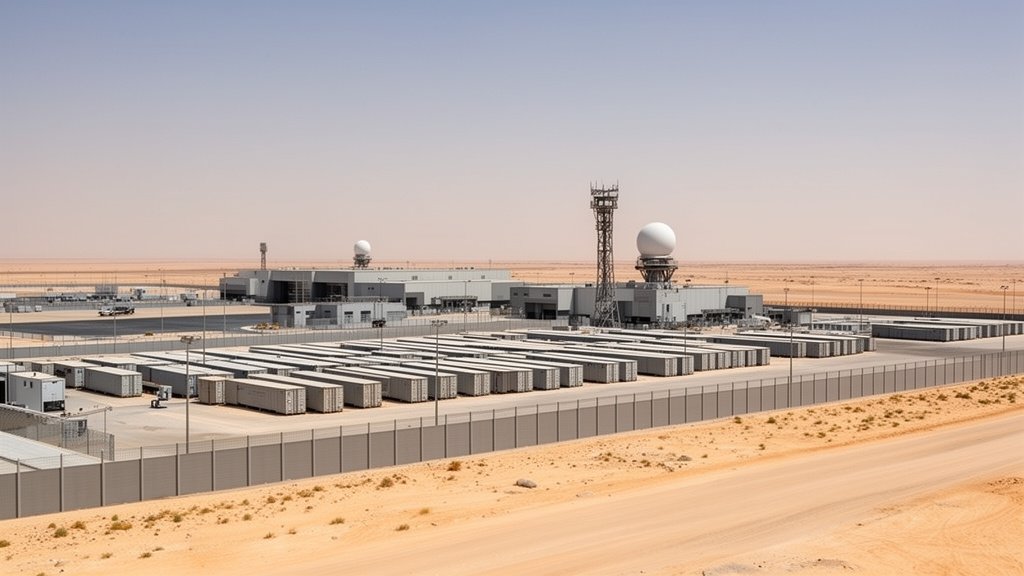
The regional security architecture of the Middle East faces an unprecedented stress test as Iranian military operations have significantly widened in scope, targeting US-used facilities in Kuwait and the United Arab Emirates. This tactical expansion marks a definitive pivot away from previous localized confrontations, as Iranian officials formally define the shift as an ‘asymmetrical’ strategy intended to project power deeper into the Gulf theater and directly challenge the logistical backbone of US operations in the region. The strikes, which involved a coordinated barrage of drones and precision missiles, signal a calculated move to complicate the defensive calculations of both Gulf Cooperation Council (GCC) member states and US Central Command (CENTCOM).
Key Highlights
- Tactical Expansion: Iran has extended its military theater beyond its borders, now targeting US-used installations in Kuwait and the UAE.
- Asymmetrical Doctrine: Tehran has officially characterized these strikes as part of a new, asymmetrical warfare doctrine designed to maximize strategic disruption while minimizing large-scale conventional engagement.
- Strategic Targets: The strikes focus on disrupting the logistical and defensive infrastructure used by US forces, specifically targeting areas previously considered outside the immediate radius of direct Iranian kinetic action.
- Regional Instability: This widening of the conflict threatens to destabilize energy corridors and necessitates a rapid re-evaluation of regional air defense protocols among GCC partners.
The New Doctrine of Asymmetrical Projection
The declaration of an ‘asymmetrical’ strategy by Iranian authorities serves as a critical inflection point in modern regional warfare. Historically, Iranian regional power projection relied heavily on proxy networks, such as the Islamic Revolutionary Guard Corps (IRGC) affiliates, to maintain a degree of plausible deniability. However, the decision to strike targets within Kuwait and the UAE—nations that have traditionally occupied a distinct diplomatic space—indicates a transition toward direct, albeit dispersed, kinetic engagement.
Analyzing the Asymmetrical Shift
At its core, this asymmetrical approach seeks to exploit the geographic and technological gaps in traditional missile defense systems. By deploying low-cost, high-volume drone swarms combined with precision-guided ballistic missiles, Iran aims to overwhelm the advanced, multi-layered air defense arrays—such as the Patriot and THAAD systems—that protect US-used bases like Al Dhafra Air Base in the UAE and Camp Arifjan in Kuwait. The intent is not necessarily to achieve total destruction of these facilities but to force a ‘saturation’ scenario that degrades the readiness and operational tempo of US forces. This strategy effectively turns the Gulf’s reliance on high-tech military assets against the defenders, leveraging the high cost-per-intercept disparity inherent in modern air defense.
The Geopolitical Reconfiguration
For the Gulf Cooperation Council (GCC) nations, this expansion creates an acute dilemma. Kuwait and the UAE have long sought to balance their relationships between Washington and Tehran, often attempting to position themselves as neutral brokers or at least shielded from direct confrontation. The Iranian move effectively erodes this buffer zone. The ‘axis of resistance’ doctrine—the network of Iranian-aligned actors and states—has now been projected directly onto the doorstep of these nations, forcing a reassessment of collective security arrangements. Diplomatic channels are currently scrambling to ascertain whether these strikes represent a temporary signaling exercise or the opening gambit of a sustained campaign to force US withdrawal from regional hubs.
Economic and Energy Security Implications
Beyond the military sphere, the widening of this conflict carries immediate economic weight. The Arabian Gulf is the primary conduit for a significant percentage of global energy exports. Any perceived degradation of security around critical logistical hubs in the UAE and Kuwait introduces an immediate ‘risk premium’ into global energy markets. Traders are closely monitoring the operational status of regional ports and airfields. Should the conflict intensity increase, the possibility of disruption to shipping lanes or local infrastructure could trigger sharp volatility in oil and liquefied natural gas (LNG) pricing. This creates a secondary front where Iranian leverage can be felt globally, potentially impacting the domestic economies of key trading partners in Asia and Europe.
Future Predictions and Defensive Posture
Looking ahead, US Central Command is expected to accelerate the integration of regional air and missile defense networks. We can anticipate an increase in joint patrols and a likely request for more robust defensive hardware to be stationed at previously ‘safe’ rear-echelon sites. Furthermore, the diplomatic fallout will likely manifest in increased pressure on Tehran from global powers, though the effectiveness of such pressure remains uncertain given the current alignment of international alliances. The ‘asymmetrical’ phase of this conflict suggests that the era of relying on static, conventional deterrence in the Gulf may be nearing a conclusion, necessitating a more agile, distributed military posture for all parties involved.
FAQ: People Also Ask
1. What does Iran mean by an ‘asymmetrical’ strategy in this context?
It refers to a method of warfare where Iran uses low-cost, high-volume, and unpredictable military assets—such as drones and missiles—to challenge a conventionally superior force (the US), aiming to cause significant disruption and logistical stress while avoiding a full-scale conventional war.
2. Why were Kuwait and the UAE targeted specifically?
These countries house critical logistical and air infrastructure used by US forces. By striking these locations, Iran is demonstrating its ability to reach deep into the Gulf, effectively targeting the ‘backbone’ of the US military presence rather than just frontline assets.
3. How does this affect global oil prices?
The escalation creates immediate market uncertainty. Because the Gulf region is a primary global energy hub, any threat to logistical bases or regional stability often leads to increased insurance premiums for shipping and potential speculation in oil futures, driving up prices.
4. Are these strikes considered a full-scale war?
While they are significant escalations, officials currently classify these as strategic strikes designed for signaling and tactical positioning. However, the risk of rapid escalation remains high if these strikes result in significant casualties or damage to critical national infrastructure.