
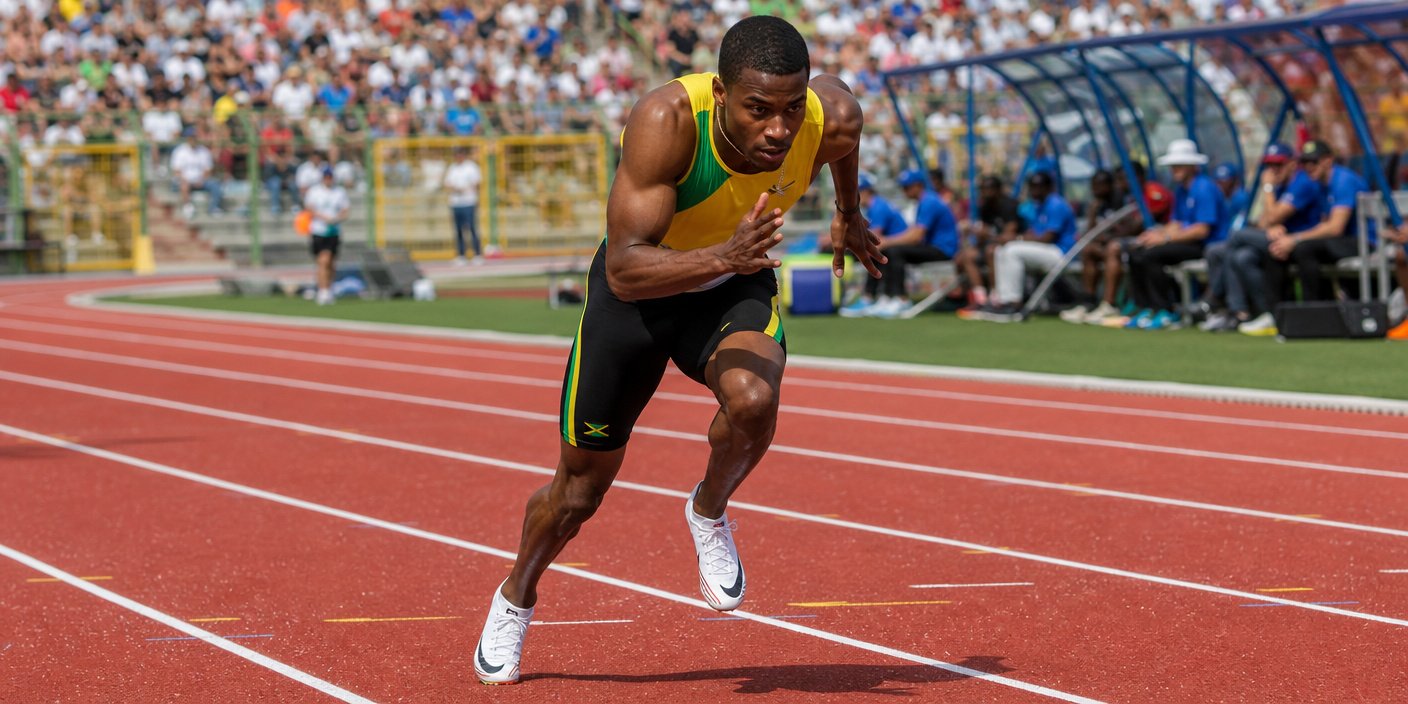
The 2024 track and field season reaches its crescendo this weekend at the iconic King Baudouin Stadium in Brussels, Belgium, where Jamaican sprint prodigy Oblique Seville spearheads a formidable lineup for the Wanda Diamond League Finals. As the atmosphere thickens in the Belgian capital, the focus turns sharply to the men’s 100m—the blue-ribbon event that has captivated global sports fans all summer. Seville, coming off a season defined by resilience and explosive potential, arrives in Brussels not merely to compete, but to secure the most coveted trophy on the professional circuit.
Key Highlights
- Season Finale: The 2024 Wanda Diamond League Finals are taking place at the King Baudouin Stadium in Brussels, serving as the definitive end to the world’s most prestigious track and field series.
- The Stakes: Competitors are battling for the Diamond Trophy, accompanied by a $30,000 top prize and the title of ‘Diamond League Champion’ for the 2024 season.
- Elite Competition: Seville faces an incredibly deep field, including the recent Olympic 200m champion Letsile Tebogo and American veteran Fred Kerley, ensuring the Brussels race will be one of the fastest of the year.
- Jamaican Pride: Seville carries the weight of the Jamaican sprinting legacy, looking to cement his status as the successor to the island’s legendary lineage of world-beaters.
The Brussels Showdown: Chasing the Diamond Trophy
The road to Brussels has been long and arduous for the elite sprinters of the world. After a season dominated by the Paris 2024 Olympic Games, the Wanda Diamond League Finals represent a final opportunity for redemption, validation, and dominance. For Oblique Seville, this meet is a litmus test of his current form. After a series of tactical races throughout the summer, the Jamaican athlete has shown a blend of consistency and top-end speed that makes him a primary contender for the gold.
Tactical Precision on the Track
Unlike major championships which often rely on qualifying rounds, the Diamond League Final is a singular, ‘winner-take-all’ event. This structure drastically alters the psychological approach. Athletes cannot afford a slow start or a tactical miscalculation; the pressure is immediate. Seville’s coach, Glen Mills, has been meticulous in his preparation for this meet, focusing on the drive phase—a component of Seville’s race that has improved significantly over the past 12 months. In Brussels, the tartan track at King Baudouin Stadium is notoriously fast, and any minor error in transition will be magnified by the caliber of the field.
The Rivalry and The Field
The field in Brussels is arguably stronger than most Olympic finals. The presence of Letsile Tebogo, the charismatic speedster from Botswana who claimed gold in Paris, creates a fascinating dynamic. Tebogo possesses a closing speed that is virtually unmatched in current sprinting, while Fred Kerley brings a level of tactical experience and championship pedigree that can destabilize younger runners. For Seville, the challenge is clear: he must hold his composure under the intense pressure of the final 20 meters. His ability to execute his race pattern under duress will be the deciding factor between a podium finish and the Diamond Trophy.
Historical Context: The Diamond League Legacy
Winning the Diamond League Trophy is often cited as a turning point in an athlete’s professional career. While Olympic gold provides the fame, the Diamond League provides the consistency and the year-round status of ‘the best in the world.’ Historically, winners of this trophy go on to establish themselves as dominant forces in the sport for years to come. By winning in Brussels, Seville would not only add a significant piece of hardware to his collection but also prove that he is the leader of the next generation of sprinters capable of carrying the mantle after the retirements of the sport’s previous icons.
Economic and Career Impact
The financial rewards of the Diamond League are substantial, with a $30,000 prize for the winner of each discipline final. However, the true economic impact lies in the valuation of an athlete’s ‘brand’ post-victory. A Diamond League champion commands higher appearance fees at future meets and becomes a more attractive prospect for major global endorsements. For an athlete like Seville, a win in Belgium represents a lucrative career milestone that transcends the track itself, solidifying his marketability in a competitive global landscape.
The Jamaican Sprinting Legacy
Oblique Seville is acutely aware of the history he represents. Jamaica is a nation synonymous with sprinting excellence. Every time Seville steps onto the track, he carries the expectations of a country that has produced the fastest humans in history. Critics often argue that the pressure of the Jamaican jersey can be overwhelming, yet Seville has shown a unique ability to insulate himself from the noise. In the lead-up to the Brussels final, his team has emphasized a ‘back-to-basics’ approach, focusing on internal metrics and individual performance rather than external expectations.
Weather and Track Conditions
Brussels in mid-September can be unpredictable. Athletes will be keeping a close eye on the thermometer and wind readings. A cold evening can stiffen the muscles, making the explosive start required for a 100m sprint more difficult to achieve. The King Baudouin Stadium, while legendary, has a track surface that requires specific spikes setup. Seville’s team has arrived early to acclimate, ensuring that by the time the gun fires, every variable has been accounted for.
FAQ: People Also Ask
Q: What is the significance of the Diamond League Finals in Brussels?
A: The Brussels event marks the conclusion of the 2024 Wanda Diamond League series. It determines the overall champion for each event, awarding the prestigious Diamond Trophy and significant prize money, making it one of the highest-quality meets in athletics.
Q: Is Oblique Seville the favorite to win the 100m in Brussels?
A: While he is a top contender, the field is extremely competitive. With athletes like Letsile Tebogo and Fred Kerley also competing, the race is expected to be an incredibly tight contest where any of the top four runners could feasibly take the win.
Q: How does the Diamond League scoring system work?
A: Throughout the season, athletes accumulate points by placing in the top spots at various Diamond League meets. The top-scoring athletes qualify for the Final in Brussels, where the winner of that specific race is crowned the Diamond League Champion.
Q: What prize money is awarded at the Diamond League Final?
A: The winner of each event final receives $30,000, with prize money descending for second through eighth place, creating a total purse that rewards the best performers of the entire season.