
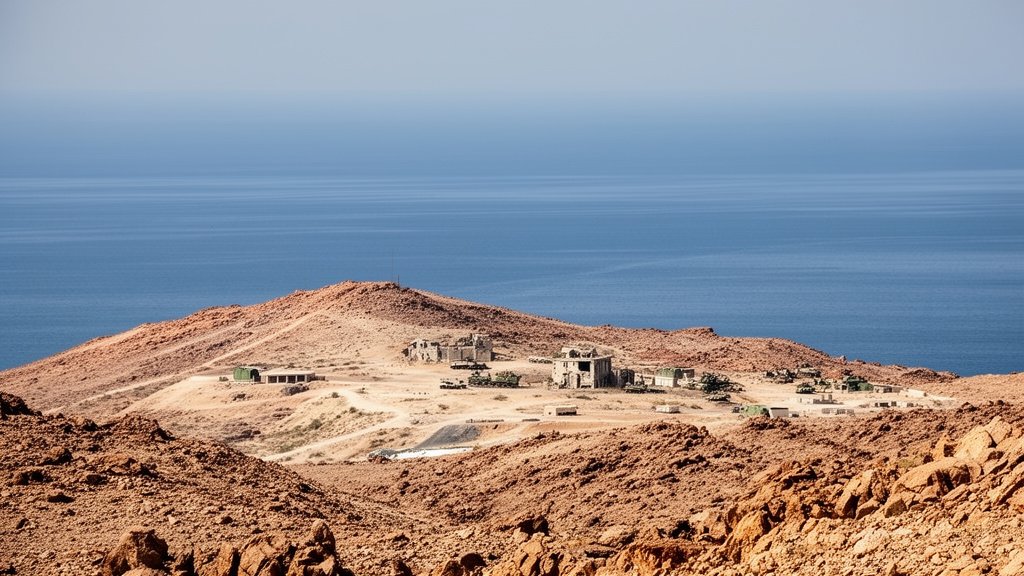
The geopolitical volatility in the Middle East escalated significantly today as US Central Command (CENTCOM) confirmed a targeted operation against offensive Iranian capabilities. US forces successfully bombed and neutralized a series of Iranian-operated rocket launchers stationed on Larak Island, a strategic location situated at the narrow entrance to the Strait of Hormuz. This tactical maneuver was framed as a preemptive measure to ensure freedom of navigation and secure vital energy shipping lanes. The response from Tehran was swift and calculated; shortly after the Larak Island operation, multiple US military bases located in Jordan and the United Arab Emirates (UAE) were hit by coordinated retaliatory strikes. Simultaneously, the maritime domain was further destabilized when a large supertanker was severely damaged following an encounter with naval mines in the Strait of Hormuz, prompting a major emergency response and raising alarms regarding the security of global oil transit.
Key Highlights
- US forces neutralized Iranian-operated rocket launchers on Larak Island, a strategic entry point to the Persian Gulf.
- Iranian military units launched retaliatory strikes against US personnel and infrastructure stationed in Jordan and the UAE.
- A supertanker sustained significant damage after striking naval mines in the Strait of Hormuz, compounding the regional crisis.
- US Central Command remains on high alert, with the 5th Fleet monitoring the area to prevent further escalation in one of the world’s most critical maritime chokepoints.
Escalation in the Persian Gulf: A Tactical Breakdown
The operation on Larak Island marks a significant hardening of the US posture in the region. Larak Island, which sits at the throat of the Strait of Hormuz, has long been a focal point for the Islamic Revolutionary Guard Corps (IRGC) due to its ability to facilitate anti-access/area-denial (A2/AD) capabilities. Military analysts have indicated that the launchers destroyed were capable of targeting both commercial shipping and naval vessels, representing a direct threat to the flow of global energy supplies. The decision to strike followed an intelligence assessment suggesting that these platforms were being readied for an immediate, large-scale provocation against international transit.
The Impact of Reprisal Attacks
Following the strike on Larak, the retaliation against US installations in Jordan and the UAE represents a shift toward direct asymmetric warfare. By targeting bases in these specific host nations, Iranian-backed elements are testing the structural integrity of the US-regional security architecture. Jordan and the UAE serve as critical hubs for regional stability; attacks here do more than threaten military personnel—they complicate the diplomatic landscape for the host nations, who must now balance their security partnerships with the reality of being caught in the crossfire of a broader US-Iran standoff. While specific casualty numbers and damage reports from these bases are currently being verified, the psychological impact on the regional security environment is already profound.
Maritime Security and the Tanker Incident
The most immediate threat to the global economy surfaced within the Strait of Hormuz itself. The supertanker incident—caused by contact with naval mines—underscores the vulnerability of the world’s most significant oil chokepoint. Through this narrow waterway passes approximately 20% of the world’s total petroleum consumption. The presence of mines indicates a sophisticated intent to disrupt global commerce, forcing shipping companies to immediately reconsider transit routes or risk catastrophic losses. Insurance premiums for vessels entering the region are expected to spike sharply, directly impacting global energy costs and supply chain stability. This event forces a re-evaluation of maritime security protocols, with navies worldwide likely to accelerate deployments to ensure the Strait remains open.
Geopolitical and Economic Consequences
The convergence of these three events—the Larak strikes, the base attacks, and the tanker mining—creates a multifaceted crisis that transcends traditional military engagement.
1. The Energy Market Volatility
Global oil markets are highly sensitive to disruptions in the Strait of Hormuz. The combination of military action and the tangible threat to a supertanker creates a ‘fear premium’ on crude oil futures. If the Strait were to experience prolonged closure or even a significant reduction in traffic, the global economy would face an immediate inflationary shock. Central banks and energy ministers are closely monitoring the situation, as the long-term closure of the Strait is considered an extreme scenario with severe consequences for the global post-pandemic recovery.
2. The Deterioration of Diplomatic Channels
The direct nature of these engagements suggests that the established back-channel communication protocols between Washington and Tehran are failing. The ‘red lines’ that previously kept regional frictions from boiling over into direct military exchanges appear to have been eroded. Diplomatic efforts to de-escalate must now contend with kinetic facts on the ground, making a return to the status quo significantly more difficult than in previous cycles of tension.
3. The Future of Regional Basing
Host nations in the Middle East are now faced with the reality of being primary targets. The attacks in Jordan and the UAE demonstrate that proximity to the conflict is no longer a shield. Future negotiations regarding the placement and mission of US bases in these nations will likely become more contentious, as local governments weigh the necessity of US security support against the existential threat posed by these targeted strikes.
FAQ: People Also Ask
Why was Larak Island specifically targeted by US forces?
Larak Island provides a strategic vantage point overlooking the narrowest section of the Strait of Hormuz. The Iranian rocket launchers placed there were deemed a direct threat to freedom of navigation, capable of threatening oil tankers and naval ships entering or exiting the Persian Gulf.
What is the significance of the Strait of Hormuz in this conflict?
It is the world’s most important oil chokepoint. Roughly 20% of the world’s daily petroleum supply transits through this narrow passage. Any obstruction here, whether by military strikes or mining, causes immediate, severe ripples in global energy prices and supply chain stability.
How will the strikes on Jordan and the UAE affect US regional policy?
These strikes challenge the long-standing security architecture in the Middle East. They force the US to prioritize defensive hardening of its installations in these countries, while simultaneously managing the diplomatic fallout with host nations that are now directly exposed to the conflict.
What is the likelihood of further military escalation?
The situation remains fluid. With both sides having taken direct action, the risk of miscalculation is at an all-time high. International observers are currently focused on whether diplomatic intermediaries can broker a temporary ceasefire before the situation degrades into a full-scale regional confrontation.