
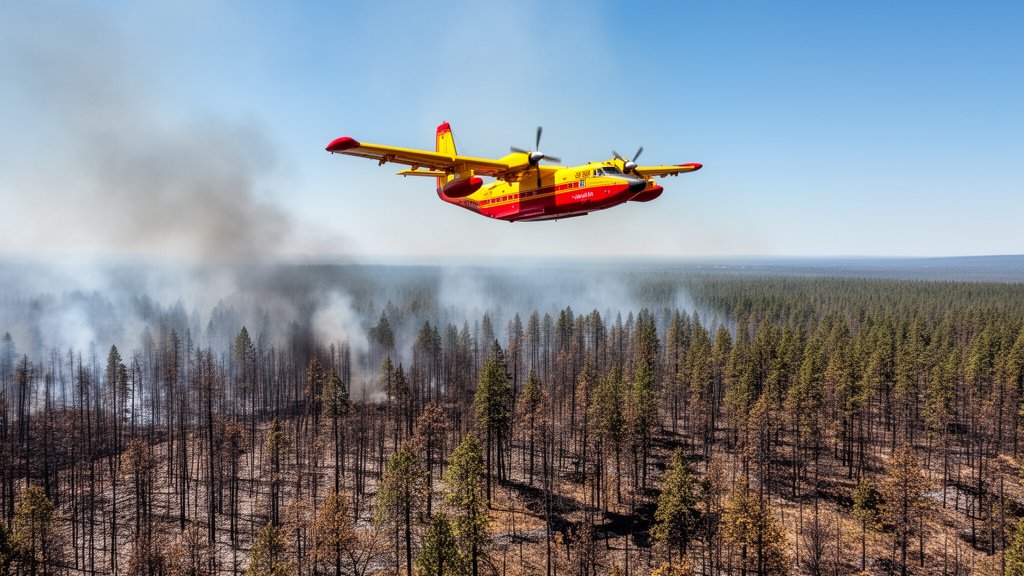
A historic heatwave has pushed temperatures to record-breaking levels across Western Europe, forcing France and central England into a desperate struggle against rampant wildfires that have strained emergency resources to their limits. The extreme atmospheric conditions, characterized by persistent high pressure, have turned vast swaths of vegetation into tinderboxes, resulting in widespread destruction, mandatory evacuations, and a heightened alert for public safety services struggling to contain the rapid spread of flames.
Key Highlights
- Historic Records in the UK: The UK Met Office recorded temperatures surpassing 40°C (104°F) for the first time in history, with Coningsby reaching 40.3°C.
- Crisis in Gironde: France’s Gironde region has been the epicenter of destruction, with over 30,000 residents and tourists evacuated as thousands of hectares of pine forest succumbed to the blaze.
- Emergency Response Strain: The London Fire Brigade declared a major incident, reporting its busiest operational day since World War II due to the surge in fire-related calls.
- Resource Deployment: Both nations have leveraged the European Union Civil Protection Mechanism, deploying specialized aircraft and cross-border support to assist ground crews battling the infernos.
The Anatomy of the European Heat Crisis
The current weather event is part of a broader, long-term trend of increasing European summer temperatures, but the intensity of this specific heatwave has caught many regions off guard. In France, the Gironde department, located in the southwest, became the primary theater of operations. The combination of intense heat, drought-stricken vegetation, and gusting winds created a “perfect storm” scenario. Emergency personnel in Gironde faced a daunting task: fighting fire in rugged, dense forest terrain that is notoriously difficult to access. The sheer scale of the blazes forced the French government to deploy thousands of firefighters, supported by heavy water-bombing aircraft (Canadairs), which are essential for creating firebreaks in areas where ground crews cannot physically operate.
England’s Unprecedented Fight
While France is accustomed to summer forest fires, England has struggled with a different, albeit equally dangerous, manifestation of the heatwave. The UK’s infrastructure is not built for such extreme thermal stress. The London Fire Brigade (LFB) faced an unprecedented workload. On a single Tuesday during the peak of the heatwave, the LFB received thousands of calls, leading to a surge in grass fires that spread with terrifying speed into residential areas. The “Red Extreme” heat warning issued by the Met Office served as a blunt reminder that the UK is not immune to climate-related catastrophes. Houses were destroyed, and suburban areas were evacuated as the dry, brittle grass ignited from incidental sparks and heat reflection.
Climate Attribution and Long-term Shifts
Scientists analyzing the event emphasize that while weather is chaotic, the statistical probability of such events is rising rapidly due to anthropogenic climate change. The “attribution science” behind this heatwave suggests that the heat intensity would have been statistically impossible, or at the very least, vastly less likely, in a pre-industrial climate. The implications are profound: European urban planning, forest management, and emergency response protocols were designed for a temperate climate that no longer exists in its historical form. Future predictions suggest a “new normal” where heatwaves are more frequent, more intense, and longer in duration, requiring a complete overhaul of how municipalities manage urban forestry and emergency budgets.
Economic and Infrastructure Strain
Beyond the immediate danger to life and property, the economic impact of these fires is severe. In France, the timber industry in Gironde faces long-term losses that could take decades to recover. Agriculture, which is already struggling with the lack of rain, is seeing yields collapse as crops wither under the relentless sun. In the UK, the heatwave caused rail networks to buckle, as steel tracks expanded, and air traffic control systems faced disruptions due to melting runways. The economic cost of repairing infrastructure and compensating for lost agricultural output is currently being calculated, but experts warn that these costs will balloon as the frequency of such extreme weather events increases. Governments are now being pressured to redirect funding toward “climate resilience” infrastructure—cooling centers, fire-resistant construction materials, and expanded wildfire response teams.
The Human Toll and Community Resilience
At the center of this crisis are the communities caught in the path of the fires. In Gironde, the images of campgrounds engulfed in flames and the mass evacuation of residents have highlighted the vulnerability of rural tourism. In the UK, families watched as fires crept toward their backyards, a phenomenon rarely seen in the British Isles. The resilience shown by first responders—police, firefighters, and medical staff—has been the sole factor preventing a higher casualty rate. However, the emotional toll on these responders is mounting. Many have been working 24-hour shifts in PPE that traps heat, creating internal health risks. The mental health support for emergency services will likely be a primary concern for local governments in the aftermath of these events.
FAQ: People Also Ask
Q: Why are wildfires more intense in Europe this year?
A: The intensity is driven by a combination of severe drought, which dried out soil and vegetation, and record-breaking heatwaves that created volatile tinderbox conditions. These factors, exacerbated by climate change, allow fires to start easier and spread faster.
Q: Is the UK normally prone to wildfires?
A: Historically, the UK has low wildfire risk due to its temperate, wet climate. However, as summer temperatures rise and periods of drought become more common, grass fires and wildfires are becoming a legitimate threat to both rural and suburban areas.
Q: How does the European Union help during these disasters?
A: Through the European Union Civil Protection Mechanism, member states and participating countries pool resources. This allows nations like France to request firefighting planes, specialized equipment, and ground crews from neighboring countries to bolster their local response.