
The energy landscape in Jamaica is currently under intense scrutiny as the Jamaica Public Service Company (JPS) and New Fortress Energy (NFE) are locked in a high-stakes arbitration process, with a total value of US$40 million on the line. This legal friction underscores the complexities of managing liquefied natural gas (LNG) infrastructure in the Caribbean and highlights the rigorous contractual oversight required for the nation’s power grid. At the center of the dispute are claims and counterclaims revolving around fuel-supply efficiency and operational liabilities at the critical Montego Freeport LNG terminal.
Key Highlights
- The Core Conflict: The total dispute value stands at US$40 million, stemming from differing interpretations of operational performance and contractual obligations.
- The Claims: The Jamaica Public Service Company (JPS) has filed a claim for US$33 million against New Fortress Energy (NFE), citing specific operational and fuel-supply challenges.
- The Counter-Strike: In response, NFE has issued a counterclaim of US$7.2 million against JPS, asserting that the claims lack merit and seeking compensation for their own operational variances.
- Operational Context: The dispute is anchored at the Montego Freeport LNG terminal, a facility that serves as a vital component for power generation in Western Jamaica.
Arbitration at the Edge: Analyzing the JPS-NFE Conflict
The current arbitration represents a significant moment for Jamaica’s energy sector. As the country continues its transition toward cleaner, more sustainable energy sources, the reliance on LNG has increased substantially. The Montego Freeport terminal is a cornerstone of this strategy, feeding gas to the Bogue Power Plant, which provides essential electricity to the Western region of the island. When a conflict of this magnitude arises, it does not just involve two corporate entities; it echoes through the entire energy value chain.
The Anatomy of the Claims
At the heart of JPS’s US$33 million claim are allegations regarding the fuel-supply chain and the operational efficiency of the terminal. While the technical specifics are largely protected by confidentiality clauses inherent to international arbitration, industry observers note that such claims typically revolve around ‘take-or-pay’ contract disputes, performance guarantees, and alleged interruptions in the supply of LNG. JPS, acting in its capacity as the sole distributor of electricity in Jamaica, holds a fiduciary responsibility to ensure that fuel costs—which are often passed on to consumers via the fuel rate adjustment—are managed with the utmost transparency and efficiency.
Conversely, New Fortress Energy’s US$7.2 million counterclaim suggests a differing perspective on the contractual obligations. By filing this counterclaim, NFE is challenging the premise of JPS’s grievance. In the context of complex infrastructure contracts, such counterclaims are standard procedure to mitigate liability and contest the attribution of ‘operational downtime.’ This creates a legal gridlock that requires neutral third-party arbitrators to parse thousands of pages of logs, maintenance reports, and supply data to determine where the contractual failures, if any, truly lie.
Operational Challenges at Montego Freeport
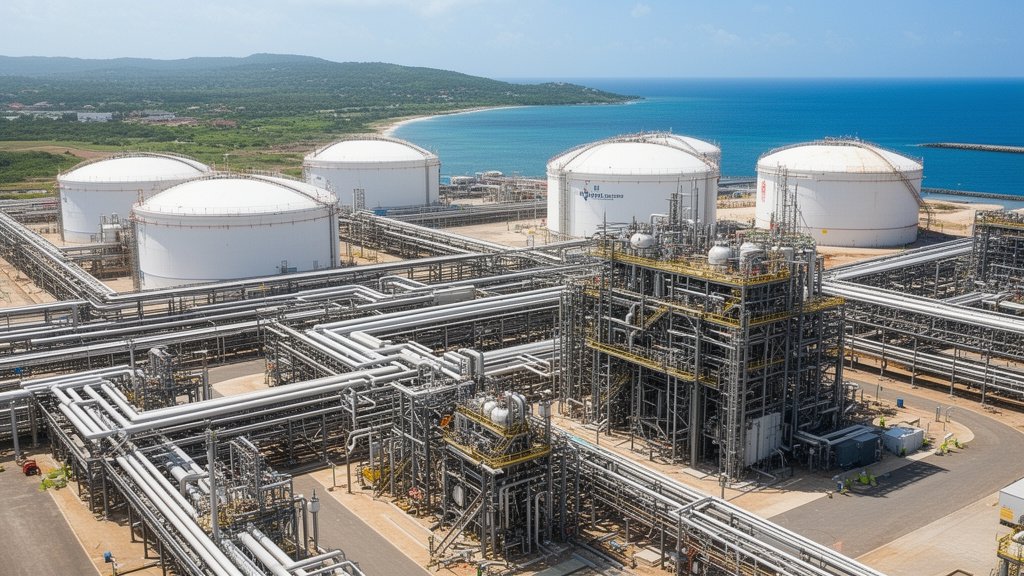
The Montego Freeport terminal is a sophisticated facility designed to regasify LNG for delivery to power plants. Operating such a facility requires precise coordination between the logistics of importing LNG by ship and the steady delivery of natural gas to the turbines. Any deviation in this chain can result in financial penalties and significant operational hurdles. Historical data regarding the facility indicates that its uptime is crucial for the stability of the Western grid.
Experts suggest that the dispute may stem from a series of events where operational output did not meet the projected efficiency benchmarks outlined in the long-term supply agreements. When such gaps occur, the financial fallout is calculated based on the lost opportunity cost of power generation or the necessity of switching to more expensive fuels—like Automotive Diesel Oil (ADO)—to maintain grid stability. This is likely where the US$33 million figure originates: the differential cost of fuel and the impact on operational capacity.
Economic Implications and Energy Security
The ripple effects of this US$40 million arbitration are being felt by stakeholders across the energy sector. First, the duration of arbitration processes can create uncertainty. If the terminal’s operations remain clouded by litigation, it could theoretically complicate future supply negotiations. However, both companies have indicated that they continue to operate within the bounds of their ongoing business relationship, suggesting that the arbitration is a specific, compartmentalized legal maneuver rather than an end to their commercial partnership.
Furthermore, the Jamaican Office of Utilities Regulation (OUR) closely monitors such disputes. Because JPS is a regulated utility, the costs associated with power generation are subject to regulatory oversight. If JPS were to lose the arbitration or be found liable for certain operational delays, the ability to pass these costs onto the rate-payers could be challenged. Conversely, if JPS wins the US$33 million, it could theoretically lead to improved efficiency or financial relief for the utility provider, depending on the ruling’s specifics.
The Future of Energy Contracts
This dispute highlights the necessity of robust, crystal-clear language in long-term energy contracts. As Jamaica seeks to diversify its energy mix and bring in more LNG, wind, and solar, the contracts governing these projects must account for every variable—from weather disruptions and ship-arrival delays to unexpected equipment maintenance. The JPS-NFE arbitration serves as a case study for future contracts in the Caribbean market. It demonstrates that as the energy sector matures, the legal sophistication required to manage these infrastructure partnerships will only increase.
Both parties now await the deliberation of the arbitration panel. While the outcome remains uncertain, the resolution of this US$40 million dispute will be a pivotal moment for both companies and a crucial test for the regulatory and contractual framework governing Jamaica’s energy supply.
FAQ: People Also Ask
1. What is the current status of the JPS vs. NFE dispute?
The parties are currently engaged in formal arbitration proceedings. This is a private, legal mechanism used to resolve commercial disputes outside of the public court system, aiming for a binding resolution based on the details of their fuel-supply contracts.
2. Why is the Montego Freeport terminal so important?
The Montego Freeport LNG terminal is critical because it provides the natural gas supply for major power generation plants in Western Jamaica, including the Bogue Power Plant. Its reliable operation is essential for the region’s energy security and electricity prices.
3. How does this affect electricity consumers in Jamaica?
While arbitration is a corporate matter between JPS and NFE, the outcome could impact the fuel component of electricity rates. Costs associated with fuel supply and generation efficiency are subject to regulatory review by the Office of Utilities Regulation (OUR).
4. Are both companies continuing to work together despite the lawsuit?
Yes, the arbitration process is a common procedure in long-term commercial contracts to resolve specific disagreements without necessarily terminating the broader business relationship.