
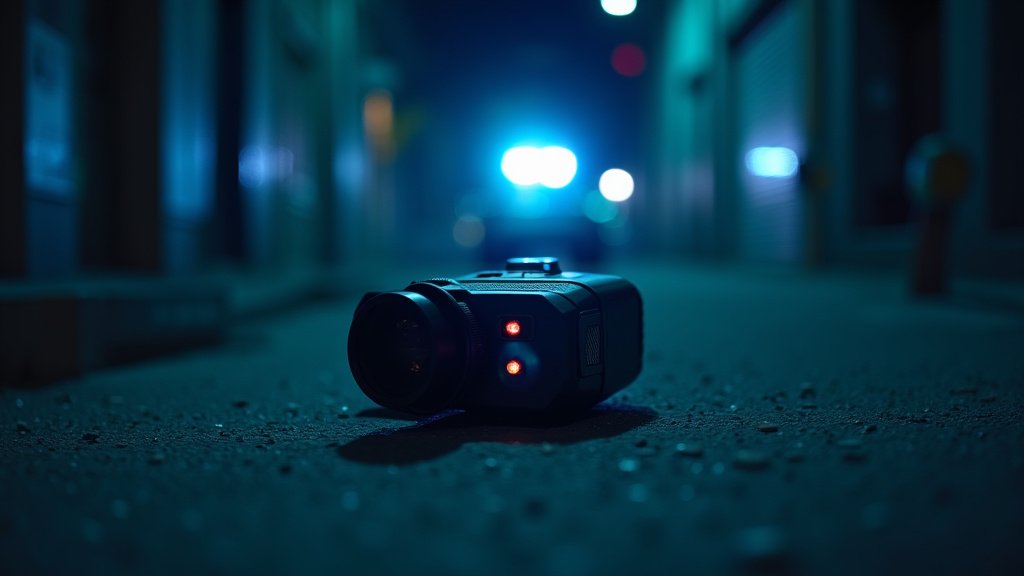
Minister of National Security and Peace, Dr. Horace Chang, has firmly rejected calls for mandatory body-worn camera usage during tactical operations against armed suspects, labeling the proposal a “crazy idea” that would jeopardize officer safety. Addressing the House of Representatives during the opening of the 2026/27 Sectoral Debate, Dr. Chang clarified that while the government is committed to modernizing the Jamaica Constabulary Force (JCF) with thousands of new cameras, the tactical deployment of that technology remains the sole prerogative of the Police Commissioner. This decision marks a significant friction point between government security policy and civil society advocates, who argue that transparency is non-negotiable—even in the heat of a firefight.
Key Highlights
- Ministerial Rejection: Dr. Horace Chang explicitly stated that forcing police to wear body cameras during planned operations against armed gunmen is operationally unsafe and potentially life-threatening.
- Commissioner’s Authority: The government maintains that the Police Commissioner, not civil society groups, holds the exclusive authority to determine when, where, and how body-worn cameras are deployed.
- Tactical Rationale: Security officials argue that the presence of camera gear can create distraction, target officers during chaotic firefights, and fundamentally alter the split-second decision-making required in high-intensity combat.
- Civil Society Pushback: Organizations like Jamaicans For Justice (JFJ) have consistently called for universal camera coverage, particularly during planned raids, following a reported increase in fatal police encounters.
- Investment in Infrastructure: The government reaffirmed its ongoing commitment to technology, with 1,000 additional cameras on order and an expansion of the Jamaica Eye surveillance network toward a 3,000-camera goal by 2028.
The Collision of Tactical Reality and Public Accountability
The declaration from Dr. Horace Chang has reopened one of the most contentious debates in modern policing: where does the line between necessary officer safety and public transparency lie? As the Jamaica Constabulary Force continues to grapple with high rates of violent crime, the government’s recent stance underscores a “tactical-first” philosophy that stands in stark opposition to the transparency demands made by human rights advocates.
The Tactical Argument: Safety Over Surveillance
At the heart of Dr. Chang’s resistance is a visceral understanding of the violence faced by Jamaican police. When discussing the potential for officers to engage suspects armed with high-powered weaponry—specifically referencing automatic rifles capable of high rates of fire—Chang painted a grim picture. He argued that in a 3:00 am operation, where seconds decide the outcome between life and death, an officer’s priority must be movement, cover, and target identification.
Security experts often note that body cameras, while vital for audit trails, add weight, complexity, and distinct visual profiles to tactical gear. In a high-stress, low-light environment, the concern is that these devices could inadvertently signal an officer’s position or distract from the essential task of neutralizing a lethal threat. Chang’s analogy—that the “hunted moves much faster than the hunter”—emphasizes the operational speed of modern criminal gangs. He posits that forcing specialized squads to manage recording equipment during active shooting events turns them into moving targets, potentially leading to higher casualty rates among law enforcement.
The Civil Society Stance: The Demand for Eyes on the Ground
Conversely, organizations like Jamaicans For Justice (JFJ) and the Independent Commission of Investigations (INDECOM) argue that the very environments Chang describes as too dangerous for cameras are, in fact, the most crucial moments for documentation. The logic of the accountability movement is rooted in the history of police-involved fatalities. Without impartial, first-person visual evidence, the narrative of a shooting often devolves into a “he-said, she-said” scenario that erodes public trust.
For civil society, transparency isn’t just about catching wrongdoing; it is about building a social contract. If the public perceives that the police act with impunity, especially during raids in vulnerable communities, that perception can paralyze cooperation and fuel further unrest. By refusing to mandate cameras in these settings, activists worry the state is essentially creating a “blind spot” in the justice system, effectively shielding the most lethal police encounters from the scrutiny required to maintain institutional integrity.
Comparing Global Police Standards
This debate is not unique to Jamaica; it is a global phenomenon. In the United States, after high-profile incidents involving the Los Angeles Police Department and other major metropolitan forces, the move toward universal body-worn cameras became a rallying cry. However, even in the U.S., policies vary wildly. Some departments mandate that cameras must be activated prior to any enforcement interaction, while others offer discretion based on the level of threat.
In the U.K., by contrast, the approach has been more prescriptive, with forces often required to record interactions unless specific, rare exemptions apply. The difference lies in the operating environment. Jamaican law enforcement is dealing with a level of armed gang violence that is functionally distinct from the typical domestic policing contexts in parts of Europe. The challenge for Chang is reconciling the international best practices of “total transparency” with the localized reality of a police force operating in a constant state of high-intensity, asymmetrical warfare.
The Data-Driven Future and Policy Constraints
Despite the friction, there is no disagreement regarding the utility of technology. Dr. Chang emphasized that the government has invested over $20 billion in the JCF, and that cameras are viewed as a “second eye” for the officer—a protective mechanism that guards against false accusations. This is a critical point often lost in the debate: police unions and government leaders frequently argue that body cameras protect good officers as much as they prosecute bad ones.
As the government pushes toward a “modernized” police force, the strategy appears to be a tiered deployment. Cameras are currently utilized effectively in traffic checks, public safety engagement, and general patrols. The refusal to mandate them in tactical raids suggests a policy of “situational deployment.” The government is essentially saying: “We want cameras where the goal is public interaction and accountability; we do not want them where the primary goal is tactical survival.” The success of this policy in the coming years will likely be measured by the number of fatal encounters and the subsequent level of public outcry, forcing a delicate balancing act for the Ministry of National Security.
FAQ: People Also Ask
1. Why does Dr. Horace Chang believe body cameras are a ‘crazy idea’ for tactical operations?
Dr. Chang argues that in high-intensity, armed confrontations, the added equipment and distraction of managing cameras can put police officers at a tactical disadvantage and make them easier targets for gunmen who are often faster and more mobile than the police.
2. Who makes the decision on when police wear body cameras in Jamaica?
According to the National Security Minister, the deployment of body-worn cameras is the sole prerogative of the Commissioner of Police, who determines which officers wear them and in what operational contexts.
3. Has the Jamaican government stopped buying body cameras?
No. The government continues to acquire them. Dr. Chang noted that thousands have been deployed and more are on order, emphasizing that they are viewed as valuable protective tools for officers in standard police-public interactions.
4. What do civil society groups want regarding police body cameras?
Organizations like Jamaicans For Justice (JFJ) are calling for mandatory use of body cameras during all planned police operations, including raids, to ensure transparency and accountability, particularly given past concerns regarding fatal police shootings.