
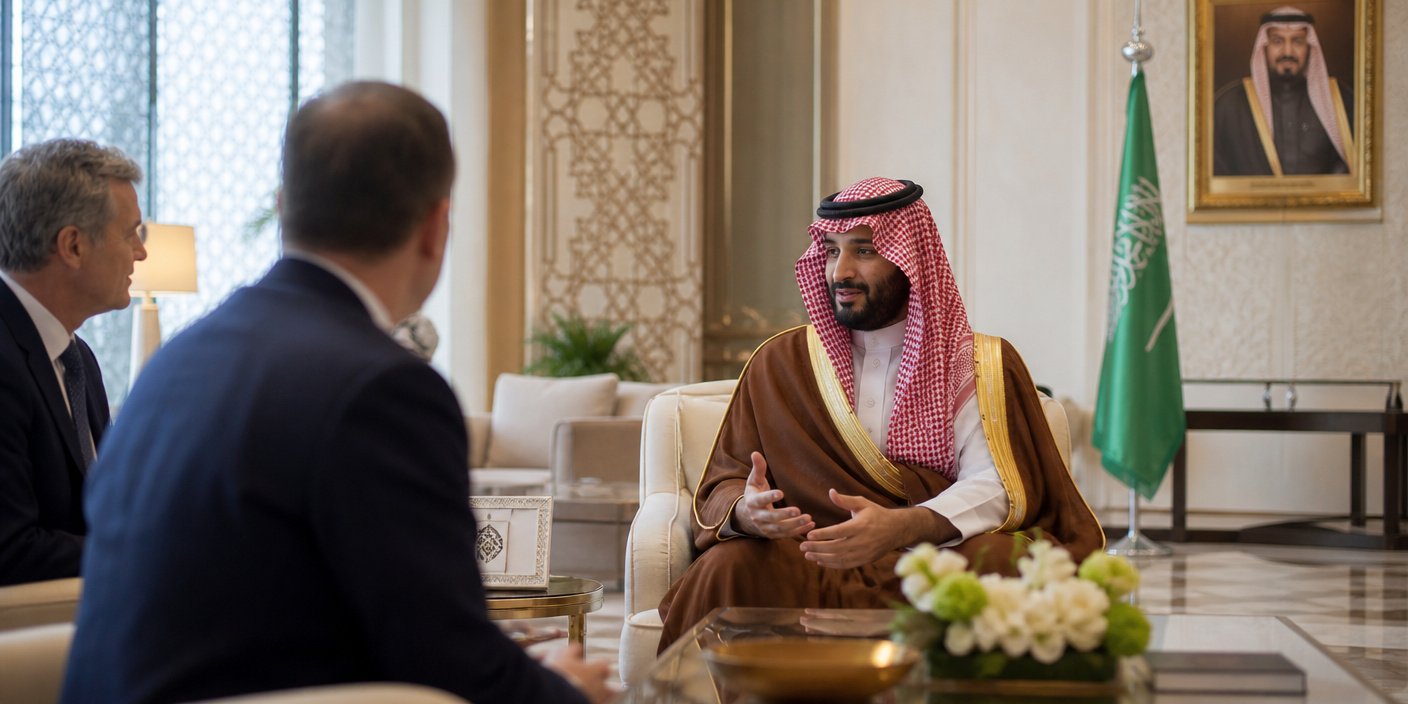
The security architecture of the Middle East is undergoing a seismic, and potentially volatile, transformation. A renewed and aggressive Houthi offensive near the Bab el-Mandeb Strait—the narrow chokepoint through which approximately 12% of global trade and a significant portion of the world’s oil supply flows—has placed Saudi Arabia in a precarious position. Crown Prince Mohammed bin Salman (MBS) is reportedly scrambling to secure external military assurances, only to find the United States and European nations increasingly reluctant to commit to the direct, boots-on-the-ground interventions that defined the previous decade. As the Houthi movement (Ansar Allah) gains territorial ground, the Riyadh-led coalition faces a stark reality: the era of Western-guaranteed security is waning, forcing a desperate pivot toward regional partners like Egypt.
The Bab el-Mandeb Chokepoint Crisis
The Bab el-Mandeb Strait is not merely a maritime boundary; it is a global economic artery. The recent escalation by Houthi forces near this strategic gate has shifted the theater of conflict from the Yemeni highlands to the maritime domain. Military intelligence indicates that the capture of key territories near the coastline gives the Houthis increased leverage to harass commercial shipping, escalate insurance premiums for tankers, and create a climate of instability that ripples through global energy markets. For Saudi Arabia, this is an existential threat. The security of the Red Sea shipping lanes is fundamental to the Kingdom’s economic diversification plans, including the flagship NEOM project. However, the Kingdom’s current military capacity is stretched, and the appetite for a protracted conflict with the Houthis—who have demonstrated growing missile and drone sophistication—is at an all-time low in Riyadh.
The Western Hesitation: A Shift in Doctrine
The current security crisis has laid bare a profound rift in the Saudi-US strategic partnership. Unlike the initial stages of the conflict in 2015, Washington and its European counterparts are now signaling a departure from direct interventionism. Senior officials in both the US and EU have reportedly declined requests for direct military engagement in support of a Saudi-led ground operation. This hesitance stems from a combination of ‘forever war’ fatigue, concerns over humanitarian optics, and the broader, more complex strategic focus on the Indo-Pacific and Eastern Europe. While Western naval coalitions, such as Operation Prosperity Guardian, have been formed to protect shipping, these are defensive, maritime-focused initiatives. They do not address the terrestrial territorial gains being made by the Houthis, nor do they provide the offensive military guarantees the Saudi leadership is seeking.
Strategic Re-alignment: The MBS Pivot to Cairo
Faced with a Western ‘no,’ Crown Prince Mohammed bin Salman has initiated a frantic diplomatic outreach to regional powers. Chief among these is Egypt. Cairo represents the most logical strategic partner for Riyadh in this theater. The security of the Bab el-Mandeb is directly tied to the viability of the Suez Canal; any threat to the former is an immediate threat to Egyptian national revenue. Reports suggest that Riyadh is exploring a framework for enhanced Egyptian military cooperation, possibly involving increased intelligence sharing, naval coordination, and potentially a symbolic ground presence to act as a deterrent. This pivot marks a transition in MBS’s foreign policy: from reliance on Western superpowers to an ‘Arab-first’ security architecture. This strategy, however, is not without risks. Engaging Egypt in an active theater of conflict—even as a deterrent—could entangle Cairo in a regional proxy war, potentially straining its own fragile economic situation.
Secondary Angle: The Economic Ripple Effect
The immediate consequence of this security crisis is the drastic spike in war-risk insurance premiums for ships traversing the Red Sea. Shipping giants have been forced to re-route vessels around the Cape of Good Hope, adding weeks to transit times and significantly inflating fuel and operational costs. This is not just a regional issue; it is a global inflationary pressure point. If the security vacuum in the Bab el-Mandeb continues to widen, the resulting disruption to global supply chains may force Western powers to reconsider their non-interventionist stance, not out of loyalty to Saudi Arabia, but out of necessity to protect global economic interests.
Secondary Angle: The Limits of Saudi-Iran Rapprochement
Crucially, this crisis tests the viability of the recent Saudi-Iran normalization deal. If the Houthis are viewed as an Iranian proxy, their territorial gains near the Bab el-Mandeb suggest that the rapprochement remains thin. If Riyadh cannot persuade Tehran to rein in the Houthis, the diplomatic ‘thaw’ may freeze entirely. MBS is gambling that he can leverage this regional rapprochement to secure stability, but the reality on the ground suggests that the Houthis may be pursuing an independent, albeit ideologically aligned, agenda that challenges Saudi interests regardless of the diplomatic status between Riyadh and Tehran.
Secondary Angle: The Evolution of US-Saudi Relations
Historically, the US-Saudi relationship was built on a simple exchange: oil security for military protection. The current crisis illustrates that this ‘oil-for-security’ paradigm is dead. Washington’s refusal to engage directly in the current Houthi offensive signals that the US now views Saudi Arabia as a partner that must manage its own neighborhood. This is a painful transition for Riyadh, forcing a rapid modernization of its own defense capabilities and a reliance on asymmetric alliances that have yet to be tested in a full-scale regional confrontation.
FAQ: People Also Ask
1. Why is the Bab el-Mandeb Strait so critical to the conflict?
It is one of the world’s most important shipping chokepoints, connecting the Red Sea to the Gulf of Aden. Millions of barrels of oil and massive volumes of commercial goods pass through daily. Control over this region gives the Houthis a geopolitical lever to disrupt the global economy.
2. Why are the US and Europe refusing to intervene?
Western nations are prioritizing defensive maritime security (protecting ships) over offensive land operations. They are wary of being dragged into a long, costly, and controversial ground war in Yemen that lacks clear diplomatic end-goals.
3. How does Egypt benefit from helping Saudi Arabia?
Egypt’s economy is heavily dependent on Suez Canal transit fees. If the Red Sea becomes unsafe, ships will bypass the Suez route, devastating Egypt’s revenue. Therefore, Egypt has a vital national interest in ensuring the safety of the approaches to the canal.
4. Is the Saudi-Iran deal collapsing?
The offensive indicates that the recent diplomatic efforts have not fully mitigated the proxy conflict. While the deal remains in place, its limitations are becoming clear as non-state actors like the Houthis continue to act aggressively despite state-level detente.