
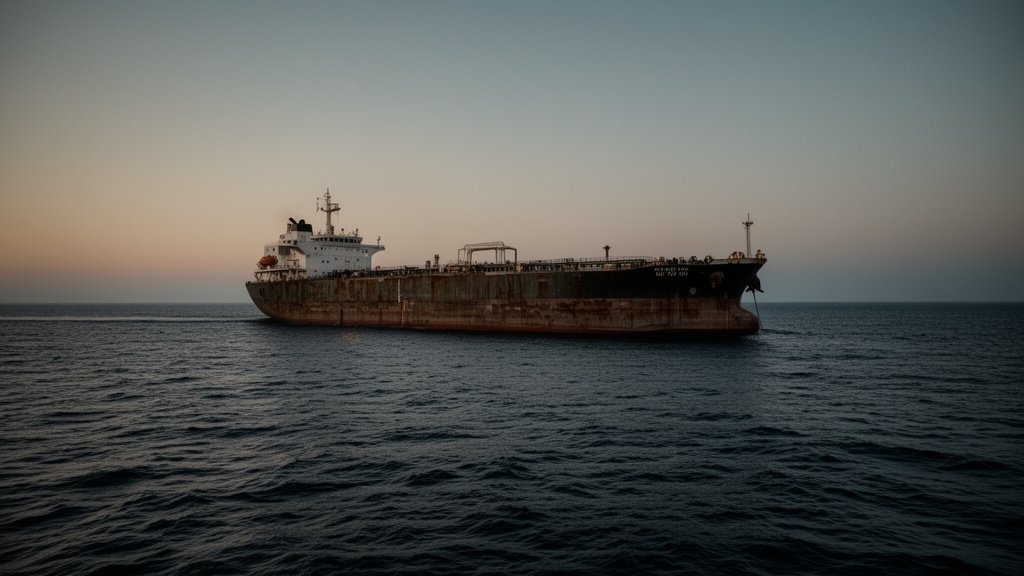
The United States has officially entered a new, intensified phase of its geopolitical containment strategy, expanding ‘Operation Economic Outcast’ to strike at the complex financial architecture supporting Iranian proxies across the Middle East. By leveraging the Office of Foreign Assets Control (OFAC) and working in concert with international intelligence partners, Washington is aiming to systematically degrade the capability of the IRGC-Quds Force to project power through regional surrogates. This initiative arrives as US intelligence reports confirm a measurable decline in Iranian crude oil exports, a direct result of aggressive interdiction efforts targeting the ‘shadow fleet’ of tankers operating outside of standard maritime insurance and regulatory frameworks.
Key Highlights
- Operation Economic Outcast Expansion: The US Treasury Department has unveiled a new tranche of sanctions targeting shell companies, maritime insurers, and logistics providers facilitating Iranian oil revenue.
- Stifling the Funding Tap: The sanctions are explicitly designed to isolate Tehran from the global financial system, with a focus on cutting off the liquidity that fuels regional proxy groups.
- Impact on Oil Exports: Recent verified data indicates a sharp, multi-percent drop in Iranian oil exports, marking a success in the administration’s efforts to close loopholes in the current sanction regime.
- Targeting the ‘Dark Fleet’: The operation focuses heavily on the opaque maritime logistics network used by Iran to circumvent international banking and shipping restrictions.
The Financial Chokehold: Deconstructing ‘Operation Economic Outcast’
The escalation of ‘Operation Economic Outcast’ is not merely a symbolic gesture; it is a calculated effort to alter the cost-benefit analysis for any entity enabling Tehran’s regional agenda. By targeting the intermediaries—the shipping firms, the insurance brokers, and the financial institutions—the US is attempting to make the cost of facilitating Iranian trade prohibitively expensive. The complexity of these networks, which often involve ship-to-ship transfers in international waters to mask the origin of crude oil, has been a significant hurdle for previous administrations.
The Mechanics of Maritime Evasion
For years, Iranian energy exports have been shielded by a clandestine network often referred to as the ‘Dark Fleet.’ These vessels, frequently aged tankers operating without P&I (Protection and Indemnity) insurance, routinely switch off their Automatic Identification System (AIS) transponders to evade tracking. The current US operation utilizes enhanced satellite imagery and high-frequency financial tracking to identify these vessels in real-time. By sanctioning the specific vessels, their owners, and the entities providing maritime services, the US is creating a ‘quarantine’ zone that forces shipping companies to choose between accessing the US dollar-denominated global banking system or conducting business with Tehran.
Economic Warfare and Regional Stability
The direct correlation between Iranian oil export revenue and the operational budget of regional proxy groups—ranging from militias in Iraq to insurgent cells in Yemen and Lebanon—is the primary driver of this strategy. US officials contend that by restricting the flow of petrodollars, the operational tempo of these proxies will inevitably decrease. The economic data is telling: as oil revenues dip, the logistical supply chain for munitions and military training for these groups faces severe disruption. Analysts are currently monitoring whether this financial pressure will force Tehran to recalibrate its regional military posture or if it will incentivize the regime to seek deeper economic integration with non-Western powers.
Navigating the Geopolitical Tightrope
While the sanctions aim to curb instability, they present a delicate diplomatic challenge. The Middle East remains a volatile region where economic warfare can quickly spill over into kinetic conflict. The US Department of State, alongside Treasury officials, is conducting an active campaign to ensure that allies in the region are not disproportionately affected by the secondary effects of these sanctions. Furthermore, the global energy market remains sensitive to any supply shocks. Washington has indicated that its intelligence-led approach is designed to be surgically precise, minimizing collateral damage to global oil supply chains while maximizing the impact on the specific actors funneling cash to proxy networks.
FAQ: People Also Ask
1. What is the primary goal of the expanded US sanctions on Iran?
The primary goal is to isolate Tehran economically by dismantling the networks that facilitate the sale of Iranian oil, thereby cutting off the funding source for regional proxy groups that threaten regional stability.
2. How do sanctions affect Iranian oil exports specifically?
By targeting the ‘shadow fleet’—tankers that lack international insurance and bypass traditional tracking—the US makes it extremely difficult for buyers to purchase Iranian oil without risking their own access to the US financial system, which leads to a decrease in export volume.
3. What does the term ‘Operation Economic Outcast’ signify?
It is the specific operational designation for the US-led strategy to identify, track, and sanction the global financial and logistical entities that enable Iran’s destabilizing activities, moving beyond mere broad-based sanctions to targeted, entity-specific interdictions.
4. Will these sanctions impact global fuel prices?
The US Treasury and State Department are employing targeted sanctions to minimize global market disruption. However, because Iranian oil is a component of the global supply, continued pressure creates a baseline of uncertainty in energy markets, which observers continue to monitor closely.