
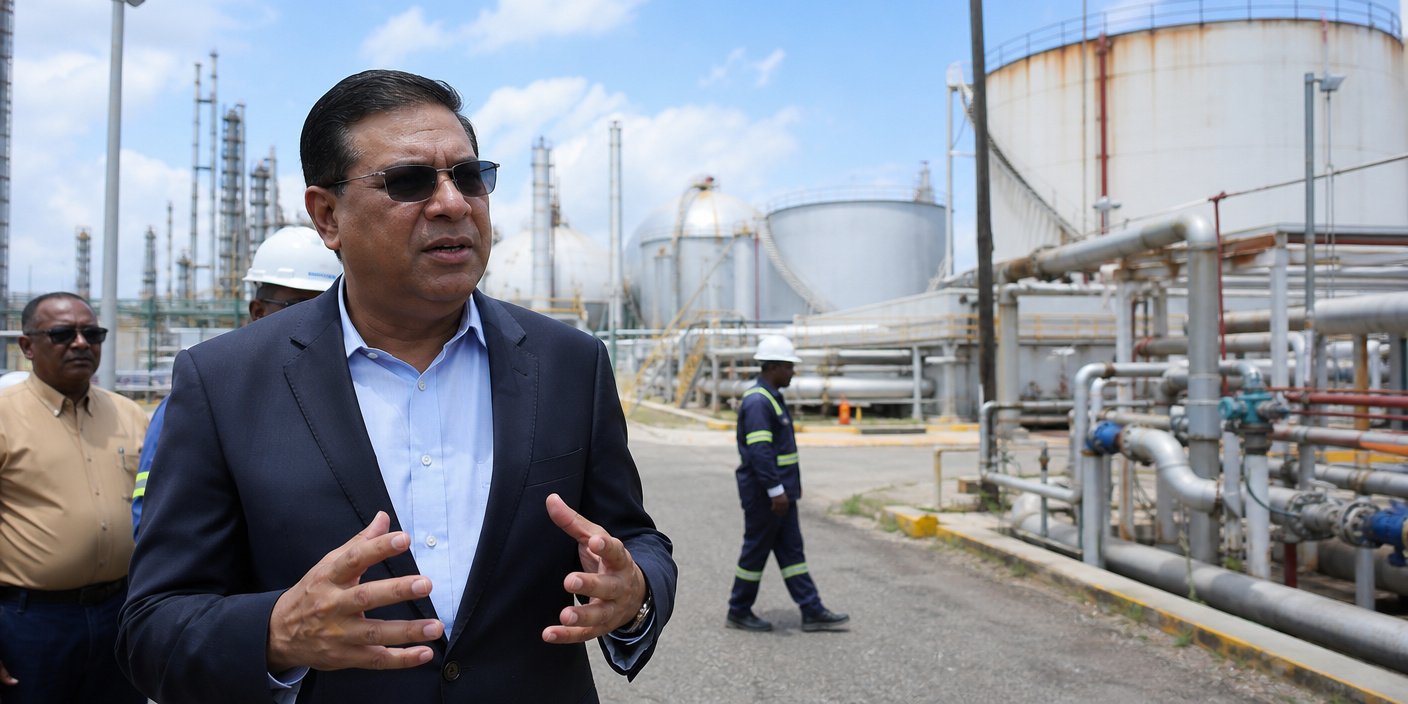
In a decisive economic move, the Jamaican government has successfully shielded local consumers and businesses from the harsh realities of volatile global energy markets. Since February 2026, the state-owned refinery, Petrojam, has executed a strategic pricing mechanism that has effectively absorbed over US$23 million in potential fuel price increases, providing a critical financial buffer for the local economy. This intervention, confirmed by Energy Minister Daryl Vaz, marks a significant effort to stabilize domestic costs amidst persistent inflationary pressures.
Key Highlights
- US$23 Million Cushion: The Jamaican government, through Petrojam, has successfully absorbed over US$23 million in potential fuel price hikes since February 2026.
- Strategic Price Smoothing: Utilizing a proprietary pricing mechanism, Petrojam has been able to stabilize local costs, insulating the economy from sudden spikes in global oil prices.
- Economic Resilience: Energy Minister Daryl Vaz emphasized that this intervention is vital for protecting small-to-medium enterprises (SMEs) and maintaining stability in the public transportation sector.
- Market Volatility: The move comes as a direct response to unpredictable fluctuations in global crude oil prices, which have created instability for energy-dependent economies.
The Strategic Mechanism of Stability
At the heart of this economic protection is the sophisticated use of the Petrojam pricing mechanism. For an island nation heavily dependent on energy imports, the volatility of the global oil market is not merely an abstract economic concept; it is an immediate threat to the cost of living and the operational viability of local businesses.
When global crude prices surge, the standard market response would be an immediate pass-through of these costs to the pump. However, the mechanism employed by Petrojam since February 2026 operates on a smoothing principle. This involves leveraging inventory management and strategic hedging to dampen the amplitude of price swings. By effectively creating a financial ‘buffer,’ the government allows the domestic market to absorb price shocks over a more extended period, rather than facing abrupt and destabilizing hikes. This approach provides businesses with predictable fuel overheads, allowing for better long-term operational planning, which is crucial for Jamaica’s post-2025 economic growth strategy.
Energy Minister’s Mandate and Economic Impact
Minister Daryl Vaz has been vocal regarding the necessity of this intervention. According to the Ministry, the primary objective is to insulate the most vulnerable segments of the economy—specifically small-to-medium enterprises and the public transportation sector—from the worst effects of global commodity speculation.
This is not just about fuel at the pump; it is about the broader inflationary chain. When transportation costs rise, the cost of goods and services inevitably follows, creating a compounding inflationary effect. By capping the fuel price increases, the government is essentially utilizing energy policy as a macroeconomic tool to curb runaway inflation. This targeted intervention has ensured that the Jamaican supply chain remains fluid, preventing the kind of logistical bottlenecks that often occur when operational costs become prohibitively expensive overnight.
Navigating Global Market Volatility
The global energy landscape, particularly since early 2026, has been characterized by sharp, unpredictable shifts. Geopolitical tensions, production adjustments from major oil-exporting cartels, and shifting demand patterns in emerging markets have created a ‘perfect storm’ of pricing volatility.
For a small island developing state (SIDS) like Jamaica, relying purely on market forces to dictate energy prices is often untenable. The current Petrojam policy reflects a trend toward ‘Energy Sovereignty’—a proactive approach where the state takes an active role in managing energy assets to prioritize national stability over short-term market efficiency. This strategy allows the government to navigate geopolitical shocks without immediately compromising the purchasing power of its citizens.
Future Outlook: Sustainability of the Buffer
While the US$23 million intervention has been successful in the short-to-medium term, policymakers are actively debating the long-term sustainability of such price-smoothing funds. The critical question facing the Jamaican government is how to maintain this shield without depleting the state’s fiscal reserves.
Industry analysts suggest that the next phase of this strategy may involve increasing renewable energy penetration to reduce dependency on imported fuels, thereby narrowing the gap between global market prices and the domestic cost of energy. Until that transition is fully realized, however, the Petrojam mechanism serves as a necessary stopgap, a financial firewall designed to protect the Jamaican public from the turbulence of the international energy markets.
FAQ: People Also Ask
1. How does Petrojam manage to ‘absorb’ $23 million in costs?
Petrojam utilizes a combination of strategic inventory management and price-smoothing mechanisms. By accumulating fuel during periods of lower global prices and utilizing internal cost-capping algorithms, the refinery can offset the peaks in global pricing, effectively ‘averaging out’ the cost for the local consumer.
2. Is this intervention a permanent solution to fuel price hikes?
No, it is a temporary mechanism intended to mitigate short-term volatility. The government views this as a buffer to stabilize the economy, not a permanent substitute for market pricing, which is why the strategy is consistently reviewed based on global oil price trends.
3. Which sectors benefit most from this fuel price shielding?
While all consumers benefit, the primary beneficiaries are the transportation sector, agriculture, and small-to-medium enterprises (SMEs). By keeping fuel costs predictable, the government is essentially subsidizing the operating costs of the backbone of the Jamaican economy, which in turn helps prevent rapid increases in the cost of basic goods and services.