
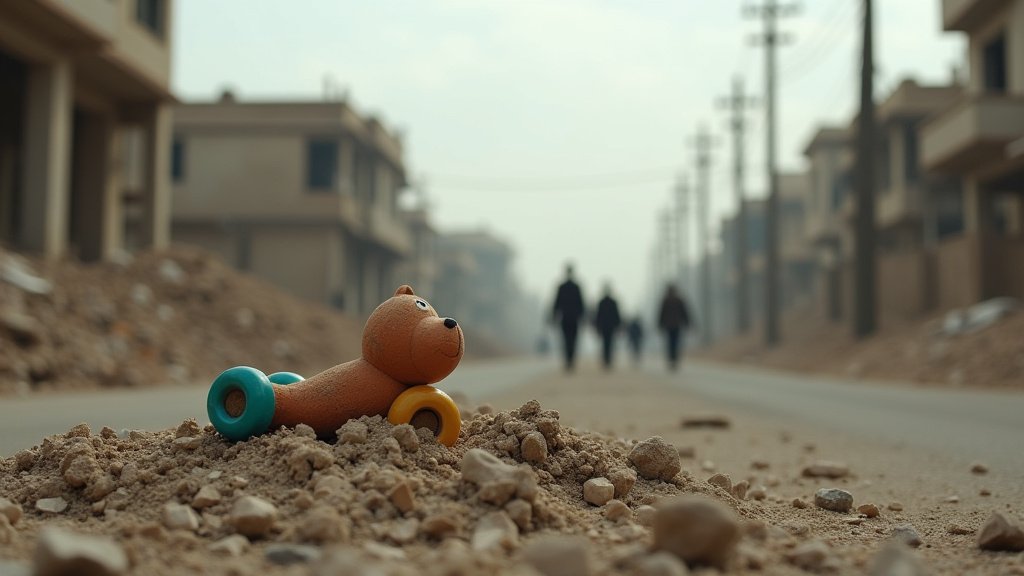
A fragile calm has settled over southern Lebanon as a US-brokered 10-day ceasefire between Israel and Hezbollah enters its initial phase, drawing thousands of displaced families back toward their damaged homes. The silence, marking a rare pause in a conflict that has claimed thousands of lives and uprooted more than a million people, remains tethered to a tenuous stability as residents navigate the skeletal remains of their villages, fully aware that the geopolitical standoff that ignited the violence remains largely unresolved.
Key Highlights
- Massive Civilian Return: Thousands of displaced Lebanese residents are traveling south toward cities like Tyre and villages like Jibsheet, despite official warnings about the safety and structural integrity of the area.
- Infrastructure Devastation: Returnees are encountering a landscape defined by flattened apartment blocks, piles of concrete rubble, and destroyed utility networks, highlighting the immense task of reconstruction.
- Tenuous Ceasefire: While the 10-day US-brokered truce is currently holding, military officials on both sides remain on high alert, with deep uncertainty regarding the long-term viability of the deal.
- Humanitarian Crisis: The return to the south is exacerbating the humanitarian situation, as essential services, water, and power grids have been largely incapacitated by months of intensive strikes.
The Landscape of Return: Navigating the Aftermath
For many of the displaced families, the journey back to southern Lebanon is not one of triumph, but of grim necessity and cautious hope. The roads leading toward the Litani River and the coastal city of Tyre have been choked with vehicles—some piled high with salvaged mattresses, suitcases, and remnants of lives packed in haste. This migration back to the south represents a collective psychological attempt to reclaim a sense of normalcy, yet the visual reality is starkly different from what they left behind.
The Psychogeography of Destruction
In villages like Jibsheet, the returnees are greeted by scenes of profound destruction. Where there were once bustling marketplaces and family homes, there are now mountains of pulverized concrete, twisted metal, and shattered glass. The air in these towns, often thick with the dust of collapsed infrastructure, is heavy with the weight of recent trauma. For residents, the return is less about ‘going home’ and more about assessing the survival of their foundations. Many are finding their homes uninhabitable, forcing them to camp in what remains of their living rooms or in vehicles, effectively extending their displacement even while physically standing on their own property.
Official Warnings vs. Civilian Desperation
Government and aid agencies have issued continuous warnings urging civilians to delay their return due to unexploded ordnance, unstable building structures, and the high probability of the conflict reigniting. However, for a population that has spent months in the limbo of emergency shelters, the pull of the south—the ancestral heartland of the local community—is too strong to resist. The desire to see what remains of their lives overrides the warnings of officials who fear that a sudden, massive return could lead to further casualties if the truce were to collapse without warning.
The Mechanics of the Truce
The current ceasefire, mediated by the United States, is built on a narrow margin of agreement. While both Israel and Hezbollah have consented to the pause, the underlying tensions that fueled the war—including the strategic positioning of Hezbollah fighters and the security requirements of Israel’s northern border—are not fully addressed by this short-term cessation.
A Diplomatic Tightrope
Diplomatic observers note that the truce is a ‘functional’ pause rather than a resolution. The agreement relies heavily on US influence to keep the channels of communication open between the warring parties. However, the ‘fragility’ of this calm is evident in the rhetoric emanating from both sides. Israel continues to signal that its security objectives remain paramount, and any violation of the border region could serve as a trigger to resume military operations. Conversely, Hezbollah’s leadership maintains a posture of defiance, framing the ceasefire as a tactical necessity rather than a strategic retreat, complicating the long-term prospects for a durable peace.
The Regional Ripple Effect
This local ceasefire is also functioning as a litmus test for broader regional stability. The US-brokered deal is watched closely by other regional actors, particularly given the ongoing, wider, and highly unstable relationship between the US, Iran, and their respective allies. The success or failure of this Lebanon-specific truce will likely dictate the next phase of the broader regional security architecture. If the ceasefire holds, it provides a rare window for the international community to transition from disaster management to substantive diplomatic negotiations. If it fails, the escalation could drag more players into a conflict that is already nearing a breaking point.
Secondary Angles: The Road Ahead
1. The Infrastructure Gap: The scale of destruction in southern Lebanon is comparable to some of the most severely impacted conflict zones in recent history. The economic impact on the Lebanese government—which was already struggling with a severe financial crisis prior to the conflict—is cataclysmic. Without massive, immediate international investment and a neutral mechanism to manage reconstruction, the south faces a long-term economic vacuum that could leave the region vulnerable to radicalization and instability for years to come.
2. Psychological Trauma and Social Cohesion: Beyond the physical rebuilding, there is the silent, ongoing crisis of mental health. The population, particularly children, has been exposed to sustained, high-intensity aerial bombardment. The return to broken homes in a volatile environment suggests that the psychological fallout of this conflict will resonate through generations, requiring a specialized approach to social support that currently does not exist in the region.
3. The Role of the Lebanese Army: The conflict has fundamentally altered the security dynamic in the south. Discussions are underway regarding the role of the Lebanese Armed Forces in maintaining the peace, yet their capacity to assert authority over areas formerly dominated by non-state actors is untested and highly controversial. The effectiveness of the Lebanese Army in enforcing the terms of the truce will be the definitive factor in whether this ‘fragile calm’ evolves into a lasting cessation of hostilities.
FAQ: People Also Ask
Q: How long is the current ceasefire supposed to last?
A: The ceasefire is officially documented as a 10-day pause, brokered by the United States. It is intended to allow for a cessation of hostilities and the potential for initial discussions, but it is not a permanent peace treaty.
Q: Why are residents returning despite warnings?
A: Many displaced civilians are returning due to the exhaustion of living in temporary, crowded shelters and a desperate need to assess the damage to their properties and protect their land. For many, it is a psychological reclamation of their home, even if it is currently in ruins.
Q: Is it safe for civilians to return to southern Lebanon?
A: Authorities, including government and humanitarian organizations, have warned against an immediate return. The areas in the south contain significant risks, including unexploded ordnance, unstable, damaged buildings, and the persistent threat that the ceasefire could collapse suddenly.
Q: What is the primary role of the US in this truce?
A: The United States is acting as the primary mediator, leveraging diplomatic influence to compel both Israel and Hezbollah to pause military actions. The US is attempting to manage the communication channels to prevent miscalculations that could lead to a resumption of fighting.