
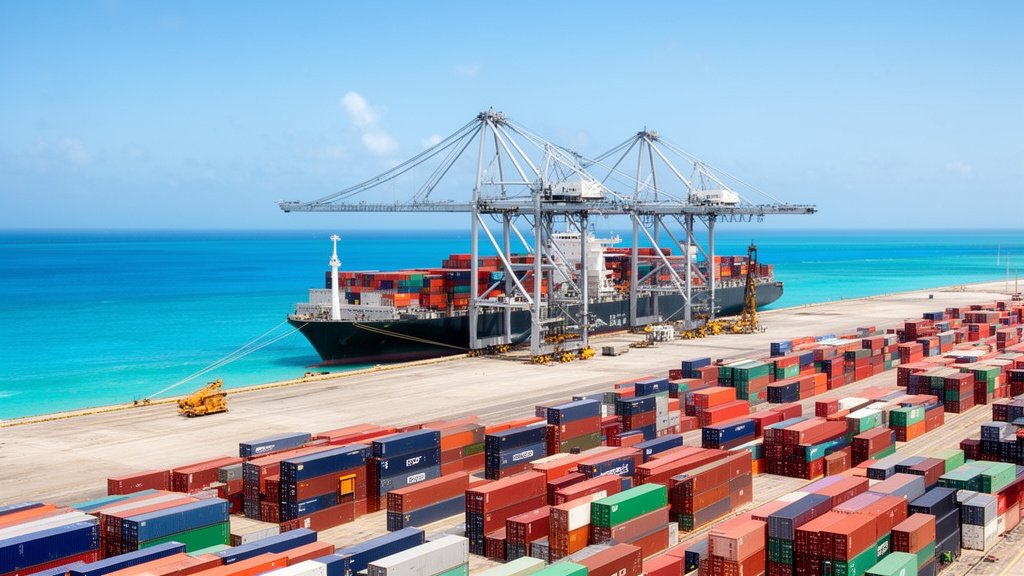
The Caribbean region is bracing for a significant economic shock as proposed International Maritime Organization (IMO) net-zero emission regulations loom on the horizon. A new, rigorous study conducted by the CARICOM Private Sector Organisation (CPSO) has brought to light a startling projection: Caribbean economies could face an additional US$3.6 billion in shipping costs between 2028 and 2035. This development places the region at a critical juncture, where the imperative of global environmental responsibility clashes directly with the economic survival of Small Island Developing States (SIDS). The proposed levies threaten to disrupt already fragile supply chains, forcing policy makers to demand immediate safeguards to prevent disproportionate economic fallout.
Key Highlights
- Projected Financial Burden: Caribbean nations face a cumulative US$3.6 billion increase in shipping costs from 2028 to 2035.
- Regulatory Driver: The financial strain is tied to new, aggressive net-zero emissions mandates proposed by the International Maritime Organization (IMO).
- Supply Chain Vulnerability: As import-dependent nations, Caribbean economies are uniquely susceptible to the inflationary pressures of increased maritime logistics costs.
- Strategic Advocacy: The CPSO is actively lobbying for “equitable transition” mechanisms to protect vulnerable regional economies from the full weight of these shipping levies.
The Economic Fallout of Green Maritime Regulations
The maritime industry is the lifeline of the Caribbean, facilitating the vast majority of food, fuel, and essential commodity imports. While the transition to net-zero shipping is a global necessity, the CPSO’s findings highlight a stark geographical inequality. The IMO’s strategy to decarbonize the shipping sector involves putting a price on carbon—a move that, while intended to force technological innovation among fleet operators, is projected to result in higher freight rates passed directly onto consumers in smaller, isolated markets.
Breaking Down the $3.6 Billion Projection
The US$3.6 billion figure is not merely a theoretical estimate; it represents a calculated analysis of projected tariff impacts, operational cost adjustments, and the lack of regional competitive infrastructure. The timeframe—2028 to 2035—is pivotal, as it coincides with the phased implementation of IMO regulations. During this window, the transition from heavy fuel oil to cleaner alternatives will likely involve significant capital expenditure for shipping lines, which are expected to recover these costs via surcharges on specific trade routes. For the Caribbean, which lacks the bargaining power of larger, consolidated markets, these surcharges threaten to exacerbate existing inflationary trends.
The Conflict: Global Policy vs. Regional Survival
At the heart of the issue is a fundamental policy conflict. The IMO is tasked with regulating global shipping emissions, but its broad-brush policies often fail to account for the unique economic topography of SIDS. The CARICOM region argues that because these nations contribute minimally to global maritime emissions yet rely heavily on the shipping network, a “one-size-fits-all” regulatory approach is inherently inequitable. The CPSO’s research is being utilized as a strategic tool to advocate for regional exemptions or a tiered implementation timeline that would allow Caribbean economies time to adjust and invest in necessary port and logistics upgrades.
Navigating the Supply Chain Crisis
Maritime logistics in the Caribbean are already characterized by high costs due to distance and low volume. The introduction of emissions-related surcharges acts as a tax on geography. If the cost of importing food and fuel rises significantly, the resulting ripple effect on the cost of living could lead to social instability. The private sector’s concern is that without specific safeguards, Caribbean nations may find themselves disproportionately subsidizing the global green transition while enduring localized economic stagnation.
Future Projections and Economic Mitigation
The path forward requires a complex balancing act between environmental compliance and fiscal protectionism. While the Caribbean is fully aligned with global climate goals, the economic reality mandates a nuanced implementation strategy. The CPSO is leading the conversation on how to structure these regulations to avoid harming vulnerable states.
The Fight for Equitable Transition Mechanisms
One of the primary solutions being proposed is the creation of a “revenue recycling” mechanism. The Caribbean position is that funds raised through shipping emissions levies should be partially reinvested into the region. This capital could be directed toward upgrading port infrastructure, investing in renewable energy projects for port facilities, or subsidizing the cost of essential goods for low-income populations. By channeling revenue back into the economies most affected, the IMO could potentially neutralize the negative economic impact while still achieving its environmental objectives.
Potential for Regional Maritime Innovation
Despite the immediate financial threat, there is an upside to the regulatory push: the catalyst for innovation. The necessity to reduce shipping costs could spur the Caribbean to develop more efficient, regional short-sea shipping networks. By incentivizing the use of smaller, fuel-efficient vessels and streamlining customs procedures, the region could potentially offset some of the projected US$3.6 billion cost. Furthermore, there is an emerging opportunity to position the Caribbean as a hub for green maritime testing, potentially attracting international investment in renewable marine technologies.
The Geopolitical Stance of the Caribbean
The CARICOM bloc is moving to present a unified front at the IMO meetings. The objective is to ensure that the voice of SIDS is not drowned out by major shipping powers and developed nations. The CPSO’s data is the ammunition for this geopolitical negotiation. If the region succeeds in securing “special status” or transitional grace periods, it could set a global precedent for how international environmental policy treats the economic viability of smaller developing nations.
FAQ: People Also Ask
Q: What is the primary cause of the projected US$3.6 billion cost increase?
A: The cost increase is driven by proposed IMO net-zero emissions regulations, which will likely result in higher shipping rates as fleet operators pass on the expenses of transitioning to cleaner fuels and low-carbon technologies.
Q: Why are Caribbean nations more vulnerable to these shipping costs?
A: Caribbean nations are “import-dependent” economies, meaning they rely on maritime transport for the vast majority of food, fuel, and manufactured goods. They also lack the scale of larger economies, making them less able to absorb increased freight charges.
Q: What is the CPSO doing to address this issue?
A: The CARICOM Private Sector Organisation (CPSO) is using its study to advocate for equitable transition mechanisms, such as revenue recycling, which would return a portion of collected emissions levies to impacted regions to offset costs.
Q: How does the 2028-2035 timeframe impact the economy?
A: This period is critical as it marks the anticipated implementation phase of the IMO’s new regulatory standards. The financial modeling indicates that the accumulation of these costs over these seven years could result in a cumulative economic burden of US$3.6 billion if no mitigating safeguards are put in place.