
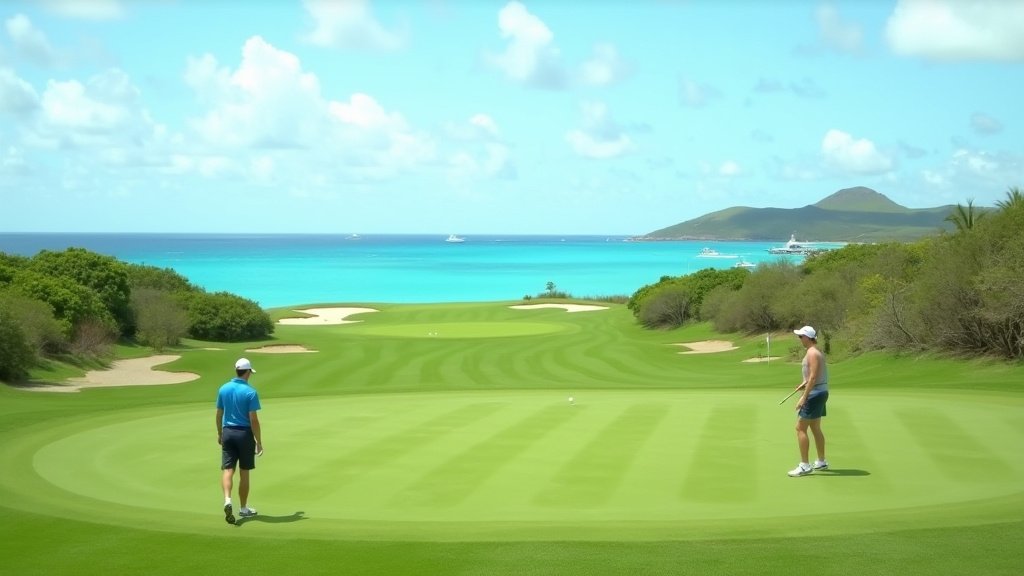
Jamaica’s historic six-year dominance at the Caribbean Golf Association’s (CGA) 4-Ball Championship has officially concluded, marking a watershed moment in regional golf. At the 7th iteration of the tournament held in the Turks and Caicos Islands, Jamaica finished second overall, ceding the prestigious Ambrose Gouthro Cup to a formidable team from The Bahamas. While the loss of the overall title breaks a staggering winning streak that spanned more than half a decade, the Jamaican squad managed to salvage significant pride by securing hard-fought victories in the Senior and Super Senior categories.
Key Highlights
- Streak Concluded: Jamaica’s six-year winning streak in the CGA 4-Ball Championship ended with an overall second-place finish.
- Ambrose Gouthro Cup Shift: The Bahamas emerged victorious, capturing the overall title and disrupting the regional hierarchy.
- Category Dominance: Despite the overall loss, Jamaica asserted its depth by winning both the Senior and Super Senior divisions.
- Championship Setting: The 7th annual event was hosted in Turks and Caicos, highlighting the increasing competitiveness of Caribbean golf infrastructure.
A Shifting Landscape in Caribbean Golf
The 7th Caribbean Golf Association’s 4-Ball Championship represented more than just a standard tournament; it served as a crucible for regional talent. For years, the Jamaican national golf team acted as the benchmark for the event, maintaining a level of consistency that few teams could challenge. The 4-Ball format—a distinct style of play where two players compete as partners, each playing their own ball with the lowest score on each hole counting—requires a specific synergy and tactical understanding. Jamaica had mastered this format for six consecutive years, utilizing a blend of high-caliber stroke play and strategic partner rotation.
However, the outcome in Turks and Caicos signals a shift in the balance of power. The Bahamas Golf Federation entered the competition with a clearly refined strategy, likely focusing on consistency across the pairings to edge out the competition. For the Ambrose Gouthro Cup—the ultimate prize representing overall team success—the Bahamian performance over the duration of the tournament was enough to displace the reigning champions. This change in guard is indicative of a broader trend: the narrowing gap in talent across the Caribbean golf circuit. As countries invest more in their local golf infrastructure and junior development programs, the once-unassailable leads held by dominant nations like Jamaica are becoming increasingly vulnerable.
Resilience in the Senior Divisions
While the loss of the overall Ambrose Gouthro Cup will undoubtedly lead to a period of tactical introspection for the Jamaican golf program, the victories in the Senior and Super Senior categories cannot be overlooked. These categories are often the bedrock of a national team’s stability, requiring deep experience and emotional fortitude to navigate the pressure of a multi-day championship.
Securing gold in both divisions proves that Jamaica’s talent pipeline remains robust. Senior golf, in particular, rewards consistency, course management, and the ability to minimize high-score mistakes. The fact that Jamaica could dominate these specific age-group brackets suggests that while their overall strategy for the combined team scoring may need recalibration, the individual skill sets of their veteran players remain world-class. This “consolation” gold serves as a vital reminder that the nation’s golfing ecosystem is far from in decline; rather, it is evolving.
The Future of Caribbean Competition
Looking ahead to the 8th edition of the Championship, the dynamic has fundamentally changed. The Bahamas will no longer be considered the underdog, but rather the team to beat. For Jamaica, the objective is now clear: analyze the scoring differentials that led to the loss of the Cup and identify where the gap in the 4-Ball partnership pairings occurred.
This tournament also highlights the growing importance of the host venue. The Turks and Caicos course conditions proved challenging, favoring players who could adapt quickly to the local terrain. Future training cycles for regional teams will likely place a greater emphasis on adaptability and specialized training to combat varying coastal wind conditions, which frequently influence the outcome of 4-Ball events. The rivalry between Jamaica and The Bahamas has been reinvigorated, promising higher stakes and closer competition in the coming years.
FAQ: People Also Ask
What is the Ambrose Gouthro Cup?
The Ambrose Gouthro Cup is the premier trophy awarded to the overall winning team at the Caribbean Golf Association’s 4-Ball Championship. It represents the pinnacle of team success in the tournament.
What is the ‘4-Ball’ golf format?
In a 4-Ball format, two-person teams compete. Each player on the team plays their own ball throughout the round. On each hole, the team records the score of the partner who had the lower score. It rewards team chemistry and complementary playing styles.
Why is Jamaica’s Senior and Super Senior victory significant?
Winning these categories demonstrates that Jamaica maintains strong, experienced depth in its roster. While the loss of the overall cup was a setback, the success in age-restricted divisions confirms that the national program retains high-level talent.
Where was the 7th CGA 4-Ball Championship held?
The tournament took place in the Turks and Caicos, a location that presented unique environmental challenges that tested the adaptability of all participating regional teams.