
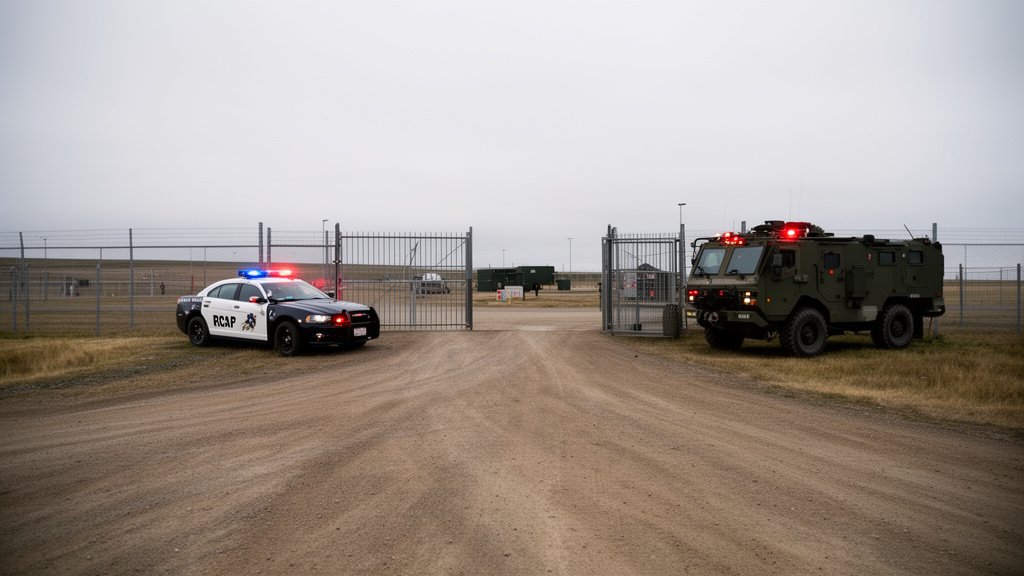
A catastrophic fire and deadly incident have paralyzed operations at Canadian Forces Base (CFB) Wainwright in Alberta, prompting a massive multi-agency emergency response that has significantly strained Edmonton’s healthcare network. Local authorities and Canadian Armed Forces officials are grappling with the aftermath of an event that has claimed lives and disrupted one of the nation’s most critical military training installations. As emergency services work to contain the environmental and structural damage, the Royal Canadian Mounted Police (RCMP) have secured the scene to initiate a high-level investigation into the origins of the tragedy.
Key Highlights
- Incident Scope: A major fire and associated deadly incident occurred at CFB Wainwright, forcing a lockdown and emergency protocol activation.
- Medical Crisis: An influx of patients from the base has overwhelmed regional healthcare capacity, with Edmonton Zone hospitals diverting resources to accommodate the surge.
- Ongoing Investigation: The RCMP has taken a lead role in the investigation, coordinating with military police to determine the cause of the disaster.
- Operational Impact: Training operations at the sprawling Wainwright facility have been suspended indefinitely as the site remains an active zone.
Crisis at CFB Wainwright: Emergency Response and Investigation
The events unfolding at CFB Wainwright represent one of the most significant emergency situations in Alberta in recent years. As one of the Canadian Armed Forces’ primary training grounds, the facility—which spans thousands of hectares—is typically a hub of tactical activity. However, the current situation has shifted the focus from military preparedness to civilian and military coordination under extreme duress.
The Sequence of Emergency Operations
Shortly after the initial reports of the fire and the subsequent deadly incident, Alberta emergency services were mobilized on a scale rarely seen outside of natural disasters. First responders from surrounding municipalities were dispatched to assist base personnel. The primary challenge remains the isolation of the base, which necessitates complex logistical support for the movement of critical equipment and personnel. The fire, which broke out under circumstances that are currently the subject of an intense RCMP probe, created a chaotic environment that hampered initial efforts to secure the area and provide medical aid. Coordination between the military’s internal safety protocols and the RCMP’s investigative requirements has been the primary focus for command officials on the ground.
Healthcare Strain in the Edmonton Zone
Perhaps the most immediate public consequence of the disaster has been the overwhelming pressure placed on the Edmonton hospital system. Alberta Health Services (AHS) reported a sudden, critical influx of patients resulting from the tragedy at Wainwright. To manage the load, hospitals have had to mobilize surge capacity, resulting in the postponement of non-urgent procedures to ensure that trauma resources remain available for those affected by the incident. This strain underscores the fragility of regional healthcare logistics; when a mass-casualty event occurs, even at a distance from the urban center, the ripple effects are felt instantly within the city’s emergency departments. Medical teams are currently operating under “Code Orange”-adjacent protocols, prioritizing stability for those transported from the base.
The Intersection of Military and Civil Jurisdiction
One of the most complex aspects of this developing story is the interplay between the RCMP and the Canadian Armed Forces. Because the incident resulted in fatalities, the RCMP possesses jurisdiction for the criminal and forensic aspects of the investigation. However, the military retains control over the physical site and operational security protocols. Sources indicate that this collaborative process involves not only determining the fire’s ignition point but also examining whether existing safety procedures were adhered to leading up to the disaster. Military investigators are working alongside civilian counterparts to sift through the debris, a process that is expected to take days, if not weeks, as the scale of the wreckage is documented.
Secondary Angles: Examining the Broader Impact
1. Emergency Medical Logistics and Trauma Response
The transportation of patients from rural military bases to tertiary trauma centers in Edmonton highlights a critical vulnerability in Alberta’s emergency response infrastructure. The incident at Wainwright has demonstrated that even with established emergency planning, the geographic distance creates significant delays in treatment windows. This event is likely to prompt a review of aerial medical evacuation capabilities and the distribution of specialized medical supplies at remote military sites.
2. Operational Security and Military Preparedness
CFB Wainwright is vital to Canada’s military readiness, hosting large-scale exercises for both domestic and international partners. The indefinite suspension of activities at the base poses a challenge to training calendars. The investigation will undoubtedly explore whether this incident was an accident, a structural failure, or an external threat, each of which carries vastly different implications for the security of Canadian military assets.
3. Psychological Impact on Local Communities
Wainwright and the surrounding rural communities share an intrinsic economic and social bond with the base. The emotional toll of the tragedy, coupled with the visibility of the emergency response, has left the local population in a state of shock. Support services are being deployed to the area to assist families of the affected personnel, and community leaders are bracing for a prolonged period of grieving and uncertainty.
FAQ: People Also Ask
Q: What is the current status of the fire at CFB Wainwright?
A: As of the latest reports, emergency crews are working to contain the fire, which has caused significant structural damage. The area remains an active investigative zone, and public access is strictly prohibited.
Q: Are there fatalities confirmed in this incident?
A: Yes, the incident has been confirmed as deadly. Authorities have initiated a formal death investigation, though names are being withheld pending notification of next of kin.
Q: Why are Edmonton hospitals affected by an incident at a military base?
A: CFB Wainwright lacks the comprehensive, high-level trauma facilities required to treat mass casualties, necessitating the transfer of patients to the nearest major medical hub, which is Edmonton.
Q: When will the RCMP release their findings?
A: The investigation is in its early stages. The RCMP and the Department of National Defence have indicated that a full forensic investigation will be conducted before any public findings are released.