
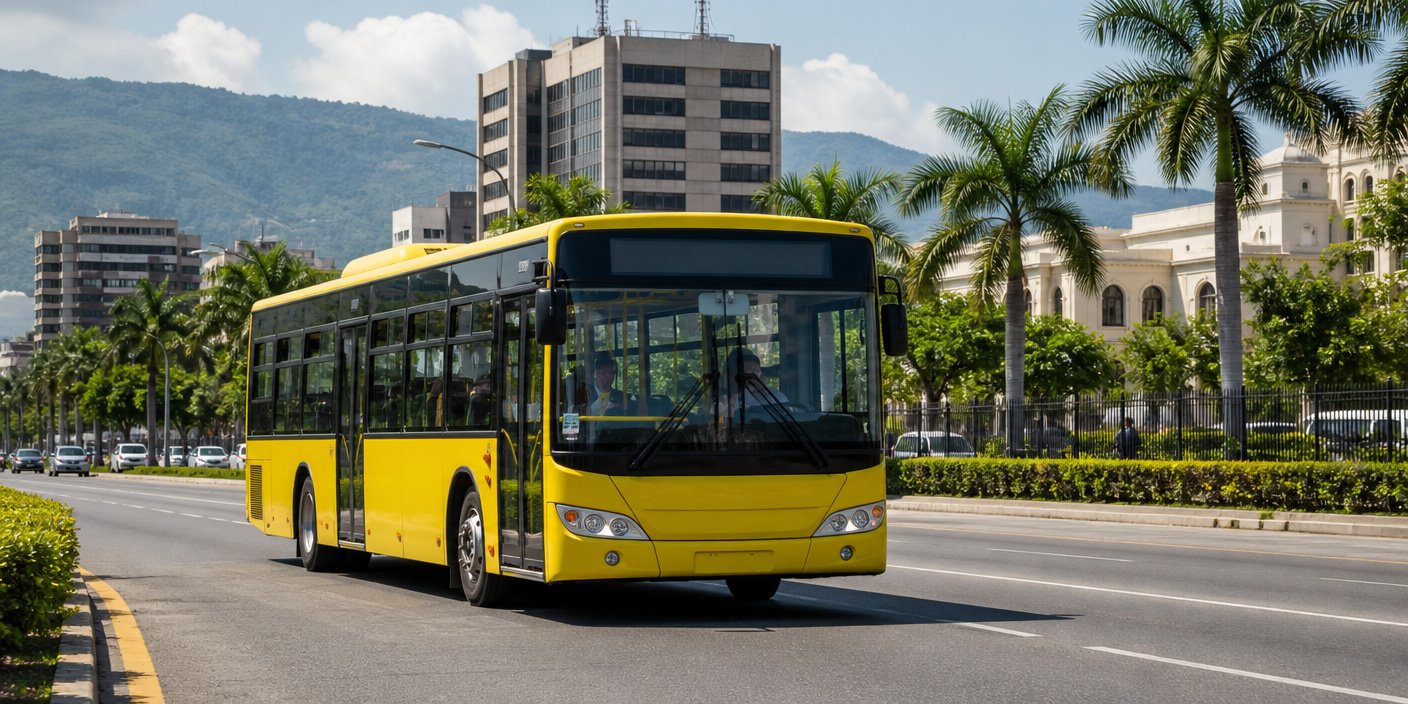
The Jamaica Urban Transit Company (JUTC) has reported a significant financial milestone, with revenue climbing by 24 per cent to $1.78 billion for the 2025/2026 financial year, a surge largely attributed to aggressive service expansions and the successful implementation of new express routes. Under the strategic oversight of Minister of Science, Energy, Telecommunications and Transport Daryl Vaz, the state-owned entity has navigated a complex fiscal environment to post these gains, signaling a pivot toward greater operational sustainability within the Kingston Metropolitan Transport Region (KMTR).
Key Highlights
- Revenue Growth: JUTC recorded a 24 per cent year-over-year increase, reaching $1.78 billion.
- Strategic Drivers: Growth was fueled primarily by the introduction of new express routes and increased bus frequency on high-demand corridors.
- Fiscal Context: The performance reflects the 2025/2026 financial year, underscoring the impact of modernized transit management.
- Operational Focus: Continued efforts to reduce deadhead time and improve route optimization were central to the fiscal turnaround.
Driving Efficiency: The Anatomy of JUTC’s Financial Growth
The reported 24 per cent increase in revenue for the JUTC is more than just a headline statistic; it represents a fundamental shift in how public transportation is being managed and monetized in Jamaica. For decades, the JUTC has faced criticism regarding reliability and maintenance. However, the $1.78 billion revenue figure for the 2025/2026 period suggests that the recent strategic maneuvers—specifically the expansion into express routes—have resonated with the commuting public.
The Impact of Express Routes
The introduction of specialized express routes has been the cornerstone of this growth. By providing faster travel times for commuters traveling from suburban residential zones into the city centers of Kingston and St. Andrew, the JUTC successfully recaptured ridership that had previously migrated to informal transit options. This strategy of ‘right-sizing’ service delivery—placing buses where demand is highest and cutting travel times—has directly translated into higher fare collection rates.
Minister Daryl Vaz’s directive to optimize the existing fleet while expanding the reach of express services has minimized the ‘cost-per-passenger’ while simultaneously maximizing the ‘revenue-per-trip.’ This operational balancing act is essential for a state entity, which must navigate the dual pressures of being a social safety net and a financially responsible business.
Operational Optimization and Fleet Management
Beyond route expansion, the internal operational changes within the JUTC have played a critical role. Improving fleet availability through more rigorous maintenance schedules ensures that fewer buses are sidelined for repairs, thereby increasing the daily ‘on-the-road’ count. When more buses are active, the frequency of service increases, which naturally leads to lower wait times. A reliable bus network is a prerequisite for public trust; once that trust is restored, commuters are more inclined to choose the JUTC over private alternatives.
This cycle of reliability leads to increased ridership, which creates the revenue necessary to further reinvest in the fleet. The $1.78 billion figure is evidence that the JUTC has, to a significant extent, broken out of the negative feedback loop that often plagues public transit authorities in developing nations.
Economic Implications for the KMTR
The Kingston Metropolitan Transport Region relies heavily on efficient transit. As fuel costs fluctuate and the cost of living increases, the demand for affordable, state-subsidized public transport is at an all-time high. The JUTC’s revenue growth is not just a win for the company’s balance sheet; it is a vital economic indicator for the city. Efficient transport reduces congestion, lowers carbon emissions, and ensures that the labor force can reach employment centers in a timely and affordable manner.
Furthermore, the transparency provided by these financial results helps in securing future government subsidies and private-public partnerships. If the JUTC can demonstrate consistent year-over-year growth, it becomes a much more attractive entity for potential investment, whether in the form of green-energy bus fleets or advanced digital ticketing infrastructure.
Challenges on the Horizon
While a 24 per cent growth rate is commendable, the JUTC faces persistent challenges. Aging infrastructure, rising energy costs, and the need for continued digitalization of the fare collection system remain significant hurdles. To maintain this growth trajectory, the entity must ensure that the quality of service does not degrade as the number of routes expands. Sustaining the 2025/2026 performance levels will require constant vigilance, continued support from the Ministry, and potentially, a further diversification of revenue streams, such as leveraging bus stations for commercial advertising or retail space.
Ultimately, the JUTC’s financial progress serves as a blueprint for other Caribbean transit authorities. By prioritizing customer-centric service expansions and operational discipline, public transit can move toward a model of self-sufficiency.
FAQ: People Also Ask
1. Q: What were the primary drivers of the JUTC’s 24% revenue increase?
A: The growth was primarily driven by the expansion of service networks and the implementation of new, high-efficiency express routes that catered to commuters’ demands for faster travel times.
2. Q: Which financial period does this $1.78 billion revenue figure cover?
A: The revenue figure of $1.78 billion corresponds to the 2025/2026 financial year.
3. Q: How does this growth impact the average commuter in the Kingston Metropolitan Transport Region?
A: The growth indicates a more reliable bus service with shorter wait times and more direct express options, improving the overall daily transit experience for commuters.
4. Q: What role did the Ministry of Transport play in this outcome?
A: Under Minister Daryl Vaz, the Ministry implemented strategic oversight and directives aimed at operational optimization and fleet management, which were instrumental in achieving the financial turnaround.