
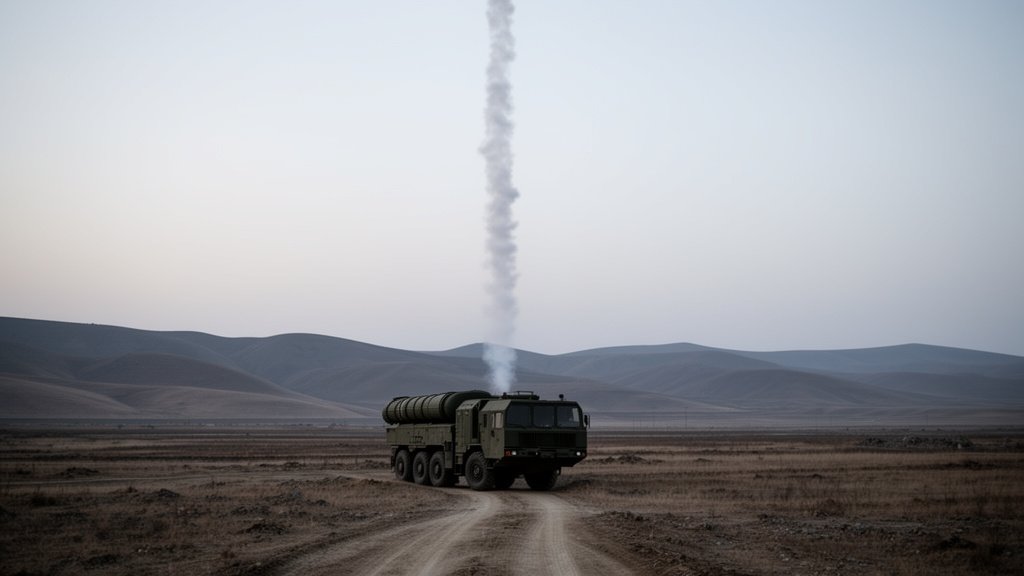
On Monday, October 12, 2026, the Democratic People’s Republic of Korea (DPRK) executed a series of ballistic missile launches from the Pyongyang metropolitan area, a move that military analysts and regional governments identify as a distinct escalation in the regime’s ongoing cycle of weapons development. The launches, which included at least one projectile traveling a distance exceeding 900 kilometers, have prompted swift condemnation and enhanced surveillance protocols from defense authorities in Seoul and Tokyo. This event marks a critical juncture in the 2026 geopolitical calendar, reinforcing the regime’s rejection of international diplomatic calls for de-escalation.
Key Highlights
- Launch Details: Multiple ballistic missiles were fired from the Pyongyang area on October 12, 2026.
- Distance Metrics: Tracking data confirmed at least one missile covered a flight path exceeding 900 kilometers.
- Regional Response: Military officials in South Korea and Japan immediately mobilized, condemning the tests as a threat to regional stability.
- Diplomatic Stance: The testing spree signals a hardening of the regime’s position, effectively silencing recent low-level diplomatic overtures.
Escalation and Strategic Defiance: The Pyongyang Missile Tests
The events of October 12 represent more than a simple test of hardware; they function as a calculated signal of defiance within the broader context of East Asian security. By launching from the Pyongyang area, the DPRK has once again demonstrated that its mobile missile capabilities are not confined to remote northern testing sites but are integrated into the heart of its administrative and logistical hubs. The fact that one missile successfully achieved a flight distance of 900 kilometers places significant regional infrastructure—potentially including key naval and air assets—firmly within the reach of these systems.
Analyzing the Technical Payload
While full telemetry data remains subject to post-flight analysis by intelligence agencies, the range achieved in this test suggests the refinement of medium-to-intermediate range ballistic capabilities. The consistency of these launches over the past several months indicates that the DPRK’s industrial complex is successfully overcoming previous supply chain constraints and engineering bottlenecks. The ability to launch “multiple” weapons in a single barrage demonstrates not only technological progress in propulsion systems but also an improvement in operational readiness. The goal of such testing is twofold: to stress-test the detection capabilities of the South Korean and Japanese integrated air defense systems and to force a change in the security posture of the United States and its regional allies.
The Shift in Regional Security Architecture
For South Korea and Japan, these launches are a reminder of the fragility of the current status quo. The trilateral defense coordination between Seoul, Tokyo, and Washington is currently in a state of high alert. Defense officials in both South Korea and Japan have indicated that they are analyzing the flight paths to determine if the projectiles involved advanced maneuvering capabilities or hypersonic glide vehicles. Should these tests incorporate such technologies, the defensive window for interception is significantly narrowed. This evolution forces the region into a constant state of high-readiness, diverting resources and focus from other diplomatic and economic priorities.
The Diplomatic Deep Freeze
Perhaps most concerning to international observers is the complete lack of engagement following these provocations. The regime in Pyongyang has effectively utilized this streak of weapons testing as a primary instrument of foreign policy, rendering traditional diplomatic channels stagnant. By accelerating the cadence of these launches, the DPRK appears to be signaling that it is uninterested in dialogue unless the foundational conditions—such as the total suspension of regional military drills and the lifting of economic sanctions—are met to its satisfaction. This maximalist approach, combined with the continued advancement of its weapons program, creates an intractable dilemma for the international community. The reliance on deterrence, while necessary, carries the inherent risk of miscalculation, particularly as the frequency of these tests increases.
FAQ: People Also Ask
Why is the 900km distance significant?
A flight distance of 900 kilometers is tactically significant as it puts major military installations and key population centers in both South Korea and Japan within a single, rapid-strike envelope. This range confirms the regime’s ability to project force well beyond the Korean Peninsula.
How have South Korea and Japan reacted?
Both nations have issued strong condemnations, stating that these launches violate UN Security Council resolutions. Their respective defense ministries have intensified intelligence sharing and increased the readiness level of their radar and interceptor batteries in response to the barrage.
Does this indicate a change in North Korea’s military strategy?
The timing and scale of the launches suggest a deliberate move toward normalization of frequent testing as a tool of political pressure, rather than sporadic demonstrations. It signals a shift toward a long-term strategy of technological intimidation and diplomatic non-engagement.