
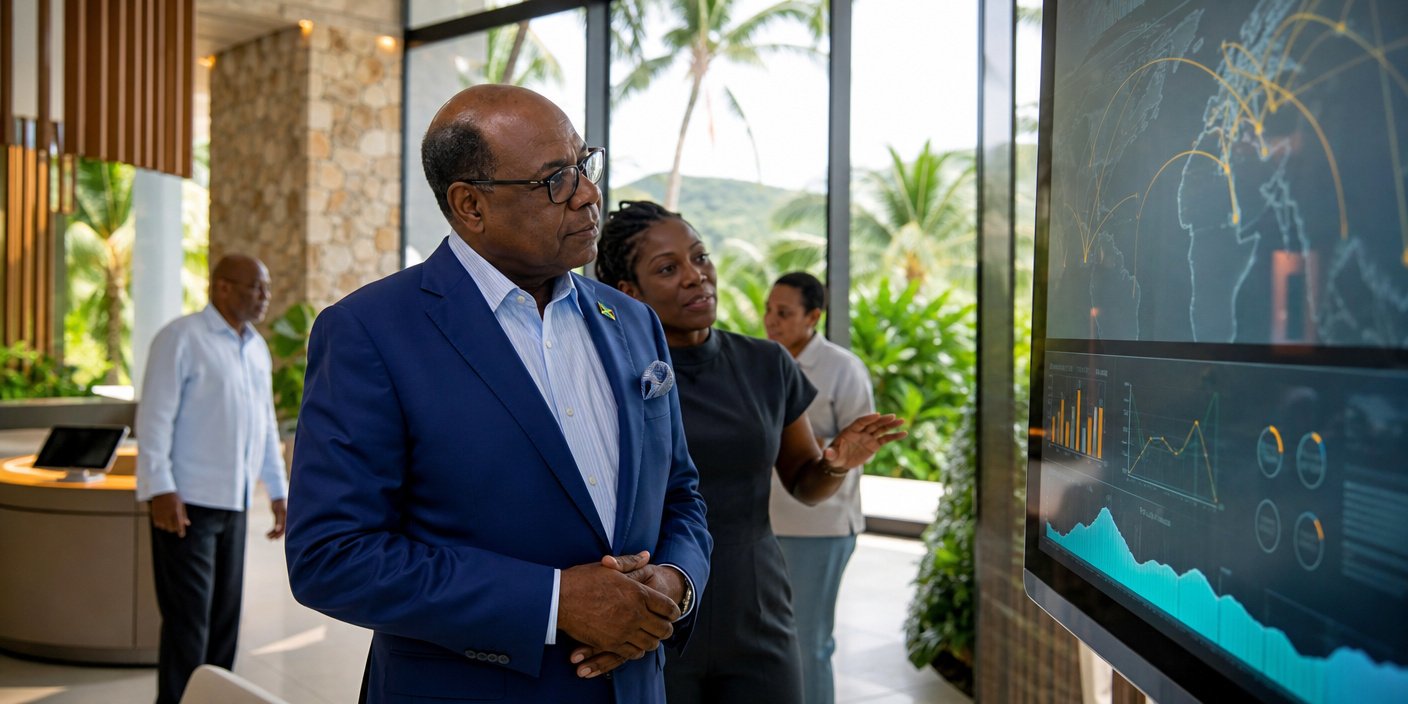
Tourism Awareness Week 2026, held from September 27 to October 3, marks a pivotal moment for Jamaica’s hospitality sector as the nation officially pivots toward the ‘Tourism 3.0’ agenda. Under the guidance of Minister of Tourism Edmund Bartlett, the Ministry is spearheading a digital transformation strategy that places Artificial Intelligence (AI) at the core of the visitor experience, marketing, and long-term industry resilience. This shift represents more than a technological upgrade; it is a structural redesign of how an island nation leverages data to compete in a hyper-connected global marketplace.
The Vision of Tourism 3.0
The conceptual framework of ‘Tourism 3.0’ signifies a departure from traditional, mass-market strategies toward a hyper-personalized, data-driven approach. While previous iterations of Jamaican tourism relied heavily on broad demographic targeting—focusing on general sun, sand, and sea packages—the 3.0 model utilizes AI to understand the granular desires of individual travelers.
Minister Edmund Bartlett has framed this transition as an existential necessity rather than a luxury. In an era where traveler sentiment can shift overnight due to global economic fluctuations or climate events, the ability to predict and react is paramount. Tourism 3.0 integrates real-time analytics to manage visitor flows, optimize destination marketing budgets by targeting high-value niche segments, and enhance the overall efficiency of local stakeholders, from boutique hoteliers to heritage site operators. By digitizing the tourism ecosystem, Jamaica aims to create a ‘frictionless’ travel experience where AI assistants handle itinerary planning, local logistics, and even predictive sustainability tracking.
AI as the Engine of Economic Resilience
A critical secondary angle of this initiative is economic stability. Tourism has long been the lifeblood of the Jamaican economy, yet it is notoriously sensitive to external shocks, such as the global pandemics or meteorological disturbances that often affect the Caribbean. The integration of AI allows for the creation of ‘predictive tourism models.’
By analyzing massive datasets—including flight patterns, search engine trends, and geopolitical climate stability—the Ministry of Tourism can forecast downturns or surges in arrivals with unprecedented accuracy. This data allows local businesses to pivot operations rapidly, adjust staffing levels, and manage inventory more sustainably. Furthermore, AI-driven platforms can help distribute tourism traffic more evenly across the island. Instead of concentrating all visitors in high-density hubs like Montego Bay, AI algorithms can nudge tourists toward emerging, lesser-known cultural destinations, thereby spreading the economic benefits more equitably across rural communities and reducing over-tourism in sensitive ecological zones.
Bridging the Gap: The Digital Infrastructure
Implementing Tourism 3.0 is not merely about launching a new app; it is about building the necessary digital infrastructure to support a tech-forward hospitality sector. This involves several technical and social undertakings. First, the Ministry is emphasizing the need for digital literacy among industry workers. A workforce that is fluent in managing digital visitor interfaces is crucial for the success of this strategy.
Secondly, the collaboration with the Global Tourism Resilience and Crisis Management Centre (GTRCMC) is central to this digital strategy. The GTRCMC acts as the analytical hub, utilizing AI to track potential crises before they manifest. Whether it is a looming storm or a shift in travel regulations, the GTRCMC’s AI tools provide actionable intelligence to the Ministry, allowing them to communicate effectively with stakeholders and tourists alike. This technical framework ensures that Jamaica remains a stable, reliable destination in the minds of international tour operators and investors, who prioritize predictability and safety above all else.
Future Predictions: The Personalized Traveler
Looking toward the future, the ‘Tourism 3.0’ agenda predicts that the traveler of the late 2020s will demand a level of personalization that was previously impossible. Imagine a visitor landing at Sangster International Airport whose smartphone already holds a curated itinerary based on their culinary preferences, music taste, and historical interests—all facilitated by AI-integrated travel partners.
This shift allows Jamaica to transition from being a passive destination to an interactive service provider. By capturing data points throughout the traveler’s journey, the Ministry can refine its marketing spend, ensuring that every dollar invested in international promotion yields a higher return on investment (ROI). The goal is to move the industry away from volume-based metrics (simply counting heads) toward value-based metrics (maximizing the economic impact of each individual visitor). As Tourism Awareness Week 2026 unfolds, the message is clear: Jamaica is betting on the silicon chip as much as the golden shore to secure its economic future.