
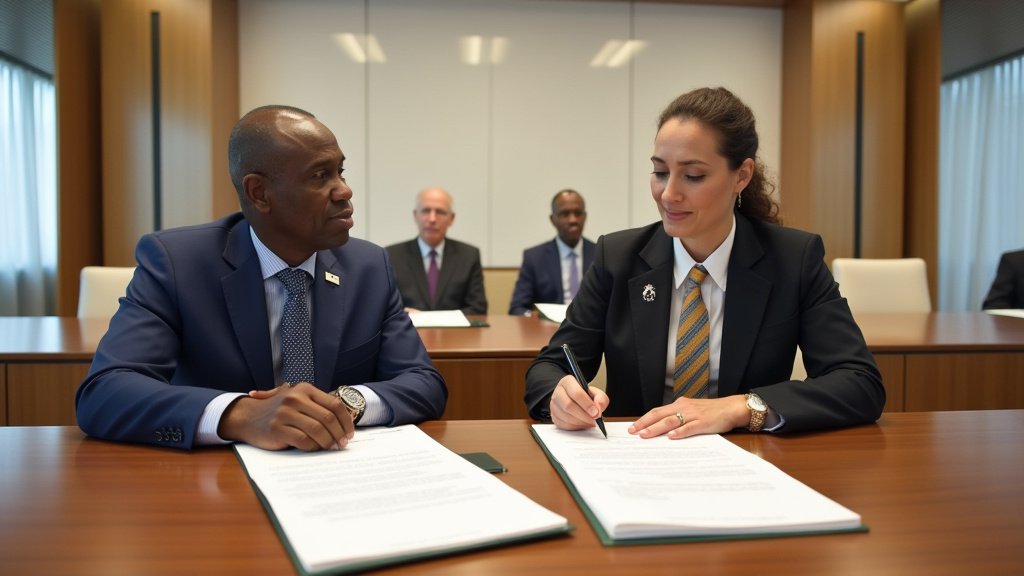
The Jamaican Government has officially cemented its place on the international sporting stage by signing a comprehensive seven-point agreement to co-host the 2031 FIFA Women’s World Cup. This pivotal development marks the conclusion of a high-stakes, rigorous vetting process that evaluated the nation’s capacity to meet FIFA’s stringent standards for hosting one of the world’s largest sporting events. As part of a unique four-nation consortium—alongside the United States, Mexico, and Costa Rica—Jamaica is now formally positioned to play a critical role in the tournament, pending final regulatory compliance and infrastructure milestones.
Key Highlights
- The Seven-Point Commitment: The Jamaican Government has ratified guarantees covering immigration, taxation, and national security, ensuring alignment with FIFA’s global tournament requirements.
- Four-Nation Coalition: Jamaica joins a strategic hosting group that includes the United States, Mexico, and Costa Rica, creating a diverse and regionally expansive tournament footprint.
- Regulatory Vetting: The agreement follows an intense period of evaluation, proving Jamaica’s institutional capacity to handle the logistics, safety, and legal demands of a mega-event.
- Economic Catalyst: Officials anticipate the move will drive significant foreign investment, tourism growth, and infrastructure upgrades, serving as a long-term economic engine for the region.
The Seven-Point Guarantee: Inside Jamaica’s Path to 2031
The road to hosting a FIFA Women’s World Cup is not merely a matter of footballing ambition; it is a complex administrative marathon. By signing the seven-point agreement, the Jamaican government has demonstrated a level of institutional maturity and collaborative capability that positions the nation as a serious contender in the world of mega-event hosting. The agreement, which covers critical areas such as immigration, taxation, and security, effectively serves as a legally binding commitment to ensure the tournament operates without domestic bureaucratic friction.
Understanding the Vetting Process
To understand the magnitude of this agreement, one must look at what FIFA demands from host nations. The ‘seven-point’ framework is a standardized, though highly rigorous, suite of guarantees that ensures athletes, officials, and fans can move freely and safely across borders. The immigration clause, for example, necessitates a streamlined visa policy for tournament participants, ensuring that squad members from every qualified nation can enter without undue delay. The taxation aspect is equally critical; host nations must often provide tax exemptions for FIFA-related entities, a significant economic trade-off that requires careful legislative navigation.
The security requirement, arguably the most scrutinized of the seven, demands a level of national coordination that touches everything from police intelligence to border control. Jamaica’s ability to meet these benchmarks underscores a shift in how the nation approaches major international partnerships, moving from a role of potential participant to that of a primary host and facilitator.
A Strategic Four-Nation Alliance
Hosting a World Cup is an expensive and logistically heavy undertaking. By joining forces with the United States, Mexico, and Costa Rica, Jamaica has adopted a ‘smart-hosting’ model. This coalition allows the burden of cost, infrastructure, and operational risk to be distributed across four distinct economies. For Jamaica, this is a masterful strategic move. It allows the country to showcase its culture and footballing pedigree on the world stage without the unsustainable financial burden of building a dozen new mega-stadiums from scratch.
Instead, the focus shifts to upgrading existing facilities and enhancing the island’s hospitality infrastructure. This is not just a sports story; it is an economic development strategy. The presence of the US and Mexico provides a massive, built-in audience and commercial base, while Costa Rica and Jamaica offer the unique Caribbean and Central American flavor that defines the host region’s identity.
Economic and Infrastructural Ripple Effects
While the 2031 tournament is years away, the impact of this signing will be felt immediately. Investors generally view government-guaranteed mega-events as a ‘green light’ for infrastructure development. We expect to see a surge in public-private partnerships focused on hotels, transportation networks, and stadium upgrades.
Moreover, the ‘Reggae Girlz’ (the Jamaican Women’s National Team) have already captured the world’s imagination with their grit and talent. Having a home-soil presence in 2031 will provide a massive platform for the continued development of women’s football within the country. It is an opportunity to institutionalize the sport, moving it from a passion project to a sustainable career path for thousands of young Jamaican girls.
The Future of Caribbean Football
This agreement is a bellwether for the future of CONCACAF (the Confederation of North, Central America and Caribbean Association Football). For too long, the Caribbean has struggled to influence the global agenda of footballing governance. By embedding themselves into the 2031 framework, Jamaican officials are ensuring that their seat at the table is permanent. The rigorous vetting process they just cleared proves that the island nation possesses the legislative and executive agility required for 21st-century event management. As the nation pivots toward 2031, the narrative will shift from ‘Can we do it?’ to ‘How big can we make it?’
FAQ: People Also Ask
1. What are the ‘seven points’ specifically?
While the full document contains sensitive diplomatic details, the seven points generally relate to: 1) Visa and immigration streamlining, 2) Tax exemptions for FIFA-affiliated activities, 3) Security and safety protocols, 4) Legal and arbitration compliance, 5) Transportation infrastructure availability, 6) Intellectual property protection, and 7) Labor and workforce rights during the event.
2. Why is Jamaica co-hosting instead of hosting alone?
Hosting a modern World Cup requires a massive number of high-capacity stadiums and significant hotel infrastructure. By co-hosting with the United States, Mexico, and Costa Rica, Jamaica can focus on its unique strengths while minimizing the financial risk associated with hosting such a large-scale global tournament alone.
3. How will this affect tourism in the region?
Analysts predict a significant boost in sports tourism. The tournament is expected to draw hundreds of thousands of international visitors, providing a long-term marketing tailwind for Jamaica’s tourism sector that will extend for years beyond the tournament itself.
4. Is this the first time Jamaica has participated in a Women’s World Cup?
No, the Jamaican women’s national team, the ‘Reggae Girlz,’ has previously qualified for the FIFA Women’s World Cup. This 2031 host status is a natural evolution of the team’s growing international prominence and the country’s rising status in women’s football.