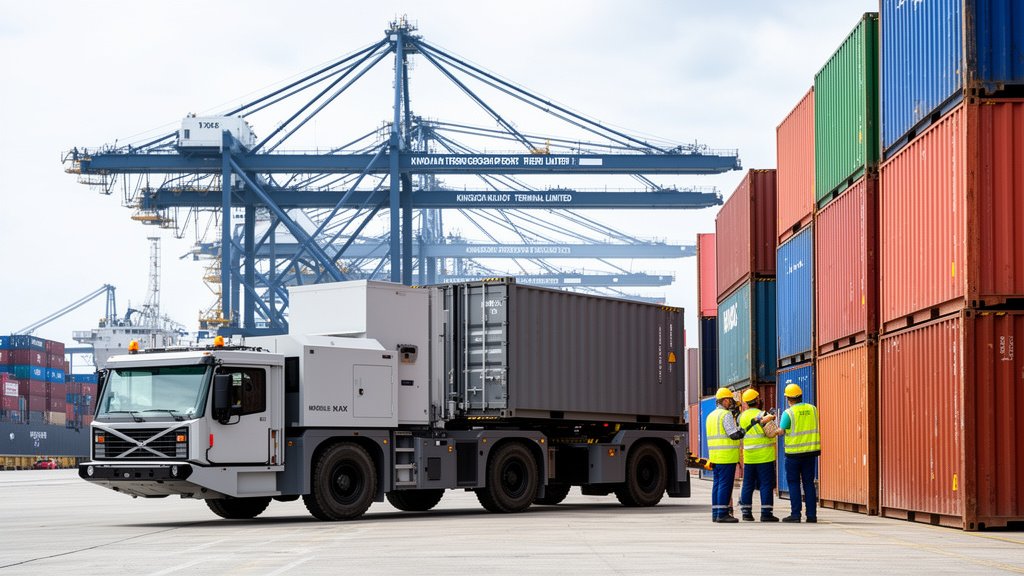
The Jamaica Customs Agency (JCA) has executed its most significant narcotics operation of the year, interdicting a massive shipment of approximately two tonnes of cocaine alongside a secondary quantity of ganja at the Kingston Freeport Terminal Limited (KFTL). This operation, which targeted high-volume commercial cargo, represents a critical success for the JCA’s Contraband Enforcement Team (CET) and underscores the increasing sophistication of drug smuggling routes operating through Caribbean transshipment hubs.
Key Highlights
- Record-Breaking Interdiction: This is officially the largest drug seizure conducted by the Jamaica Customs Agency in the calendar year 2024.
- Substantial Cargo Volume: The seizure includes a staggering two tonnes of cocaine, highlighting the immense scale of the intercepted illicit trade.
- Operational Precision: The success was achieved at the Kingston Freeport Terminal Limited, a primary node in global shipping logistics.
- Joint Force Success: The operation demonstrates the effectiveness of the JCA’s investigative and scanning protocols in coordination with specialized law enforcement units.
Securing the Port: The Anatomy of a Record-Breaking Bust
The Kingston Freeport Terminal Limited (KFTL) is not merely a commercial asset for Jamaica; it is a critical logistical artery for the entire Caribbean region. Because of its strategic positioning, it remains a prime target for transnational criminal organizations attempting to utilize legitimate shipping channels as conduits for contraband. The recent seizure of two tonnes of cocaine—supplemented by a quantity of ganja—serves as a stark reminder of the volatile nature of port security.
The Strategic Significance of the KFTL
For years, KFTL has been a focal point for international trade. However, its efficiency in moving massive volumes of goods also creates “noise” that criminal networks attempt to exploit. By blending illicit cargo with legitimate freight, syndicates hope to bypass manual inspections. The recent JCA intervention proves that the agency’s risk-profiling systems are keeping pace with these evolving tactics. The sheer volume of this seizure—two tonnes—suggests a high-level coordinated operation that was likely destined for major markets in North America or Europe, where the street value of such a quantity would reach astronomical figures.
Technological Barriers: Detecting the Undetectable
The Contraband Enforcement Team (CET), working under the umbrella of the Jamaica Customs Agency, has transitioned from relying solely on manual inspection to utilizing advanced technological tools. Modern port security relies heavily on non-intrusive inspection (NII) technologies, including high-energy X-ray scanning and radiation detection, to peer inside sealed containers without slowing down legitimate commerce.
This seizure was not a matter of chance but the result of intelligence-led targeting. The ability to identify a specific container among thousands of transiting units requires a complex integration of database analysis, manifest scrutiny, and physical surveillance. The JCA’s commitment to upgrading these scanning technologies is the primary reason why this seizure was successful, turning the port into an increasingly hostile environment for traffickers.
The Broader Impact on International Trade
Beyond the immediate tactical victory, this seizure carries significant economic and geopolitical implications. Jamaica’s reputation as a secure trading partner relies on the ability of the JCA to police its borders effectively. If ports like KFTL were perceived as “soft” targets, international shipping lines would face increased insurance premiums and stricter regulatory oversight, raising costs for Jamaican businesses. By maintaining rigorous enforcement, the JCA protects the integrity of Jamaica’s commercial brand, ensuring that the port remains a trusted gateway for global trade rather than a hub for illicit activity.
The Future of Caribbean Maritime Security
Looking ahead, this event underscores the need for continued investment in intelligence sharing. The JCA and the Jamaica Constabulary Force (JCF) Narcotics Division are increasingly reliant on transnational cooperation to track shipments from their point of origin. Criminal syndicates are moving away from traditional smaller boat smuggling and toward “containerized” shipping, which requires a more specialized, data-driven response. The JCA’s success here is a blueprint for future operations, signaling that as smugglers attempt to scale up their logistics, the defensive measures at Kingston’s ports are scaling up in tandem.
FAQ: People Also Ask
Q: How does the Jamaica Customs Agency identify contraband in such a busy port?
A: The JCA utilizes a combination of risk-profiling software, intelligence from international partners, and non-intrusive inspection (NII) technologies like industrial X-ray scanners to identify anomalies in cargo manifests and physical container contents.
Q: Why is the Kingston Freeport Terminal Limited often targeted for drug shipments?
A: Its status as a major transshipment hub means thousands of containers move through the facility daily. Traffickers attempt to exploit this high volume to hide illicit goods within legitimate commercial cargo, hoping it will go unnoticed amid the rapid turnover.
Q: What happens to the drugs after the seizure?
A: Following the documentation and evidentiary procedures by the JCA and the JCF Narcotics Division, the seized substances are securely stored under strict supervision and are eventually destroyed, usually through incineration, following the conclusion of judicial proceedings.
Q: Does this seizure impact shipping times for legitimate goods?
A: While the JCA employs high-tech scanning to minimize delays, large-scale seizures can occasionally lead to heightened alert levels and more rigorous inspections, which may cause minor, temporary fluctuations in processing times for specific cargo categories.