
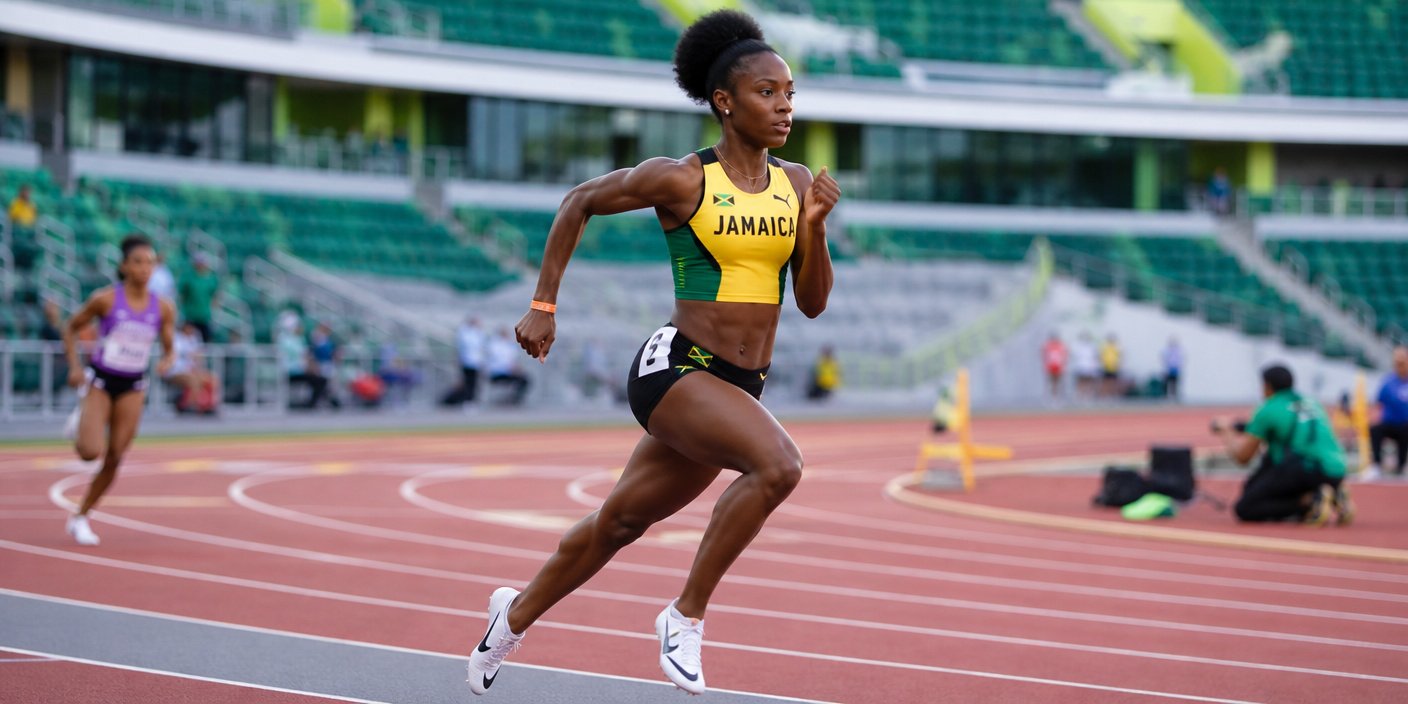
Shanoya Douglas delivered a masterclass in sprinting consistency, securing a silver medal in the women’s 200m final at the World Athletics Under-20 Championships with an impressive time of 22.68 seconds. Her performance, characterized by a powerful bend and a disciplined home straight, anchored a significant day for the Jamaican contingent, which also saw Tiana Marshall bolster the national medal tally with a hard-earned bronze in the 100m hurdles. These results underscore the relentless depth of the Jamaican athletics pipeline, proving that the next generation of track stars is well-prepared to maintain the nation’s storied dominance on the global stage.
Key Highlights
- Shanoya Douglas’s Podium Finish: Douglas secured the silver medal in the women’s 200m final, crossing the line in 22.68 seconds.
- Marshall’s Hurdles Success: Tiana Marshall added a bronze medal to Jamaica’s haul, excelling in the highly competitive 100m hurdles event.
- Global Talent Showcase: The World Athletics U20 Championships continues to serve as the premier proving ground for future Olympic and World Championship prospects.
- National Momentum: These performances contribute to a broader effort by the Jamaican team to solidify their standing in the international junior rankings.
A New Chapter for Jamaican Sprinting
The success of Shanoya Douglas and Tiana Marshall at the World Athletics U20 Championships is not merely a collection of personal achievements; it is a signal of the evolution of the Jamaican sprint program. Historically known for producing world-beaters in the 100m and 200m, the nation has increasingly focused on technical refinement and mental fortitude in its youth development systems. Douglas’s 22.68-second clocking demonstrates a level of maturity rarely seen at the U20 level, reflecting a sophisticated approach to race execution that bridges the gap between junior dominance and senior competition.
The Mechanics of the 200m Performance
Douglas’s race, which resulted in a silver medal, was a study in strategic pacing. In the 200m, the transition from the curve to the straightaway is often where races are won or lost. Douglas managed this transition with precision, maintaining her core stability while fighting through the fatigue of a high-pressure final. For athletics observers, the time of 22.68 is particularly significant; it places her in an elite cohort of junior athletes who are knocking on the door of international senior-level times. This specific performance suggests that her top-end speed is complemented by a high degree of aerobic efficiency, a trait essential for the transition to the 100m/200m senior double.
The Hurdles Challenge: Marshall’s Tactical Bronze
While the sprints often grab the headlines, Tiana Marshall’s bronze medal in the 100m hurdles is arguably an even more technical achievement. Hurdles require a unique blend of explosive power and rhythmic accuracy. Marshall’s performance in the final was marked by a clean start and efficient clearance over the ten barriers. The hurdles event is notoriously unforgiving—a single clipped hurdle can derail a podium finish. Marshall’s ability to navigate the race under extreme pressure demonstrates a mental toughness that is a hallmark of the top Jamaican athletes. By securing a bronze, she has marked herself as a rising threat in a discipline that demands consistency over raw velocity.
The Importance of the U20 Pathway
The World Athletics U20 Championships function as the crucible for the sport’s future. Unlike senior championships, where legacy and previous performance records carry weight, the U20 stage is defined by volatility and rapid progression. It is here that scouts, coaches, and scouts identify the talent that will define the sport for the next decade. For the Jamaican Athletics Administrative Association (JAAA), these results validate the investment in grassroots programs and regional track meets that feed into the national setup. The pressure of competing in Eugene—a city known as the ‘Track Capital of the World’ for its deep history in American athletics—adds a layer of prestige and difficulty that prepares these young athletes for the intensity of the Olympic Games.
Future Implications and Career Trajectory
What is next for Douglas and Marshall? The path from U20 medalist to senior champion is arduous. It requires not just physical growth, but the ability to navigate sponsorships, coaching changes, and the shift to the professional circuit. Historically, Jamaican athletes have shown a unique ability to sustain performance from the youth level to the pro ranks, largely due to a support system that emphasizes cultural identity and national pride. The next 18 to 24 months will be crucial for both athletes as they look to build on this success, potentially eyeing spots in future World Championship relays or individual qualifications. The 200m and 100m hurdles are highly competitive, and the jump to the senior level will require further gains in muscle power and technical perfection.
FAQ: People Also Ask
Q: What makes the World Athletics U20 Championships significant?
A: It is the most important global competition for athletes under the age of 20. It serves as a developmental milestone, giving young athletes international experience before they transition to the senior professional circuit, often serving as a predictor for future Olympic success.
Q: How does the Jamaican team consistently produce elite sprinters?
A: The success is driven by a combination of a vibrant, competitive domestic track culture, deep coaching knowledge, and a grassroots athletic program that starts at the primary school level. This creates a massive, talent-rich pipeline that is constantly feeding the elite national team.
Q: Are there other major events for these athletes?
A: Yes, following their U20 success, these athletes will typically target national trials, regional championships, and eventually qualify for events like the World Athletics Championships and the Olympic Games, provided they meet the stringent entry standards.
Q: What does a time of 22.68 seconds indicate in the 200m?
A: A time of 22.68 seconds in the 200m for an under-20 athlete is highly competitive on the world stage. It suggests the athlete possesses high-end speed and the potential to reach sub-22-second times in the future as they reach their physical peak.