
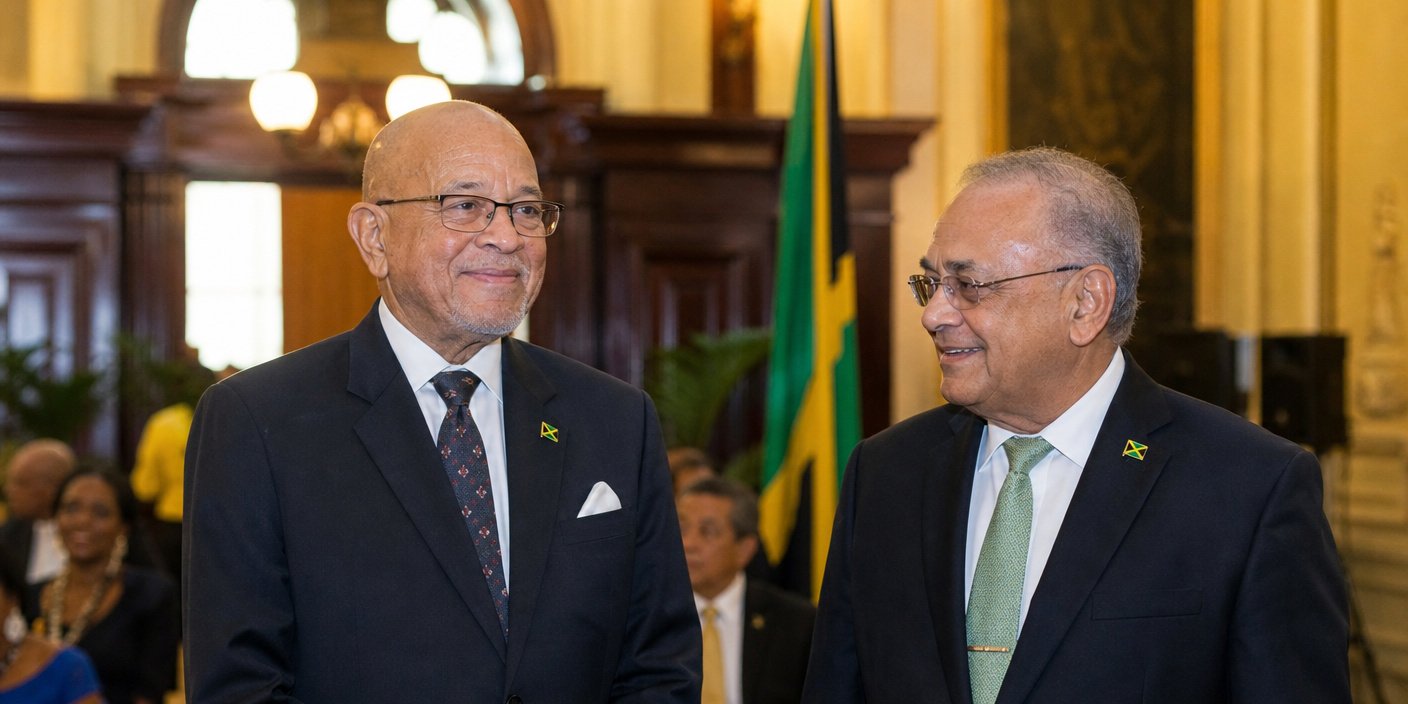
The Jamaican government has officially announced the list of 140 distinguished citizens selected to receive National Honours and Awards this year. This highly anticipated recognition underscores the island’s commitment to celebrating excellence, hard work, and patriotic service across a wide spectrum of the nation’s professional and social fabric. From the intricacies of the financial sector to the critical infrastructure of energy, the list reflects a diverse cohort of individuals whose contributions have been instrumental in driving Jamaica’s national development forward.
Key Highlights
- 140 Honourees: A total of 140 individuals have been selected for national recognition.
- Economic Leadership: Bank of Jamaica (BOJ) Governor Richard Byles is among the prominent figures being honoured for his stewardship of the nation’s monetary policy.
- Governmental Contribution: Minister of Science, Energy, Telecommunications and Transport, Daryl Vaz, has been named on the list for his service to the nation.
- Sectoral Breadth: The awards span diverse critical sectors, including finance, energy, education, and social development.
A Celebration of National Contribution and Legacy
The National Honours and Awards system serves as more than just a ceremony; it is a mechanism by which Jamaica acknowledges the vital intersection of public duty and private ingenuity. By recognizing figures like Bank of Jamaica Governor Richard Byles and Minister Daryl Vaz, the government is signalling the importance of institutional stability and policy execution in the face of ongoing regional economic challenges.
The Pillars of Financial Stability
Richard Byles, a central figure in Jamaica’s economic landscape, represents the calibre of leadership that the National Honours seek to highlight. His tenure at the Bank of Jamaica has been characterized by a focused approach to inflation targeting and the strengthening of the local currency, both of which are critical to the nation’s post-pandemic recovery strategy. His inclusion on this year’s list serves as a testament to the essential role of monetary policy leadership in ensuring long-term national viability.
Infrastructure and Public Service
Similarly, the recognition of Minister Daryl Vaz highlights the government’s emphasis on infrastructure and technological advancement. In an era where energy independence and telecommunications are the backbones of modern economies, recognizing those at the helm of these portfolios acknowledges the systemic impact of their work on the daily lives of Jamaicans. This acknowledgment extends beyond the individual, reflecting a broader appreciation for the public servants who navigate complex legislative and administrative terrains.
Breadth of Recognition: Beyond Politics
While the prominent names often capture the headlines, the strength of the 140-person list lies in its diversity. The awards are structured to permeate the lower rungs of public service as well—recognizing educators who have shaped generations, social workers who have rebuilt communities, and innovators in the energy sector who are pushing for a greener, more sustainable Jamaica. This stratification is intentional, ensuring that the ‘National Honours’ represent the collective effort of the entire society, rather than just the elite echelons of government or business.
Historical Context and Cultural Significance
Jamaica’s honours system is deeply rooted in the history of the island, drawing inspiration from the post-independence desire to define national identity through merit. Historically, these awards have served as a unifying cultural force. In a society that is often politically vibrant and occasionally polarized, the annual announcement of these awards provides a moment of national cohesion. It reminds the populace that regardless of political or economic station, service to the nation is the ultimate metric of citizenship.
Economic and Social Implications
The economic impact of such recognition should not be underestimated. When leaders in finance and energy are honoured, it signals to international investors and global stakeholders that Jamaica values and rewards structural competence. This helps in maintaining a stable business climate. Furthermore, the inclusion of educators and social activists serves as a social stabilizer, encouraging the younger generation to aspire to roles that contribute to the collective good rather than personal gain alone. It is a soft-power tool that enhances Jamaica’s reputation on the world stage, presenting a nation that takes pride in its human capital.
Looking Toward the Future
As Jamaica continues to navigate the complexities of the 21st century—ranging from climate change affecting the energy sector to the digital transformation of the financial system—the individuals chosen for these awards provide a blueprint for future leaders. The challenge moving forward will be to ensure that the criteria for these awards continue to evolve, reflecting the changing nature of work and social contribution. By casting a wide net, the government ensures that these honours remain relevant, aspirational, and deeply connected to the pulse of the Jamaican people.
FAQ: People Also Ask
1. What is the criteria for receiving a Jamaican National Honour?
The primary criteria are ‘outstanding contribution’ to the nation. This can manifest through exceptional professional service, social development, bravery, or significant contributions to the development of Jamaica’s culture and economy.
2. Who oversees the selection of the awardees?
Recipients are recommended to the Governor-General of Jamaica, who acts on the advice of the Prime Minister and an advisory committee designated for the Honours and Awards system.
3. Are these awards limited to politicians?
No. While politicians are often included due to their high-profile service, the list of 140 recipients includes a broad range of professionals from the private sector, education, energy, non-profit, and community development fields.
4. What is the significance of the timing of these awards?
These awards are traditionally linked to national celebrations and are intended to foster patriotism, acknowledging the work done to build the nation throughout the year.