
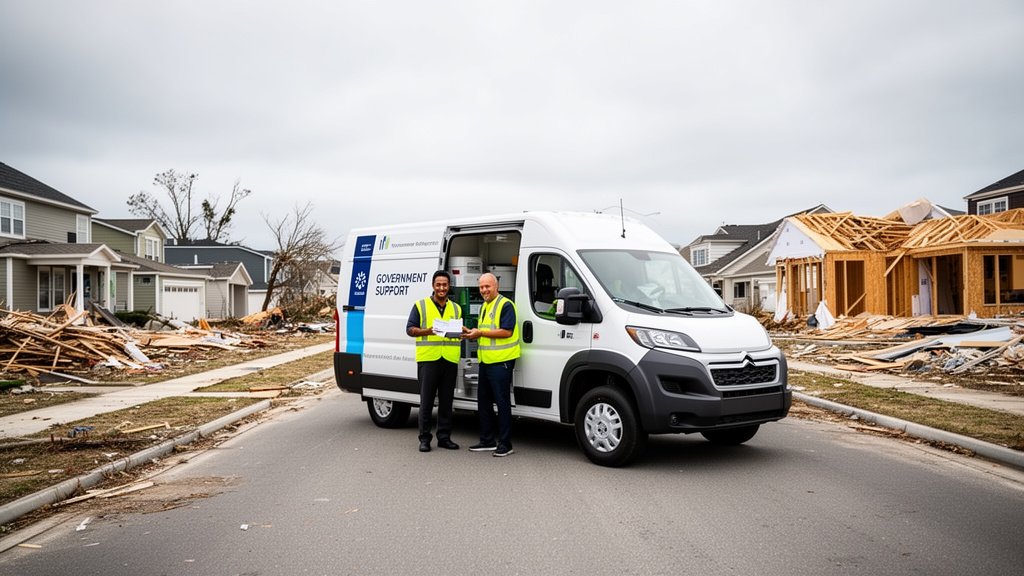
In a decisive move to restore order and public well-being, the National Security Council has formally unveiled a robust, multi-agency initiative designed to address the surging levels of psychological trauma and community instability following the catastrophic impact of Hurricane Melissa. As communities struggle to navigate the wreckage, the government’s pivot from emergency rescue to long-term psychosocial recovery marks a critical evolution in disaster management. This strategic intervention seeks to mitigate the secondary disaster of rising violence and mental health crises by embedding specialized support directly into the hardest-hit neighborhoods.
Key Highlights
- Targeted Deployment: Immediate activation of psychosocial support units and violence prevention task forces across all Hurricane Melissa-impacted regions.
- NSC Mandate: The National Security Council is spearheading the effort to stabilize volatile social environments and address the root causes of rising community instability.
- Holistic Recovery Model: The programme integrates emergency mental health triage with established law enforcement strategies to curb opportunistic violence.
- Collaborative Governance: Integration of local community leaders, health practitioners, and national security assets to ensure localized and effective service delivery.
- Data-Driven Intervention: Strategic focus on identified high-risk zones, utilizing real-time analytics to monitor community stressors.
Rebuilding Communities Through Psychological Fortitude
The immediate aftermath of a natural disaster like Hurricane Melissa is rarely limited to physical wreckage; it inevitably precipitates a wave of psychological erosion. When the infrastructure of a community collapses—homes are lost, power grids fail, and routine daily life is suspended—the resulting vacuum of security often breeds anxiety, helplessness, and, in severe cases, social instability. The National Security Council (NSC) has acknowledged that without structural intervention, these emotional stressors serve as a catalyst for increased violence and societal fracture. This new government programme is not merely a reactionary measure but a preemptive strike against the long-term erosion of the social contract in storm-affected areas.
The Intersection of Trauma and Stability
Psychological trauma acts as a force multiplier for community dysfunction. In regions where residents have experienced significant loss, the threshold for conflict lowers, and the prevalence of post-traumatic stress disorder (PTSD) rises. The government’s initiative recognizes that the path to economic revitalization is inextricably linked to mental health. By deploying specialized trauma teams, the NSC aims to provide immediate counseling to affected populations, thereby reducing the volatility that often leads to interpersonal violence or civil unrest. This approach views mental health not as a luxury, but as an essential element of national security, essential for maintaining civil order in the wake of disaster.
Operationalizing Safety and Support
The methodology behind this programme involves a two-pronged strategy: professional intervention and community-based violence prevention. The former involves the deployment of trained clinicians and social workers who operate alongside emergency management teams. These professionals are tasked with identifying early warning signs of communal distress, providing on-the-ground support to families, and ensuring that vulnerable individuals are connected to long-term resources.
Concurrently, the violence prevention arm of the programme seeks to bolster community policing and neighborhood watch initiatives. Rather than taking a purely punitive approach, the government aims to empower local stakeholders to identify sources of conflict before they escalate. By maintaining a visible and supportive government presence, the initiative aims to deter opportunistic crime, ensuring that the recovery process is not interrupted by criminal elements taking advantage of the chaotic landscape.
The Long-Term Vision for Resilience
Government officials have stressed that this is a sustained commitment. The current programme is designed to evolve as the specific needs of the Hurricane Melissa-impacted areas change. Initial phases prioritize acute trauma response and public safety stabilization, but long-term objectives include the permanent establishment of resource centers that will provide ongoing educational and vocational support. This transition from ’emergency response’ to ‘sustainable community growth’ is the ultimate litmus test for the government’s success. By investing in the mental and physical security of the populace now, the state aims to build a blueprint for resilience that can be applied to future natural disasters, thereby shortening the timeline of recovery and enhancing the collective stability of the nation.
FAQ: People Also Ask
Q: How will the government determine which areas receive priority for this support?
A: The National Security Council is utilizing high-resolution data sets, including damage assessments, localized crime statistics, and community-reported mental health incident reports to prioritize resource allocation, ensuring that the hardest-hit regions receive aid first.
Q: Is the psychosocial support provided by this programme free of charge?
A: Yes. All services deployed under this initiative, including mobile clinics, counseling sessions, and conflict resolution workshops, are government-funded and provided free of charge to residents in affected regions.
Q: How long is this initiative expected to run?
A: The programme is structured in phases. The immediate crisis response phase is set for six months, with a review period thereafter to determine if specific regions require transitioning into permanent or long-term support infrastructure.
Q: Will local law enforcement be trained in mental health awareness?
A: As part of the violence prevention strategy, security personnel involved in this initiative are receiving specialized training in de-escalation techniques and trauma-informed interactions to ensure they can effectively navigate situations involving distressed individuals.