
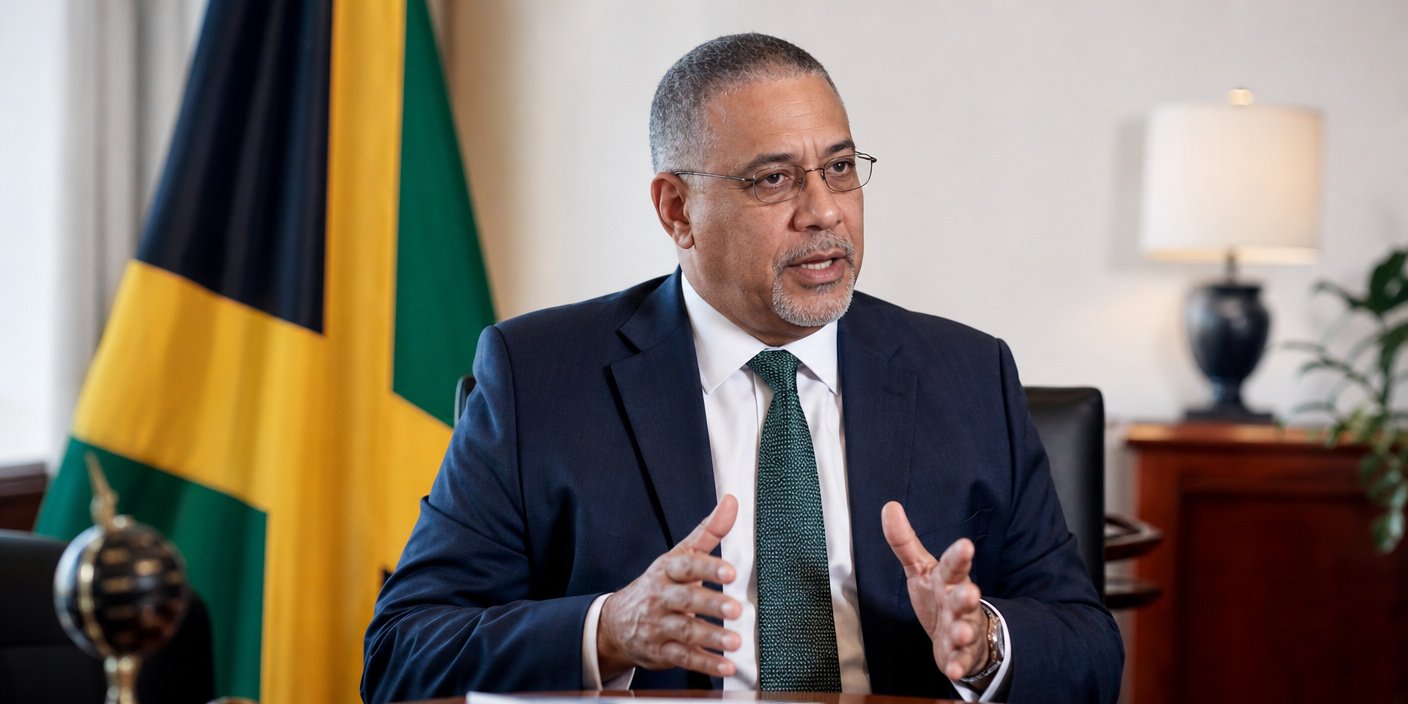
Industry, Investment and Commerce Minister Senator Aubyn Hill has announced a decisive $1 billion financial initiative aimed at providing immediate liquidity to micro-businesses struggling in the wake of Hurricane Melissa. With the rollout scheduled for implementation this week, this strategic injection represents the government’s commitment to stabilizing the local economy and preventing permanent operational closures among the nation’s most vulnerable economic entities.
Key Highlights
- $1 Billion Emergency Fund: A specialized financial injection specifically designated for micro and small enterprises (MSEs) affected by the recent weather event.
- Immediate Rollout: Implementation and access to the relief package are set to commence within the current week to mitigate ongoing disruptions.
- Targeted Support: The initiative focuses on restoring liquidity to businesses that provide essential services and goods to local communities.
- Strategic Oversight: Managed by the Ministry of Industry, Investment and Commerce under the direction of Senator Aubyn Hill to ensure transparent and efficient distribution.
Securing the Economic Backbone: The $1B Resilience Strategy
The announcement by Senator Aubyn Hill marks a critical pivot in the government’s disaster recovery posture. By prioritizing micro-businesses, the Ministry of Industry, Investment and Commerce is effectively targeting the economic segments that are most susceptible to supply chain fractures and immediate liquidity crises. Following the passage of Hurricane Melissa, many local enterprises found their operations halted due to infrastructure damage, utility interruptions, and a sudden drop in consumer purchasing power. This $1 billion initiative serves as a crucial bridge, allowing business owners to cover payroll, restock inventory, and repair critical equipment.
The Mechanics of the Relief Package
Unlike broad-spectrum economic stimuli, this fund is tailored for precision. According to official reports, the disbursement process is designed to bypass traditional bureaucratic bottlenecks that often delay the flow of aid to smaller entities. The Ministry aims to utilize existing financial infrastructure to channel these funds directly into the hands of qualified micro-entrepreneurs. This approach not only provides the necessary financial cushion but also reaffirms the government’s role in acting as a lender of last resort during periods of severe climate volatility.
Protecting the Micro-Enterprise Sector
Micro and small enterprises are the lifeblood of the Jamaican economy, accounting for a substantial portion of employment. When these businesses falter, the ripple effect is felt throughout local communities, leading to job insecurity and a reduction in the availability of essential goods. Senator Hill’s intervention acknowledges that the collapse of these entities would lead to long-term economic scarring. By injecting $1 billion into this sector, the government is essentially underwriting the survival of the local marketplace, ensuring that community-level commerce can resume as quickly as possible.
Strengthening Supply Chain Resilience
Beyond the immediate cash injection, this initiative highlights the need for systemic supply chain resilience. Hurricane Melissa exposed the vulnerabilities inherent in centralized distribution models. Future-proofing the micro-sector will require more than just emergency cash; it will necessitate a fundamental shift toward localized resource management and better insurance coverage for small businesses. The current relief package provides the breathing room required for business owners to transition from survival mode to strategic long-term planning, allowing them to rebuild with more robust infrastructure that can withstand future climate events.
Long-Term Climate Adaptation and Economic Policy
Looking ahead, this $1 billion allocation serves as a template for how the government plans to address the intersection of climate change and economic development. As storm events become more frequent and severe, the Ministry of Industry, Investment and Commerce is expected to integrate these emergency protocols into standard operating procedures. This signals a future where business relief is not merely a reactive measure but a proactive, institutionalized aspect of national economic policy. The goal is to create an environment where businesses, regardless of their size, possess the financial flexibility to withstand shocks, thereby fostering a more stable and resilient national economy.
FAQ: People Also Ask
1. How do businesses qualify for the $1 billion hurricane relief fund?
While specific criteria are detailed by the Ministry, the fund is generally targeted at micro and small enterprises (MSEs) that can demonstrate operational disruption due to Hurricane Melissa. Business owners should consult the official Ministry of Industry, Investment and Commerce guidelines for the necessary documentation and application procedures.
2. When exactly will the funds be available?
Senator Aubyn Hill has confirmed that the initiative is scheduled for implementation this week. Businesses are encouraged to stay tuned to official government channels for real-time updates regarding application portal openings or distribution centers.
3. Is this a grant or a loan initiative?
Government relief packages following disasters often incorporate a mix of low-interest loans and, in certain circumstances, grants. The specific financial vehicle for this $1 billion initiative will be clarified in the final policy documentation provided by the Ministry of Industry, Investment and Commerce.
4. What types of businesses are prioritized under this scheme?
Priority is typically given to businesses that provide essential services, such as food retail, local manufacturing, and service-based entities that are integral to community recovery. The intent is to maintain supply chains that are critical to the daily lives of residents in the affected areas.