
Economic Sentiment and the ‘Wait-and-See’ Approach
Recent economic indicators provide a sobering glimpse into the financial reality facing Jamaican households in the second quarter of 2026. According to the latest reports, the Consumer Confidence Index—a critical barometer of economic health and individual purchasing power—has registered a 2.3% decline. While this figure indicates a marginal stabilization when compared to the steeper 5.7% contraction observed in the first quarter, the lingering negative sentiment continues to act as a significant brake on discretionary spending.
For many Jamaicans, the decision to delay major financial commitments—specifically real estate acquisitions and international travel—is not merely a preference but a necessity driven by the rising cost of living. As inflation outpaces wage growth, the average consumer is prioritizing essential expenditures over long-term capital investments, a trend that is sending ripples of concern through the real estate and tourism sectors.
Key Highlights
- Consumer Confidence Shift: The Consumer Confidence Index fell by 2.3% in Q2 2026, signaling a deceleration in the rate of decline compared to the first quarter.
- First Quarter Benchmark: In Q1 2026, the nation experienced a sharper 5.7% decline, highlighting that while the economy remains in a downturn, the velocity of the decline has moderated.
- Major Purchase Deferral: Real estate developers and travel agencies are reporting an uptick in cancelled inquiries and deferred contracts as households tighten budgets.
- Inflationary Pressure: The rising cost of living remains the primary driver behind the cautious financial behavior exhibited by middle-income earners.
Navigating the Financial Headwinds of 2026
The Housing Market in Limbo
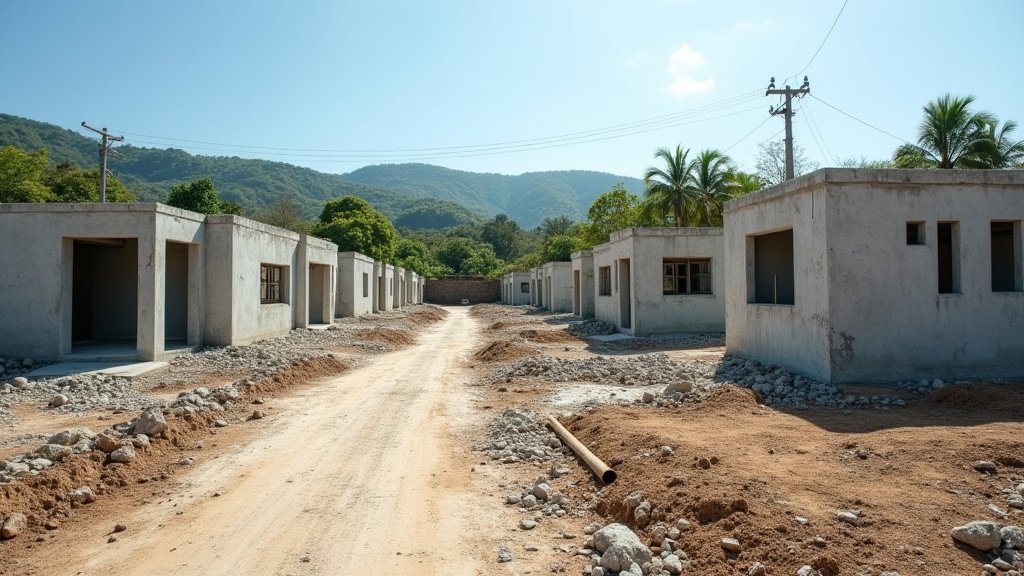
The most significant casualty of this economic contraction is the residential housing market. For years, the dream of homeownership has been a cornerstone of the Jamaican middle-class aspiration. However, the confluence of high interest rates, rising construction material costs, and the general inflationary climate has created a ‘perfect storm’ for prospective buyers.
Analysts tracking the sector note that potential homebuyers are adopting a ‘wait-and-see’ approach. Unlike previous economic cycles where buyers might stretch their financing to close a deal, current conditions are forcing a total pause. Many financial institutions have noted a decreased volume in mortgage applications, directly correlating with the findings in the Consumer Confidence Index. The issue is exacerbated by the supply side; even if developers are pushing through with projects, the absorption rate has slowed considerably. Investors are now wary of the long-term rental yield potential, fearing that the market may remain stagnant as long as consumer purchasing power remains depressed.
The Impact on Discretionary Spending and Vacations
Beyond real estate, the tourism and leisure sectors are beginning to feel the heat of the cost-of-living crisis. Historically, the Jamaican economy benefits from robust domestic and international tourism expenditure. However, the Q2 2026 data suggests that ‘discretionary spending’ is being reallocated toward basic necessities—food, utilities, and transportation.
This trend is particularly visible in the travel industry. Travel agents have reported a noticeable decline in bookings for summer vacations, with many families opting for ‘staycations’ or choosing to skip leisure travel entirely. This shift creates a cyclical economic problem: as individuals spend less, businesses in the service and hospitality sectors see lower revenues, which can lead to wage freezes or job insecurity, further dampening consumer confidence. It is a feedback loop that the government and private sector are currently struggling to break.
Understanding the Consumer Confidence Index (CCI)
The Consumer Confidence Index is more than just a number; it is a psychological indicator of the nation’s economic pulse. When the index drops, it signifies that households are less optimistic about their future income and the general state of the economy. A 2.3% decline in Q2, while ‘better’ than the 5.7% drop in Q1, should not be mistaken for economic growth. Rather, it indicates a slowing rate of degradation.
Entities such as the Statistical Institute of Jamaica (STATIN) and the Planning Institute of Jamaica (PIOJ) closely monitor these fluctuations. They recognize that a sustained period of low confidence can lead to a ‘recessionary mindset,’ where even those with the financial capacity to spend choose to hoard cash due to uncertainty about future inflation and job stability. Breaking this cycle requires a mix of targeted monetary policy and clear communication from central fiscal authorities regarding long-term economic stability and inflation mitigation strategies.
The Path Forward: Can Stability Return?
As we look toward the remainder of 2026, the critical question remains: when will the ‘wait-and-see’ phase end? Economic experts suggest that until there is a tangible reduction in the cost of basic goods and a stabilization in interest rates, it is unlikely that the consumer confidence trend will reverse into positive territory. The focus for many Jamaicans is currently on survival and debt management rather than expansion or luxury.
For policymakers, the challenge is two-fold: they must manage inflation while simultaneously restoring enough confidence in the market to encourage lending and borrowing. Without a shift in the current trajectory, the real estate and tourism sectors may face a prolonged period of suppressed demand, forcing a potential restructuring of how these industries approach their target demographics.
FAQ: People Also Ask
What is the primary reason for the decline in consumer confidence in Jamaica?
The primary driver is the rising cost of living, which has outpaced wage growth, forcing households to prioritize essential spending on food, fuel, and utilities over major capital investments like homes or vacations.
How does a 2.3% decline compare to previous economic quarters?
While a 2.3% decline in the second quarter of 2026 is still negative, it represents an improvement over the 5.7% decline recorded in the first quarter of 2026, indicating that while the economy is still contracting, the speed of that contraction has slowed.
Why are Jamaicans delaying home purchases?
Prospective buyers are delaying home purchases due to a combination of high interest rates, elevated construction costs, and economic uncertainty, leading them to preserve cash rather than committing to long-term mortgage obligations.
Are there any signs of economic recovery on the horizon?
The moderation from a 5.7% decline to a 2.3% decline suggests the economy is attempting to stabilize; however, significant recovery will likely require further intervention regarding inflation and cost-of-living mitigation strategies.
Which sectors are most impacted by this shift in consumer behavior?
The real estate, construction, and tourism/hospitality sectors are the most immediately impacted, as these rely heavily on discretionary spending and consumer willingness to take on debt for luxury or lifestyle investments.