
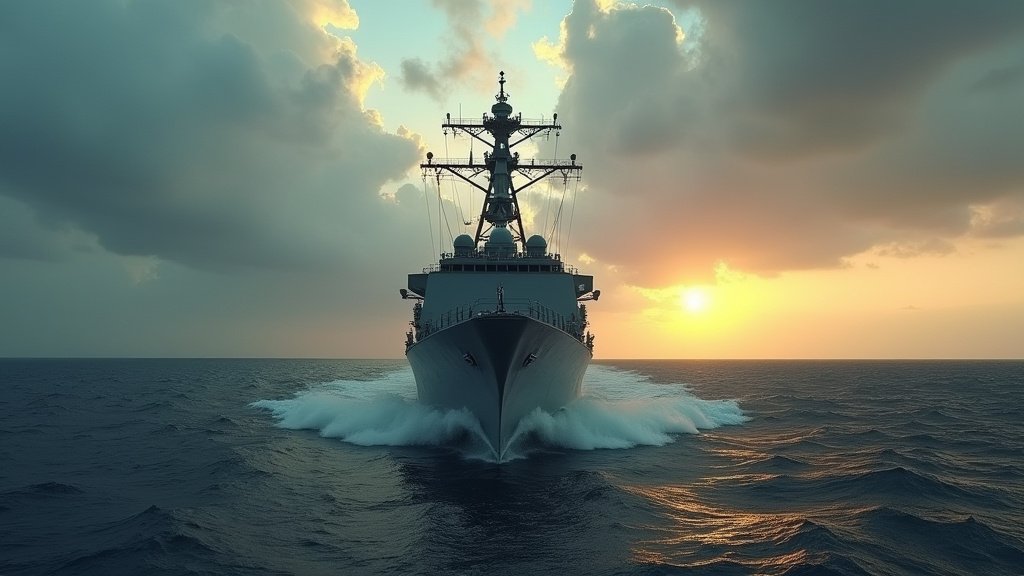
The U.S. Navy conducted a routine escort of commercial vessels through the strategic Strait of Hormuz on Tuesday, a maneuver that underscores the heightened maritime security concerns in the region due to escalating tensions with Iran. The operation involved guided-missile destroyers and other naval assets, ensuring the safe passage of international shipping traffic through one of the world’s most critical oil chokepoints. This show of force aims to deter potential Iranian aggression and reassure global partners of commitment to freedom of navigation.
Key Highlights:
- U.S. Navy warships escorted commercial vessels through the Strait of Hormuz.
- The operation highlighted increased maritime security concerns in the Persian Gulf.
- Tensions between the U.S. and Iran have been escalating, impacting regional stability.
- The U.S. emphasized its commitment to freedom of navigation in international waters.
Navigating Strategic Waters: The Strait of Hormuz in Focus
The Strait of Hormuz, a narrow waterway connecting the Persian Gulf to the Gulf of Oman, is a vital transit point for global oil supplies, with approximately 30% of the world’s seaborne oil passing through it daily. The U.S. Navy’s presence and escort missions in this area are a regular feature, designed to maintain stability and deter any actions that could disrupt international maritime trade. However, recent geopolitical developments have intensified the focus on this region, necessitating a more pronounced and visible posture from the U.S. military.
Escalating Regional Tensions
The escort operation comes at a time of significant geopolitical friction between the United States and Iran. These tensions have manifested in various forms, including naval confrontations, cyberattacks, and diplomatic standoffs, all contributing to an increasingly volatile environment in the Persian Gulf. Iran has previously threatened to close the strait or disrupt shipping, a move that would have severe repercussions for the global economy. The U.S. Navy’s patrols and escorts are a direct response to these threats, serving as a credible deterrent.
The Role of Naval Power
The deployment of guided-missile destroyers, such as those from the U.S. Navy’s Fifth Fleet operating in the region, demonstrates American naval capability and resolve. These vessels are equipped with advanced radar, missile systems, and defensive capabilities, making them highly effective in protecting shipping lanes and responding to threats. The escort mission is not merely a symbolic gesture; it involves active monitoring and preparedness for any hostile action. The presence of these warships reassures allies and commercial shipping companies, fostering confidence in the security of this critical maritime artery.
International Maritime Law and Freedom of Navigation
The U.S. Navy’s actions are grounded in the principle of freedom of navigation, a cornerstone of international maritime law. The Strait of Hormuz is an international strait, and all nations have the right to transit through it. The U.S. is committed to upholding this right, especially in the face of actions that could impede or threaten lawful maritime commerce. This commitment extends beyond U.S. interests, aiming to ensure the global flow of goods and energy resources, which is vital for international economic stability.
Economic Ramifications of Disruption
Any disruption in the Strait of Hormuz would inevitably lead to a surge in global oil prices, impacting economies worldwide. Energy markets are particularly sensitive to developments in the Persian Gulf, and even the threat of disruption can cause significant volatility. The U.S. Navy’s proactive approach aims to prevent such economic fallout by maintaining a secure environment for tankers and other vessels. The cost of increased naval presence is considered a necessary investment to safeguard global economic interests.
Historical Context of U.S.-Iran Naval Encounters
The U.S. Navy has a long history of operating in the Persian Gulf and engaging with Iranian forces. Past incidents, ranging from minor confrontations to more serious maritime incidents, have underscored the delicate balance of power in the region. The current operational tempo and the visible escort missions reflect a strategic decision to project strength and deter potential miscalculations by Iran. Understanding this historical context is crucial to grasping the significance of current naval operations.
FAQ: People Also Ask
What is the Strait of Hormuz and why is it important?
The Strait of Hormuz is a narrow waterway between the Persian Gulf and the Gulf of Oman. It is a critical chokepoint for international oil transport, with a significant percentage of the world’s oil supply passing through it daily. Its strategic importance lies in its role in global energy security.
Why are U.S. Navy ships escorting vessels through the Strait of Hormuz?
The U.S. Navy escorts vessels through the Strait of Hormuz to ensure the safety and security of international shipping, particularly in light of rising tensions with Iran. These operations are part of efforts to deter potential threats and maintain freedom of navigation.
What are the current tensions between the U.S. and Iran regarding maritime activity?
Current tensions involve Iran’s past threats to disrupt shipping in the Strait of Hormuz and its assertive naval activities. The U.S. responds with increased naval presence, patrols, and escort missions to counter these actions and ensure open sea lanes.
What is freedom of navigation?
Freedom of navigation is a principle of international law that allows ships of all nations to travel through international waters, including straits and territorial seas, without interference. The U.S. Navy actively promotes and defends this principle globally.
What would be the economic impact if the Strait of Hormuz were closed?
A closure or significant disruption of the Strait of Hormuz would lead to a sharp increase in global oil prices, potentially causing a worldwide economic recession. It would severely impact energy markets and supply chains.