
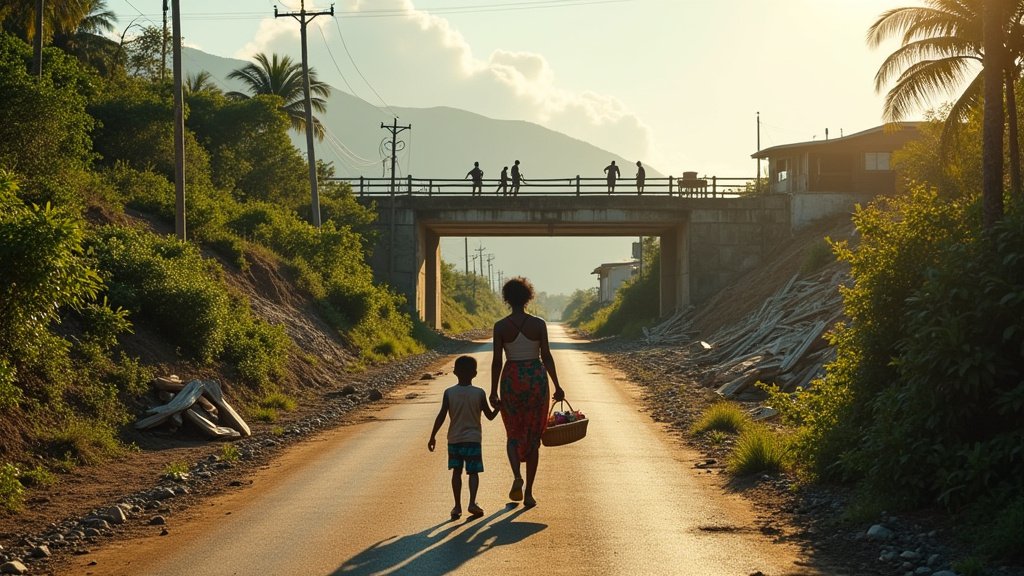
Nearly a year after Hurricane Melissa devastated parts of Jamaica, the island nation is continuing its arduous journey of recovery and rebuilding. The category 4 storm, which made landfall in September of last year, left a trail of destruction, impacting infrastructure, homes, and livelihoods across several parishes. Despite the immense challenges, a spirit of resilience and community-driven efforts are at the forefront of the rebuilding process.
Key Highlights:
- Significant progress has been made in restoring essential services and rebuilding damaged infrastructure.
- Community-led initiatives are playing a crucial role in supporting affected families and small businesses.
- International aid and local government efforts are ongoing to ensure sustainable recovery.
- Focus remains on building back stronger and more resilient to future climate events.
The Road to Recovery: Jamaica’s Post-Melissa Reconstruction
The aftermath of Hurricane Melissa presented Jamaica with one of its most significant natural disaster challenges in recent history. The storm’s fierce winds and torrential rains caused widespread flooding, landslides, and severe damage to critical infrastructure, including roads, bridges, power lines, and communication networks. Coastal communities bore the brunt of the storm surge, leading to the displacement of thousands of residents.
Infrastructure Rehabilitation
The immediate priority for the Jamaican government and its partners was the restoration of essential services. Significant efforts have been directed towards repairing and rebuilding damaged roads and bridges to facilitate the movement of relief supplies and personnel, as well as to reconnect isolated communities. Power restoration was a complex undertaking, involving extensive work by the Jamaica Public Service Company (JPS) to repair downed lines and damaged substations. Telecommunication services, vital for both personal communication and business operations, have also seen substantial recovery.
Community Resilience and Support
Beyond governmental and international aid, the spirit of Jamaican resilience has been most evident in the widespread community-led recovery efforts. Local organizations, faith-based groups, and citizen volunteers have mobilized to provide immediate relief, including food, water, and temporary shelter to those most affected. Small business owners, many of whom lost their livelihoods, are receiving support through micro-financing programs and business development assistance aimed at helping them restart and rebuild. These grassroots efforts highlight the strong social fabric of the island.
International and Local Partnerships
The rebuilding process has been bolstered by a combination of international aid, loans from financial institutions, and dedicated government funding. Agencies such as the United Nations Development Programme (UNDP) and various non-governmental organizations have provided technical expertise and financial assistance for reconstruction and disaster risk reduction. The Jamaican government has also committed significant resources, focusing on not only rebuilding but also on implementing measures to enhance the nation’s resilience against future extreme weather events, aligning with global climate action goals. The National Works Agency (NWA) has been instrumental in overseeing many of the public infrastructure repair projects.
Building Back Stronger
A critical component of Jamaica’s recovery strategy involves ‘building back better’ – not just restoring what was lost, but improving resilience. This includes strengthening building codes, investing in early warning systems, and developing more robust disaster management plans. Coastal protection measures and improved land-use planning are also being considered to mitigate the impact of future storms and sea-level rise. The lessons learned from Hurricane Melissa are being integrated into national development strategies to ensure a more secure future for the island.
FAQ: People Also Ask
What was the immediate impact of Hurricane Melissa on Jamaica?
Hurricane Melissa caused widespread destruction, including severe damage to infrastructure such as roads, bridges, power lines, and homes. It also led to significant displacement of residents due to flooding and storm surge.
What has been done to restore essential services?
Efforts have focused on repairing power grids, telecommunication networks, and crucial transportation routes to reconnect communities and facilitate relief operations.
How are local communities contributing to the recovery?
Community groups, NGOs, and volunteers are actively providing aid, organizing relief efforts, and supporting small businesses to help those affected by the hurricane.
What is being done to prevent future damage?
Jamaica is focusing on ‘building back better’ by strengthening infrastructure, improving building codes, enhancing early warning systems, and developing more comprehensive disaster management plans to increase resilience against future storms.
What role has international aid played in the rebuilding?
International organizations and foreign governments have provided financial assistance, technical expertise, and resources to support Jamaica’s reconstruction efforts and long-term disaster risk reduction strategies.