
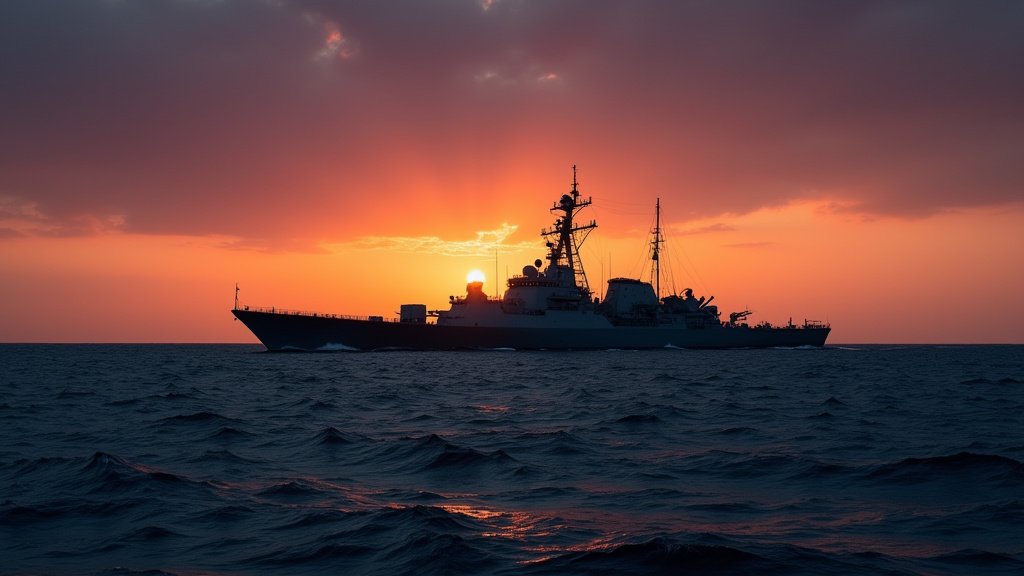
France has dispatched its flagship aircraft carrier, the Charles de Gaulle, and its accompanying strike group into the Red Sea, a significant move amid escalating regional tensions and concerns over maritime security. The deployment signals a heightened French commitment to regional stability and freedom of navigation in one of the world’s most critical maritime choke points.
Key Highlights:
- France’s Charles de Gaulle carrier strike group has entered the Red Sea.
- The deployment is a response to rising tensions in the Middle East.
- It aims to ensure freedom of navigation and maritime security.
- The move underscores France’s commitment to regional stability.
Naval Power Projection in a Volatile Region
The strategic deployment of the Charles de Gaulle carrier strike group into the Red Sea marks a significant escalation of France’s naval presence and a clear signal of its commitment to regional security. As global powers grapple with increasing instability in the Middle East, particularly concerning maritime routes and potential disruptions to global trade, France’s assertive posture underscores its role as a key security partner in the Indo-Pacific and beyond. The carrier strike group, a formidable military asset, is designed for power projection, offering a range of capabilities including air superiority, anti-submarine warfare, and logistical support. Its presence in the Red Sea is intended to deter aggression, reassure allies, and protect vital shipping lanes that are crucial for global commerce. The decision to move the strike group comes at a time of heightened geopolitical sensitivity, with ongoing concerns about the Strait of Hormuz and broader regional stability. France’s proactive stance in deploying such a significant naval force highlights its strategic interests in maintaining open sea lanes and preventing any unilateral actions that could threaten international maritime law and security.
Strategic Significance of the Red Sea
The Red Sea, a vital waterway connecting the Indian Ocean to the Mediterranean Sea via the Suez Canal, is one of the world’s most critical maritime arteries. It facilitates a substantial portion of global trade, making its security paramount. The presence of a French carrier strike group in this sensitive area serves multiple purposes: enhancing surveillance, providing rapid response capabilities, and demonstrating solidarity with regional partners. The French Navy’s operations in this theatre are complex, involving coordinated efforts with international naval forces to monitor maritime traffic, counter potential threats, and ensure the unimpeded flow of goods and energy resources. The Charles de Gaulle, as France’s sole aircraft carrier, is a symbol of its defense capabilities and its willingness to engage in high-stakes international security operations. Its deployment is not merely a show of force but a calculated strategic maneuver aimed at reinforcing deterrence and de-escalating potential conflicts.
Geopolitical Context and French Foreign Policy
France has consistently advocated for a robust European security architecture and has increasingly sought to assert its strategic autonomy on the global stage. The deployment of the Charles de Gaulle carrier strike group aligns with this broader foreign policy objective. By taking a leading role in ensuring maritime security in a critical region, France positions itself as an indispensable ally and a key player in multinational security initiatives. This move also comes at a time when several nations are re-evaluating their engagement in the region, making France’s proactive stance even more notable. The French Ministry of Armed Forces has emphasized the defensive nature of this deployment, stressing that it aims to contribute to collective security and uphold international law. The carrier strike group’s mission will likely involve a combination of naval patrols, joint exercises with allied forces, and intelligence gathering to monitor regional developments.
The Charles de Gaulle Carrier Strike Group
The Charles de Gaulle (R 91) is the flagship of the French Navy and the only nuclear-powered aircraft carrier outside the United States Navy. It operates with a complement of Rafale M fighter jets, E-2D Hawkeye airborne early warning aircraft, and various support helicopters. The carrier strike group typically includes escort vessels such as frigates, destroyers, and a nuclear attack submarine, providing a comprehensive defensive screen and offensive capabilities. The operational readiness and advanced technology of this group make it a potent instrument of statecraft, capable of responding to a wide spectrum of maritime security challenges. The group’s deployment to the Red Sea will allow it to conduct extended operations, project air power, and enhance its interoperability with other naval forces operating in the region, thereby strengthening the collective maritime security posture.
FAQ: People Also Ask
What is the primary mission of the Charles de Gaulle carrier strike group in the Red Sea?
The primary mission is to ensure freedom of navigation and maritime security in the Red Sea, deter potential aggression, and contribute to regional stability amidst heightened geopolitical tensions. The group will conduct patrols and potentially engage in joint exercises with allied naval forces.
How does this deployment impact global shipping and trade?
By reinforcing maritime security and deterring potential threats to shipping lanes, the deployment aims to ensure the continued and safe passage of commercial vessels, thereby supporting the global supply chain and economic stability. The Red Sea is a critical route for international trade, and its security is vital for the global economy.
What are the current tensions in the region that prompted this deployment?
The deployment comes in response to a general increase in regional tensions, including concerns over the Strait of Hormuz and potential threats to maritime infrastructure and commercial shipping. While not directly tied to a single incident, it reflects a broader strategy to maintain stability in a volatile area.
What kind of assets are part of the Charles de Gaulle strike group?
The strike group typically includes the Charles de Gaulle aircraft carrier, fighter jets (like the Rafale M), early warning aircraft, helicopters, and escort vessels such as frigates, destroyers, and submarines. This composition provides comprehensive air, surface, and subsurface defense capabilities.
What is France’s broader strategic interest in the Red Sea region?
France has strategic interests in maintaining stability in areas crucial for international trade and security, particularly in the Indo-Pacific and Mediterranean regions. The Red Sea is a vital link in global maritime trade, and France’s involvement underscores its commitment to international law and its role as a security partner.