
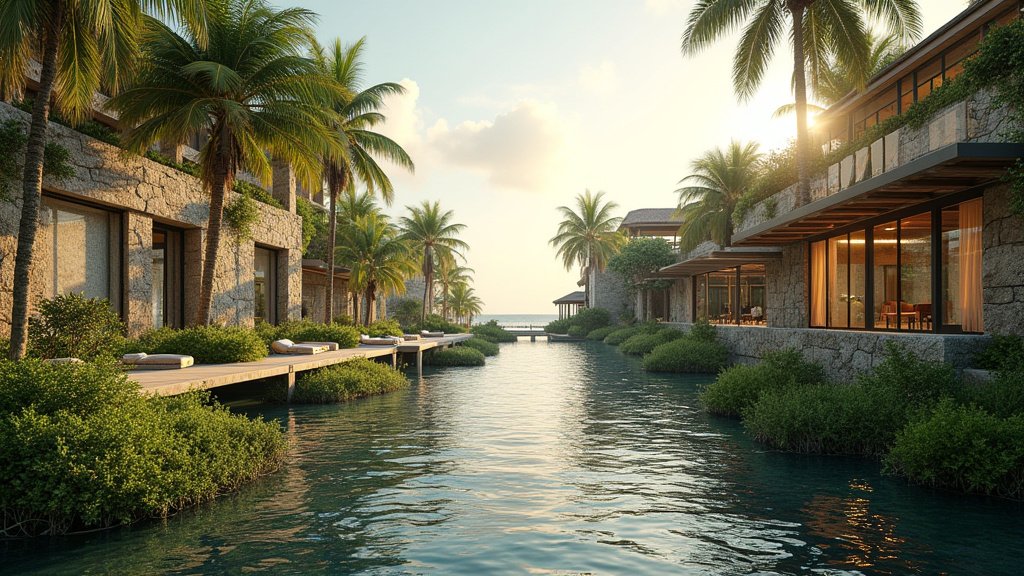
As the Jamaican tourism and hospitality sector navigates its recovery from the aftermath of Hurricane Melissa, Minister of Tourism Edmund Bartlett has unveiled a transformative roadmap. Centered on the operational capabilities of the National Reconstruction and Resilience Authority (NaRRA), this strategic initiative aims to fundamentally reimagine the South Coast tourism corridor. Bartlett’s vision, outlined during a recent tour of St. Elizabeth, positions NaRRA not merely as a recovery tool, but as the legislative and institutional engine required to transition the island’s tourism product into what he terms ‘Tourism 3.0.’ By integrating infrastructure development with a localized economic approach, the government aims to create a robust, resilient, and globally competitive destination model.
Key Highlights
- NaRRA’s Strategic Role: The National Reconstruction and Resilience Authority bill serves as the legal and institutional framework for the total reimagining of the South Coast.
- Tourism 3.0 Implementation: Minister Bartlett has signaled that the sector is shifting toward a new era of ‘Tourism 3.0,’ with a major roadmap release slated for June 30.
- The Black River Transformation: A core focus involves repositioning the historic town of Black River as a modernized tourism hub, mirroring the successful ‘South Beach’ model.
- Economic Integration: The strategy emphasizes localized growth, aiming to integrate coastal communities into the tourism value chain more effectively through improved connectivity and infrastructure.
Unlocking the Future: The NaRRA-Driven Tourism Reset
The announcement of the NaRRA framework marks a definitive pivot for Jamaica’s tourism policy. For years, the South Coast has been recognized for its raw, untapped potential, often overshadowed by the more established resort corridors in the north. However, according to Minister Bartlett, the devastation brought by Hurricane Melissa has provided the impetus to ‘build back better’ rather than simply restoring what was lost. The legislative weight of NaRRA is intended to streamline the bureaucracy that often stifles large-scale development, providing a fast-track mechanism for investments that align with the government’s vision of resilience and sustainability.
Legislative Hurdles and Structural Vision
While the NaRRA bill has faced scrutiny in Parliament—with some opposition figures calling for amendments to its current drafting—the government remains steadfast in its utility. The authority is designed to act as an ‘implementation machine,’ capable of bypassing traditional red tape to expedite the repair and expansion of critical infrastructure. This includes not only roads and utility grids but also the digital and maritime infrastructure necessary to support modern tourism. By aligning public policy with the needs of private investors, NaRRA seeks to create a predictable environment that encourages long-term capital flows into the South Coast.
The ‘South Beach Effect’ and Urban Renewal
Central to the government’s strategy is the revitalization of Black River. Bartlett explicitly referenced the ‘South Beach’ model—a reference to the iconic Florida district known for its blend of historic architecture, vibrant nightlife, and beach-side commerce. The plan for Black River involves a deliberate shift of tourism activity inland, allowing the coastline to be reclaimed for pristine, high-end, or eco-sensitive tourism developments. This spatial reorganization is intended to create a unique visitor experience that balances heritage with modern luxury, distinguishing the South Coast from other Caribbean destinations that rely solely on all-inclusive resort models. This is not just urban renewal; it is the creation of a ‘lifestyle’ destination that offers deeper engagement with local culture and geography.
Defining ‘Tourism 3.0’
Perhaps the most ambitious aspect of the announcement is the impending launch of ‘Tourism 3.0.’ While specific details remain under wraps until the sectoral debate, the terminology suggests a departure from traditional volume-based tourism toward a value-based model. This model likely incorporates the lessons learned from the post-pandemic landscape and the more recent climate-related disruptions. It suggests a future where technology, human capital, and environmental resilience converge. For Bartlett, this means leveraging data analytics to personalize the visitor experience, implementing green energy solutions to lower operational costs for hoteliers, and, most importantly, ensuring that the benefits of tourism are distributed more equitably among the local population. The focus is on quality, resilience, and sustainable growth, rather than just raw arrival numbers.
Economic Resilience and Local Linkages
The initiative also highlights the government’s broader ‘Local First’ policy. The infrastructure projects facilitated by NaRRA are designed to create a pipeline for local farmers, artisans, and transport operators. By improving the connectivity between inland agricultural zones and the coastal tourism hubs, the government hopes to reduce the industry’s reliance on imports, effectively keeping more of the tourism dollar within the Jamaican economy. This represents a mature approach to tourism development—one that views the industry not in isolation, but as an engine for holistic national development.
FAQ: People Also Ask
Q: What is the primary purpose of the National Reconstruction and Resilience Authority (NaRRA)?
A: NaRRA acts as a specialized governmental body designed to manage post-disaster recovery and long-term resilience projects. Its role in tourism is to provide the legal and structural framework to expedite infrastructure development, ensuring that rebuilding efforts are not just restorative but transformative.
Q: What does ‘Tourism 3.0’ entail for the average traveler?
A: While official details are expected on June 30, ‘Tourism 3.0’ focuses on a value-driven experience. It implies a shift toward smarter, tech-enabled, and highly sustainable tourism that offers deeper, more personalized cultural and environmental engagements, moving beyond the traditional sun-and-sand model.
Q: How will the ‘South Beach’ effect change Black River?
A: The strategy aims to transform Black River into a modern tourism hub by repurposing coastal areas for high-end tourism while moving residential or industrial elements slightly inland. This creates a dedicated ‘lifestyle’ zone that leverages historic charm and modern amenities, similar to the economic and aesthetic model seen in Miami’s South Beach.