
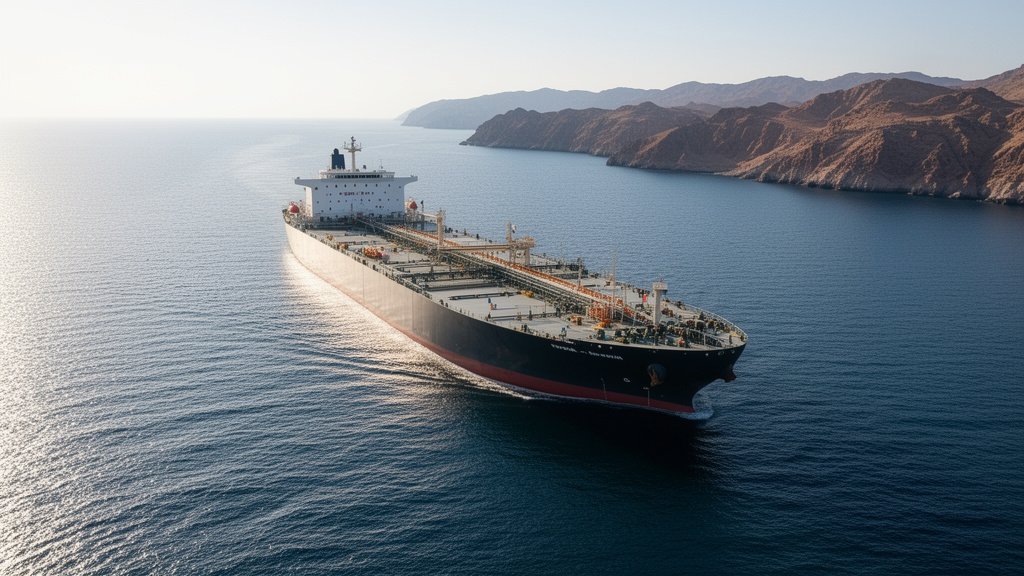
The global energy market is reeling following a violent escalation in the Strait of Hormuz, where the Panama-flagged commercial vessel MT On Peace was struck off the coast of Oman. The attack has left 11 Indian crew members injured and served as a stark, kinetic reminder of the vulnerability of global trade chokepoints. As geopolitical tensions between the United States and Iran continue to intensify, the ripple effects are being felt immediately at the petrol pumps in the United Kingdom, where diesel prices have surged to a record-breaking nearly £2 per liter. This incident is not merely a regional maritime skirmish; it is a critical disruption to the delicate supply chains that power the global economy.
Key Highlights
- Incident Details: The Panama-flagged vessel MT On Peace was attacked off the coast of Oman, resulting in 11 injuries to its Indian crew.
- Economic Impact: The resulting market anxiety has driven UK diesel prices to a record high of approximately £2 per liter.
- Geopolitical Context: The attack underscores the volatility surrounding the Strait of Hormuz, a key artery for global oil transport and a focal point of US-Iran diplomatic and military friction.
- Supply Chain Vulnerability: Global insurance markets are expected to respond with increased premiums, further compounding the rising cost of fuel and consumer goods.
The Strategic Chokepoint: Why the Strait of Hormuz Matters
The Strait of Hormuz is arguably the most important maritime artery in the world. As the narrow passage connecting the Persian Gulf to the Gulf of Oman and the Arabian Sea, it serves as the vital transit point for approximately one-fifth of the world’s oil consumption. When the MT On Peace was targeted, it was not merely an attack on a single ship; it was a psychological and economic strike against the entire framework of international energy security.
Historically, the Strait has served as a barometer for Middle Eastern stability. Whenever diplomatic relations between Tehran and Washington reach a breaking point, shipping traffic through this narrow passage becomes a primary theater for posturing and asymmetric warfare. The specific targeting of a commercial vessel under a foreign flag indicates a shift in tactics, moving beyond simple surveillance and into direct, kinetic engagement. For shipping conglomerates and global insurers, this creates an environment of extreme uncertainty. Every time a vessel is struck, the risk assessment for all other ships in the region skyrockets, leading to immediate spikes in insurance premiums that are ultimately passed down to the consumer at the pump.
The Human Cost and Immediate Aftermath
While the financial charts track the price of Brent crude and diesel futures, the human reality of the attack on the MT On Peace is the most concerning aspect. With 11 Indian crew members injured, the incident has drawn immediate international condemnation and calls for heightened security measures. The safety of merchant mariners is already under extreme duress due to ongoing maritime conflicts, and this latest incident raises questions about the efficacy of current protective naval escorts. The crew, serving on a Panama-flagged vessel, represents the multinational nature of the shipping industry—a web of ownership, registry, and labor that becomes tangled when geopolitics turn violent. The diplomatic fallout will likely involve inquiries from the Indian government regarding the safety of its citizens, adding another layer of complexity to an already strained international landscape.
The UK Diesel Crisis: From the Strait to the Pump
Why does a maritime incident in the Middle East cause such a dramatic spike in UK fuel prices? The connection lies in the fragility of global supply chains and the speculative nature of commodities markets. When the security of the Strait of Hormuz is compromised, oil traders immediately price in the risk of supply disruptions. Even if the actual flow of oil is not physically stopped for an extended period, the fear of stoppage is enough to drive prices upward.
In the UK, the diesel market is particularly sensitive to these fluctuations. Unlike petrol, diesel is the primary fuel for commercial transportation, logistics, and heavy industry. Consequently, a price hike of this magnitude—reaching nearly £2 per liter—acts as a regressive tax on the entire economy. It increases the cost of shipping food, electronics, and construction materials, effectively fueling domestic inflation. For the average UK motorist, the shock at the pump is only the visible surface of a deeper economic disruption. If prices remain at this record high, the Bank of England and government policymakers may face renewed pressure to intervene, though there are few levers available to influence global oil prices directly.
Secondary Angles: Energy Security and Future Risks
To understand the long-term implications, we must look beyond the immediate shock. First, there is the issue of Energy Security. Nations relying heavily on imported fossil fuels are now faced with the reality that their energy independence is non-existent as long as they remain dependent on a single, volatile chokepoint. This may accelerate domestic pushes for alternative energy sources and increased storage capacities in the UK and Europe.
Second, the Insurance Industry is set for a massive re-evaluation. Maritime insurance for vessels transiting the Persian Gulf is already expensive. If attacks like that on the MT On Peace become a frequent occurrence, we could see a ‘war zone’ surcharge that remains in place for years, creating a permanent increase in the cost of imported goods.
Third, the Diplomatic Response is the wildcard. If the US and Iran continue to use the Strait as a proxy battlefield, international maritime bodies may demand a more robust, multi-nation naval presence to ‘police’ the waters. This, however, brings the risk of accidental escalation, where a minor misunderstanding between naval vessels could lead to a broader, unintended conflict. The situation is a powder keg, and for the global economy, the fuse is currently burning at the rate of £2 per liter.
FAQ: People Also Ask
Q: Why does the attack on a single ship affect UK diesel prices so dramatically?
A: Markets react to the risk of supply disruption. If the Strait of Hormuz is perceived as unsafe, traders buy oil futures as a hedge, driving up global crude prices. Diesel, being a refined product highly sensitive to supply chain costs, reflects these price increases almost immediately.
Q: Who are the crew members of the MT On Peace?
A: The MT On Peace, a Panama-flagged vessel, had an Indian crew. The incident resulted in 11 injuries, drawing attention to the safety of international merchant sailors working in conflict-prone maritime zones.
Q: Is this the first time diesel prices have hit £2 in the UK?
A: Prices have fluctuated significantly in recent years due to various geopolitical and post-pandemic supply chain issues. Reaching the £2 per liter threshold signifies a return to peak crisis pricing, driven specifically by this latest maritime escalation.
Q: What is the significance of the Strait of Hormuz?
A: The Strait is a vital maritime chokepoint through which approximately 20% of the world’s oil supply passes daily. It is the primary route for exports from major producers like Saudi Arabia, Iraq, and the UAE, making it the most critical logistical point in the global oil market.