
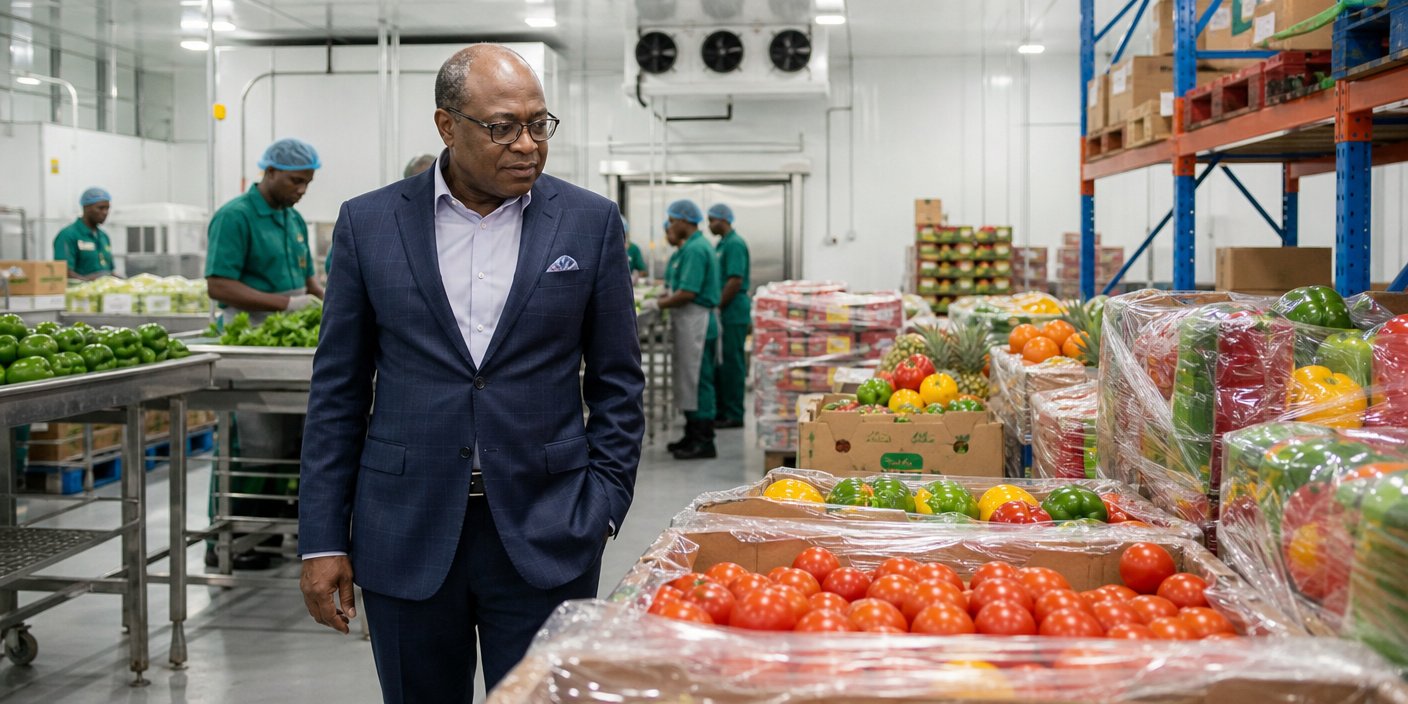
Tourism Minister Edmund Bartlett is spearheading a transformative strategy to establish a Caribbean Tourism Agricultural Logistics Centre, aimed at curbing the multi-million dollar ‘leakage’ of foreign exchange by connecting local farmers directly to the resort supply chain. By centralizing the distribution and quality control of fresh produce, the initiative seeks to replace imported agricultural goods with local alternatives, fostering regional economic resilience and ensuring that the financial benefits of the tourism sector remain within the local economy.
Key Highlights
- Addressing Economic Leakage: The strategy targets the phenomenon of ‘leakage,’ where foreign exchange earned from tourism flows out of the country to pay for imported food, rather than remaining in the local economy.
- The Logistics Solution: The proposed Caribbean Tourism Agricultural Logistics Centre is designed to solve the critical issue of ‘last-mile’ delivery, ensuring that local farmers can meet the volume, consistency, and quality standards required by international resort brands.
- Supply Chain Integration: The project moves beyond mere rhetoric by creating a formal infrastructure that integrates the agricultural value chain directly with the hotel and restaurant procurement sectors.
- Regional Food Security: This initiative aligns with broader CARICOM goals to reduce regional food imports, leveraging the stable demand of the tourism market to scale local agricultural output.
The Logistics Revolution: Securing the Regional Food Chain
For decades, the Caribbean has struggled with a paradox: while the region boasts vibrant agricultural sectors and world-class tourism industries, the two rarely function as a cohesive economic unit. Tourism Minister Edmund Bartlett has identified this disconnect as one of the most significant impediments to long-term economic growth. The proposal for a Caribbean Tourism Agricultural Logistics Centre is more than just a supply-chain initiative; it is a fundamental shift in how the region manages its foreign exchange and economic sovereignty.
Closing the Multi-Million Dollar Leakage
‘Leakage’ is an economic term that haunts tourism-dependent economies. In the Caribbean context, it refers to the percentage of revenue generated by the tourism sector that flows out of the country to pay for imports—primarily food, beverages, and energy—rather than staying within the local circulation. When a resort orders food, if the local supply chain cannot guarantee year-round delivery, consistent quality, or necessary volume, the resort naturally turns to international imports.
Minister Bartlett’s proposal recognizes that this leakage acts as a silent drain on the national treasury. By establishing a logistics centre, the government aims to create a ‘clearing house’ for local produce. This facility would serve as a hub where agricultural output is aggregated, standardized, packaged to hotel specifications, and distributed. This structure allows smaller farmers, who might not individually meet the rigorous procurement standards of a major resort chain, to collectively fulfill large-scale, consistent contracts.
The Supply Chain Bottleneck
Critics often ask why this integration hasn’t happened sooner. The reality is that the hospitality industry functions on a ‘Just-in-Time’ (JIT) inventory model. Resort procurement managers require absolute predictability. They need to know that 500 kilograms of high-grade tomatoes will arrive on Tuesday morning, rain or shine, and that every unit will meet specific size and ripeness criteria.
Historically, the local agricultural sector has been fragmented, making it difficult for individual farmers to guarantee this level of consistency. The proposed Logistics Centre addresses this bottleneck by professionalizing the middle layer of the supply chain. By introducing standardized grading, cold-chain storage, and sophisticated distribution logistics, the centre effectively lowers the risk for hotel procurement departments. It turns the agricultural sector from a ‘variable’ into a ‘stable asset’ for the hospitality industry.
Integrating the Farmer into the Resort Economy
This initiative fundamentally redefines the role of the farmer in the tourism value chain. Currently, many farmers view the tourism sector as an occasional customer at best, and a distant, disconnected entity at worst. By creating a direct pipeline through the logistics hub, the government is effectively creating a captive market for local agricultural products.
This integration has profound secondary benefits. It encourages farmers to diversify their crops based on tourism demand rather than traditional subsistence cycles. It incentivizes the adoption of modern agricultural technology, such as protected agriculture (greenhouses), which can mitigate the impact of climate change on production consistency. Furthermore, it creates a feedback loop: as resorts share their specific product needs with the logistics hub, the hub can communicate these demands back to the farmers, allowing for a demand-driven approach to planting and harvest planning.
Regional Food Security and Global Competitiveness
While the primary focus of Minister Bartlett’s proposal is the tourism-agriculture nexus, the potential impact on regional food security is equally significant. The Caribbean relies heavily on food imports, a vulnerability that was painfully exposed during the global supply chain disruptions of the COVID-19 pandemic. By stimulating agricultural production through the reliable demand of the tourism sector, the Caribbean can build economies of scale that make local produce more price-competitive against imports.
If the region can successfully substitute a significant percentage of its food import bill with local produce, it will not only retain foreign exchange but also reduce the carbon footprint associated with long-distance food transportation. This is a critical selling point for the modern eco-conscious traveler—an angle that can be leveraged in marketing the destination globally.
The Economic Multiplier Effect
Ultimately, the goal of the Caribbean Tourism Agricultural Logistics Centre is to maximize the ‘multiplier effect.’ When a tourist spends money at a resort, that money should circulate through the local economy as many times as possible before leaving. Currently, that multiplier is dampened by the immediate outflow of cash to pay for imported food.
By keeping the food budget within the country, the government ensures that money is spent on local wages, local capital improvements, and local community development. This initiative represents a sophisticated approach to economic management: using one of the region’s most powerful industries (tourism) as a catalyst to solve one of its most persistent structural weaknesses (agricultural fragmentation). As Bartlett moves to plug the ‘tourism import leak,’ he is not just improving supply chain logistics; he is strengthening the foundational economic fabric of the region.