
The volatility of global shipping markets acts as a silent tax on island nations, and for an import-dependent economy like Jamaica, this tax is becoming increasingly unsustainable. As global supply chains face a dual pressure—the demand for rapid decarbonization and the unpredictable swings in freight rates—the Caribbean finds itself on the front lines of an economic volatility it did not create. Bertrand Smith, Director General of the Maritime Authority of Jamaica (MAJ), has consistently underscored the precarious position of island states, where the cost of moving goods directly correlates to the cost of living for every citizen.
Key Highlights
- Import Dependency: Jamaica imports over 80% of its goods, making the domestic economy hyper-sensitive to “Bunker Adjustment Factors” and global freight rate fluctuations.
- The Decarbonization Burden: New International Maritime Organization (IMO) regulations aimed at reducing carbon emissions, while necessary, are imposing significant transition costs on aging shipping fleets, which are being passed directly to consumers.
- Transshipment Risks: As a major Caribbean transshipment hub, Jamaica faces the twin challenge of modernizing port infrastructure to attract green shipping while absorbing the inflationary pressures of global logistical disruptions.
The Anatomy of Island Economic Vulnerability
For island nations like Jamaica, the maritime industry is not merely a sector of the economy; it is the infrastructure of existence. Unlike large continental economies with robust road and rail networks capable of absorbing logistical shocks, Jamaica relies almost exclusively on maritime connectivity. When the cost of shipping rises, it does not just affect industrial profit margins; it creates an immediate, vertical spike in the price of food, medicine, construction materials, and fuel.
The Decarbonization Dilemma
The maritime industry is currently undergoing its most significant transformation since the transition from sail to steam. Under the International Maritime Organization’s (IMO) 2023 strategy, shipping lines are under intense pressure to reach net-zero greenhouse gas emissions by 2050. While the environmental imperative is undeniable, the implementation comes with a hefty price tag. Shipping companies are investing billions in new, dual-fuel vessels and retrofitting existing fleets to comply with the Carbon Intensity Indicator (CII) regulations.
Bertrand Smith of the MAJ has highlighted that these capital expenditures are not being absorbed by shipping lines but are instead passed down the supply chain through increased freight rates and surcharge fees. For a nation like Jamaica, this means “green” shipping is currently synonymous with “expensive” shipping. The challenge for Jamaican policymakers is to advocate for global maritime standards that do not disproportionately penalize small island developing states (SIDS) that have negligible carbon footprints yet bear the brunt of the transition costs.
Freight Volatility and Inflationary Pressure
The post-pandemic shipping market has been characterized by “bullwhip” effects—wild swings in demand and supply that create bottlenecks. When global shipping costs spike, the “pass-through” effect to the Jamaican consumer is near-instantaneous. Because most goods are imported in containers, any rise in the cost of a Twenty-foot Equivalent Unit (TEU) is reflected in the shelf price of items within weeks.
Furthermore, the complexity of global alliances means that Jamaica’s shipping costs are often dictated by decisions made in hubs thousands of miles away. If a major carrier decides to reroute vessels to optimize fuel efficiency or avoid geopolitical “hotspots,” Jamaica may face reduced frequency of service, which drives up warehousing costs and delays the replenishment of essential inventory.
Strategic Port Resilience
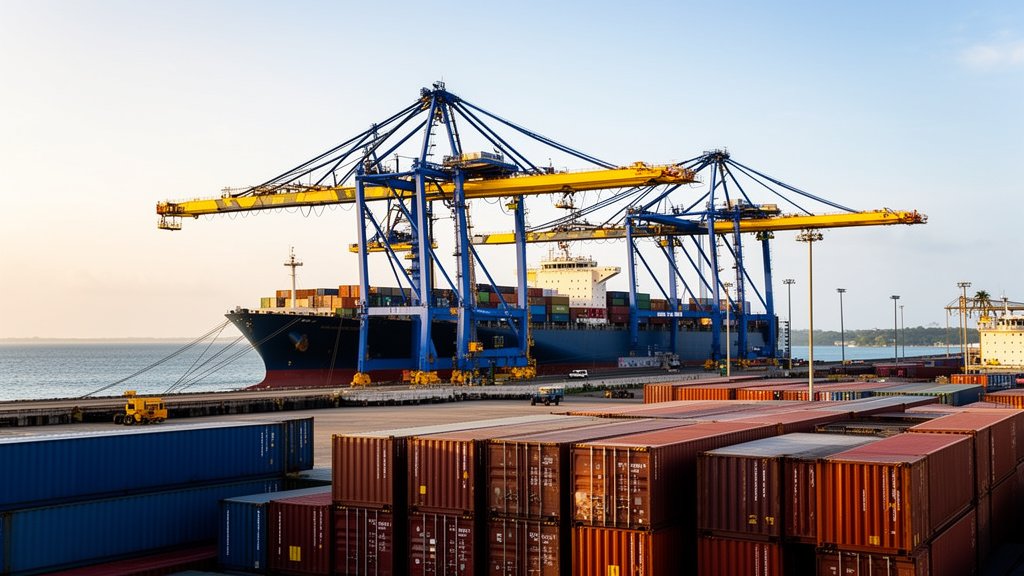
Despite these headwinds, Jamaica is not a passive victim of global trends. The Port Authority of Jamaica has been aggressively pursuing a strategy of “Smart Port” modernization. By digitizing customs processes and improving turnaround times for vessels, the country aims to lower the “cost of stay” for shipping lines. If a ship can be loaded and unloaded faster, the carrier’s operational costs decrease, which theoretically keeps rates more competitive for the cargo owner.
However, this requires a continuous influx of capital for automation, blockchain-based logistics tracking, and gantry crane upgrades. The maritime sector serves as the economic lungs of the nation, and keeping those lungs operating at peak efficiency is the only buffer Jamaica has against the unpredictable storms of the global shipping market.
Secondary Angles: Exploring Future Resilience
1. Food Security and Cold Chain Infrastructure: As shipping costs rise, the integrity of the cold chain becomes critical. High freight costs threaten the viability of importing perishable goods, necessitating a push for increased domestic agricultural production to reduce import reliance.
2. The Regional Cooperation Model: There is increasing advocacy through the Caribbean Shipping Association (CSA) for regional states to bulk-buy shipping services or coordinate transshipment schedules, effectively creating a “Caribbean bloc” that carries more negotiating power with global shipping conglomerates.
3. Sustainable Financing for Maritime Infrastructure: The future of Jamaican ports depends on attracting private-public partnerships (PPPs) that focus specifically on “green ports,” leveraging international climate finance funds to subsidize the infrastructure required for the energy transition.
FAQ: People Also Ask
Q: Why are shipping costs to Jamaica higher than to other regions?
A: Shipping costs are largely determined by “economies of scale.” Because Jamaica is an island nation with a smaller population compared to continental markets, shipping lines have less incentive to offer deep discounts. Additionally, the geography of the Caribbean requires specific vessel sizes, which can be less efficient than the massive container ships servicing major East-West trade routes.
Q: How does the IMO decarbonization strategy affect the price of goods in Jamaica?
A: The IMO mandates require ships to be more fuel-efficient. Older, less efficient ships are being scrapped or retrofitted. This reduces the overall global shipping capacity in the short term, driving up rates. Because Jamaica is highly dependent on imports, these higher rates are immediately passed on to the importer, who then increases prices for the final consumer.
Q: Is the Maritime Authority of Jamaica doing anything to combat these rising costs?
A: The MAJ is heavily involved in international maritime policy, lobbying for “just transition” frameworks that ensure island nations are not unfairly penalized. Domestically, they work closely with port operators to streamline logistics, reduce “dwell time” at the port, and implement digital trade tools to minimize the friction that adds to the final landed cost of goods.