
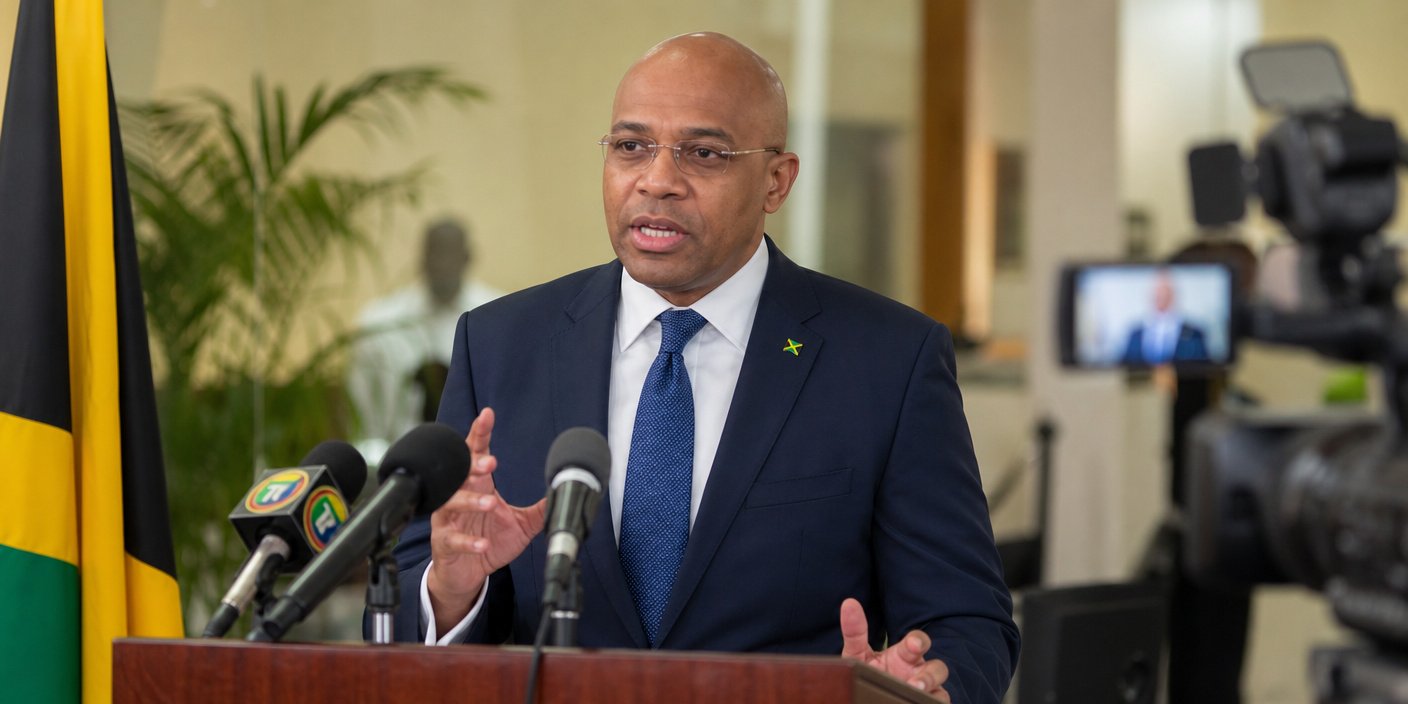
As the island faces intensifying dry conditions, the Jamaican government has authorized an additional $500 million JMD to bolster critical drought mitigation efforts. Led by Senator Mathew Samuda, Minister without Portfolio in the Ministry of Economic Growth and Job Creation, this urgent capital injection aims to address severe water shortages affecting farmers, households, and critical infrastructure across the island.
Key Highlights
- Immediate Funding: A $500 million JMD allocation has been fast-tracked to expand drought mitigation and emergency response programs.
- Logistical Focus: Funds are earmarked for enhanced water trucking operations and the urgent repair of non-functional water systems managed by the National Water Commission (NWC).
- Agricultural Defense: Targeted support for farming communities to prevent massive crop failure and preserve local food security.
- Infrastructure Resilience: The move signals a pivot toward long-term water storage solutions and pipeline network maintenance in high-risk parishes.
Strengthening Resilience: A Response to the Climate-Induced Water Crisis
The Jamaican government’s decision to commit an additional $500 million JMD to drought mitigation is a strategic, albeit urgent, response to a mounting climate challenge. As the Meteorological Service of Jamaica continues to monitor shifting weather patterns and the encroaching dry season, the administration is shifting from a reactive posture—solely relying on water trucking—to a more comprehensive management strategy. The funds, announced by Minister Mathew Samuda, are designed to stabilize the most vulnerable areas before the impact of the drought threatens the nation’s socio-economic stability.
The Operational Reality of Water Scarcity
At the heart of this allocation is the operational capacity of the National Water Commission (NWC). Historically, the NWC has faced logistical hurdles in maintaining supply consistency during peak heat. The $500 million injection is not merely an emergency relief fund but a critical operational subsidy. A significant portion of these funds will be deployed to optimize the water trucking network, ensuring that water reaches parishes that have historically struggled with intermittent supply.
Minister Samuda has emphasized that this funding must be used with precision. By accelerating the repair of faulty pumps, clearing clogged pipelines, and enhancing storage capacity in rural areas, the government hopes to reduce the reliance on emergency trucking in the long run. The objective is to make water infrastructure more robust, turning the tide on a systemic issue that has plagued rural agricultural zones for years.
Agricultural Preservation and Food Security
The most acute pressure from the current drought falls upon the agricultural sector. Small-holder farmers, who form the backbone of the Jamaican rural economy, are particularly susceptible to erratic rainfall. A drought that lasts even a few weeks beyond the seasonal norms can destroy an entire harvest, driving up market prices and threatening the island’s food sovereignty.
This funding addresses the immediate need to secure irrigation sources. By partnering with the Rural Agricultural Development Authority (RADA), the government is working to identify specific “at-risk” farming belts that require prioritized water delivery. While the $500 million is a significant start, stakeholders argue that the long-term solution lies in diversifying irrigation technology, such as drip irrigation and rainwater harvesting, which the current funding aims to support through improved local storage infrastructure.
Navigating Climate Trends
It is impossible to discuss the current drought without contextualizing the broader climate trend. The Caribbean, and Jamaica specifically, is witnessing a distinct alteration in its traditional rainfall cycles. Prolonged heatwaves and shortened wet seasons are becoming the new baseline, necessitating a permanent shift in how the government manages water resources.
Minister Samuda’s office has noted that while short-term mitigation is essential, the strategy moving forward must include capital projects that improve catchments and reservoir integrity. The $500 million is effectively a “bridge” investment, allowing the country to maintain supply lines while larger, multi-year projects—aimed at increasing overall storage capacity—continue to move through the development pipeline. The goal is a climate-proof water grid, though the realities of the current crisis demand immediate attention to the now.
The Socio-Economic Impact
The social strain of water scarcity cannot be overstated. When taps run dry, the impact is felt in schools, health centers, and households. The government’s proactive funding is aimed at forestalling the social friction that occurs when basic utilities fail. By acting early, the administration intends to maintain public order and ensure that the most vulnerable demographics—the elderly and those in low-lying or high-elevation rural communities—are not left behind as the climate conditions worsen. The effectiveness of this $500 million will ultimately depend on the speed of implementation and the transparency of the NWC’s reporting on where these funds are being deployed.
FAQ: People Also Ask
1. How will the $500 million be distributed across the parishes?
Funds are allocated based on a vulnerability assessment conducted by the Ministry of Economic Growth and Job Creation, prioritizing parishes with the lowest water storage capacity and the highest demand from agricultural sectors.
2. Is this funding enough to end water shortages?
No, this is an emergency mitigation and maintenance fund. It is intended to manage the current drought conditions, not to replace the need for long-term national water infrastructure projects and reservoir expansion.
3. Will households see immediate changes in water supply?
The funding is aimed at improving the logistics of water delivery and system efficiency. While it should reduce the frequency of outages caused by broken infrastructure, it remains subject to the severity of the ongoing drought conditions.
4. Who is managing the implementation of these measures?
The National Water Commission (NWC) and the Ministry of Economic Growth and Job Creation, under the direction of Minister Mathew Samuda, are responsible for overseeing the deployment of these resources.