
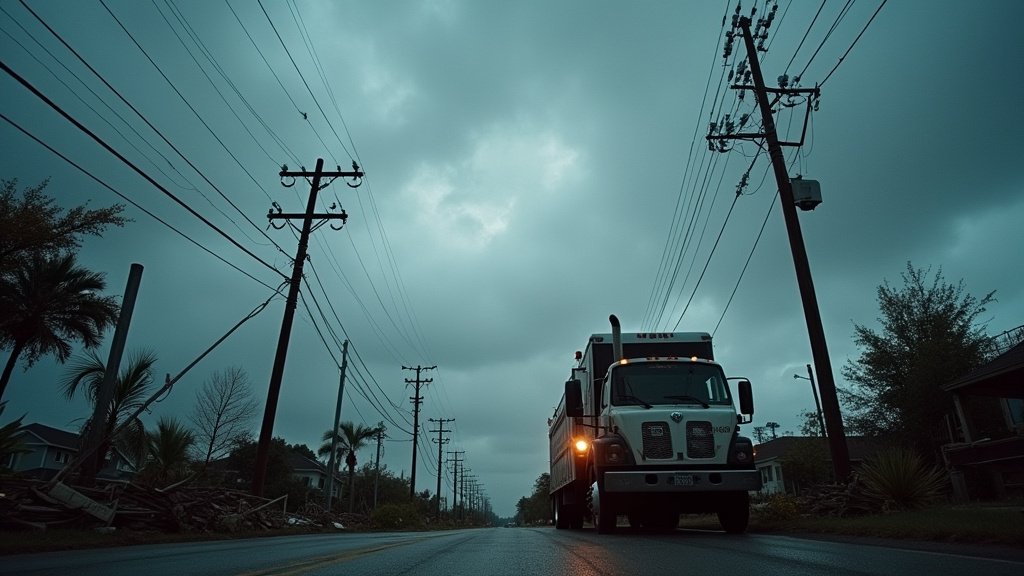
Utilities and telecommunications companies are forging unprecedented collaborations to rapidly restore critical services in the wake of Hurricane Melissa’s devastating impact. This coordinated effort aims to minimize downtime and ensure the resilience of essential infrastructure for affected communities.
Key Highlights:
- Joint command centers established for real-time resource allocation.
- Shared access to repair crews and equipment across sectors.
- Prioritized restoration of communication lines for emergency services.
- Enhanced data sharing to predict and address infrastructure vulnerabilities.
Post-Hurricane Melissa: A New Era of Infrastructure Resilience
The immediate aftermath of Hurricane Melissa has underscored a critical need for integrated disaster response strategies between the utility and telecommunications sectors. Historically, these sectors operated in silos, leading to slower recovery times and duplicated efforts. However, in the face of Melissa’s widespread damage, a paradigm shift is underway. Power outages, downed communication lines, and damaged distribution networks presented a complex, interconnected challenge that demanded a unified approach.
Collaborative Command and Control
One of the most significant advancements in the recovery effort is the establishment of joint operational command centers. These centers, staffed by representatives from major utility providers like Dominion Energy and telecommunications giants such as AT&T and Verizon, serve as hubs for real-time situational awareness and resource deployment. This co-location of decision-makers allows for swift, informed choices regarding personnel, equipment, and repair priorities. By pooling resources and sharing intelligence, companies can dispatch crews more efficiently, avoiding redundant travel and maximizing the speed of repairs.
Shared Resources and Prioritization Frameworks
The collaboration extends to the sharing of critical assets. Utility companies are allowing telecom technicians access to their repair vehicles and staging areas, while telecom firms are providing bandwidth for utility monitoring systems. A crucial element of this partnership is the development of shared prioritization frameworks. While the immediate focus is on restoring power and communication to essential services like hospitals, emergency responders, and water treatment facilities, the collaborative model also allows for a more nuanced approach to residential and business restoration, ensuring that the most vulnerable areas receive attention swiftly.
Enhanced Data Sharing and Predictive Analysis
The hurricane’s impact has highlighted the interconnectedness of infrastructure. A downed power line can disable cell towers, and a lack of communication can hinder the repair of power grids. To combat this, companies are enhancing data sharing protocols. This includes sharing information on network status, damage assessments, and predicted restoration times. This improved data flow enables predictive analysis, allowing teams to anticipate potential cascading failures and proactively deploy resources to prevent them. For instance, by monitoring power grid stability, telecom companies can better manage their network loads and reroute services to prevent outages triggered by power fluctuations.
Lessons Learned and Future Preparedness
The experience with Hurricane Melissa is not just about immediate recovery; it’s a catalyst for long-term change. Both sectors are analyzing the operational data and on-the-ground experiences to refine disaster preparedness plans. This includes investing in more resilient infrastructure, such as hardened cell sites and underground power lines where feasible, and developing more robust mutual aid agreements. The success of this collaborative model is likely to influence future disaster response protocols not only in this region but also serve as a blueprint for other areas prone to natural disasters.
FAQ: People Also Ask
What are the main challenges in restoring utility and telecom services after a hurricane?
The primary challenges include widespread physical damage to infrastructure (downed power lines, damaged cell towers, flooded substations), restoration of power to network equipment, ensuring the safety of repair crews in hazardous conditions, and coordinating the efforts of multiple companies and agencies to avoid duplication and maximize efficiency.
How do utility and telecom companies prioritize repairs?
Typically, repairs are prioritized for critical infrastructure such as hospitals, emergency services, government facilities, and water treatment plants. Following that, efforts focus on restoring service to the largest number of customers as quickly as possible, often targeting major transportation routes and business districts before moving to more localized residential areas.
What is the role of government agencies in post-hurricane recovery?
Government agencies, like FEMA and state emergency management offices, play a crucial role in coordinating overall disaster response, providing financial assistance, facilitating communication between different entities, and ensuring that recovery efforts align with public safety and long-term rebuilding goals.
How can consumers prepare for potential service disruptions after a storm?
Consumers should have a disaster preparedness kit that includes essential supplies, backup power sources for essential devices (like cell phones), and a plan for staying informed through battery-powered radios or pre-downloaded offline maps and emergency contact information. It’s also advisable to have a communication plan with family members in case traditional methods are unavailable.
What technological advancements are improving post-disaster recovery?
Advancements include drone technology for damage assessment, advanced network monitoring systems that provide real-time data, satellite communication backups, and improved predictive modeling for resource allocation. The integration of AI and machine learning is also beginning to play a role in optimizing repair efforts and identifying vulnerabilities.