
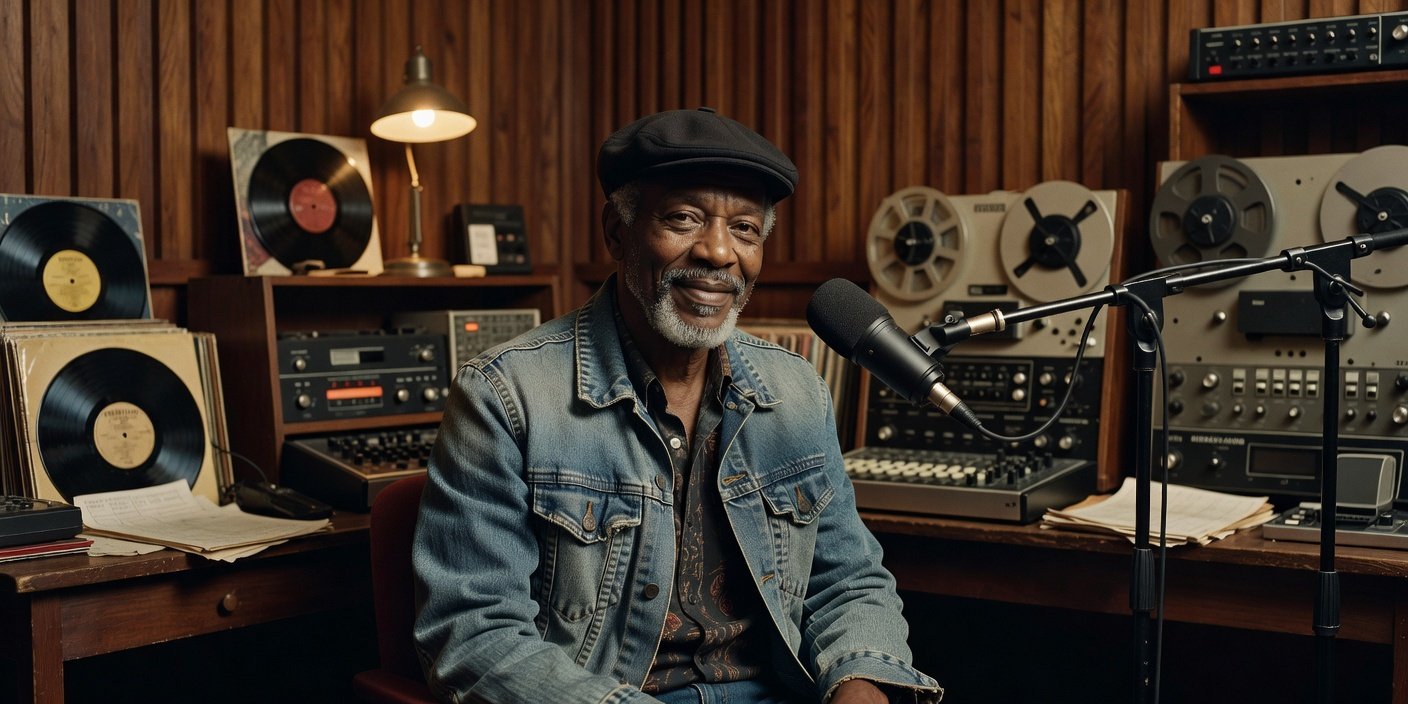
The Jamaican music community and the global reggae fraternity are in mourning today following the passing of Glenroy Anthony Michael Archangelo Smith—universally known as Ernie Smith—who died on April 16, 2026, at the age of 80. A towering figure in the evolution of Jamaican music, Smith was celebrated not merely for his distinct, smooth baritone vocals, but for his uncanny ability to bridge the gap between soulful folk and the developing reggae sound of the late 1960s and 1970s. His passing marks the end of a golden era for many, yet his influence remains deeply embedded in the DNA of contemporary Caribbean music. Smith’s death follows a period of illness, and he leaves behind a catalog that defined the soundtrack of a nation in transition.
Key Highlights
- Legendary Career: Ernie Smith was a pioneer of the rocksteady and reggae genres, rising to international prominence during the late 1960s and 1970s.
- Signature Sound: Renowned for his deep baritone, Smith delivered hits such as “Life Is Just For Living,” “Duppy or Gunman,” and “Pitta Patta.”
- Songwriting Excellence: Beyond his own performances, Smith was a prolific songwriter, penning tracks that reached global audiences, including the chart-topping success of Johnny Nash’s “Tears on My Pillow.”
- Official Recognition: In 1973, he was awarded the Badge of Honour for Meritorious Service in the Field of Music by the Jamaican government, cementing his status as a national treasure.
- Cultural Resilience: His life was marked by significant triumphs and personal trials, including his temporary exile in Canada during the politically turbulent 1970s, which only strengthened his resolve to share Jamaican culture globally.
The Unmatched Legacy of an Island Architect
To understand the magnitude of Ernie Smith’s contributions, one must look at the landscape of Jamaican music during the late 1960s. While many of his peers were aggressively pushing the frantic pace of ska or the budding, heavy-bass rhythms of early reggae, Smith occupied a unique, contemplative space. His music was narrative-driven, often introspective, and delivered with a vocal clarity that transcended the standard dancehall aesthetic of the time. Born in May 1945, Smith’s journey from rural St. Ann parish to the pinnacle of the music charts is a testament to the power of lyrical storytelling.
A Foundation in Songwriting
Smith’s brilliance was not confined to the microphone. He operated with the precision of a poet, understanding that a great reggae song required more than a catchy beat; it needed a soul. His association with Federal Records, owned by the influential Khouri family, allowed him the resources to refine his sound alongside some of the best session musicians of the era, including guitarist Willie Lindo and bassist Val Douglas. This synergy resulted in timeless compositions that did not rely on gimmicks. Tracks like “Life Is Just For Living” became anthems, resonating with listeners not just in Jamaica, but across the African and Caribbean diaspora, establishing him as a crossover success long before the term became industry standard.
The Exile and the Evolution
Perhaps no moment in Smith’s career highlights his artistic integrity quite like the 1970s. Following the release of the politically charged “The Power and the Glory,” Smith faced significant pushback. The song, viewed by some as a critique of the policies enacted by the administration of Prime Minister Michael Manley, led to threats on his life and a period of instability. In a bold move of survival and artistic freedom, Smith relocated to Toronto, Canada.
This era, while difficult, proved vital to his evolution. In Canada, he continued to record and tour, releasing albums like To Behold Jah and Skareggae. The distance allowed him to broaden his thematic scope, infusing his work with gospel-influenced melodies and a more global perspective. It showcased his ability to adapt without losing the core ‘Jamaican-ness’ that made him a star. He eventually returned to the Caribbean, settling in South Florida, where he continued to mentor younger artists and keep the fire of his legacy burning bright.
Impact on the Global Charts
The reach of Ernie Smith’s pen extended far beyond his own vocal recordings. One of the most significant moments in his career was his songwriting contribution to the international stage. When Johnny Nash recorded “I Can’t Take It” (re-titled as “Tears on My Pillow”), it topped the UK Singles Chart in 1975. This was a monumental achievement for a Jamaican songwriter at a time when global distribution and recognition for Caribbean artists were significantly harder to secure. Smith’s ability to write for others while maintaining his own distinct identity made him a pillar of the industry—a ‘songwriter’s songwriter’ who understood the commercial viability of a well-crafted melody.
The Human Side of the Icon
Those who knew Smith often spoke of his warmth and his unwavering dedication to his family. His later years were spent in South Florida, surrounded by loved ones and continuing to perform in intimate settings. Birthday celebrations, such as his 79th in 2024, served as reminders that he was not just a historical figure in a textbook, but a living, breathing part of the community. His humor, his quick wit, and his willingness to perform classics like “Duppy or Gunman” for smaller, appreciative crowds demonstrated that his ego never overshadowed his art. His marriage to his wife, Claudette, and his close ties to his children provided the stability he needed to navigate the latter stages of his life, away from the intense pressures of the touring circuit.
Shaping the Future of Reggae
As the industry reflects on his 80 years, the question arises: what is the enduring value of an artist like Ernie Smith? In an age of digital saturation and fast-turnover music, Smith’s work serves as a reminder of the slow-burn power of authentic songwriting. He represents a generation that viewed music as a vehicle for social commentary, personal therapy, and cultural preservation. Young reggae artists today, while influenced by dancehall and trap-reggae, continue to draw from the well that Smith and his contemporaries helped dig. His legacy is found in every Jamaican artist who prioritizes lyricism and vocal conviction over artificial production. The ‘Ernie Smith approach’—prioritizing the story and the song above all else—is a masterclass that remains as relevant today as it was in 1970.
FAQ: People Also Ask
What was Ernie Smith’s biggest hit?
While he had many, “Life Is Just For Living” and “Duppy or Gunman” remain his most iconic and culturally significant tracks, defining his legacy in the rocksteady and reggae genres.
Did Ernie Smith write songs for other artists?
Yes, extensively. He was a prolific songwriter; notably, his song “I Can’t Take It” became a UK No. 1 hit when recorded by Johnny Nash as “Tears on My Pillow” in 1975.
Why did Ernie Smith move to Canada in the 1970s?
Smith relocated to Toronto following threats on his life, which stemmed from the political tension surrounding his song “The Power and the Glory,” which some interpreted as a criticism of the Jamaican government at the time.
What was Ernie Smith’s contribution to Jamaican music culture?
Beyond his singing and songwriting, he was a recipient of the Badge of Honour for Meritorious Service in the Field of Music (1973). He helped elevate the status of Jamaican songwriting and bridged the gap between folk, soul, and reggae, influencing generations of musicians.