
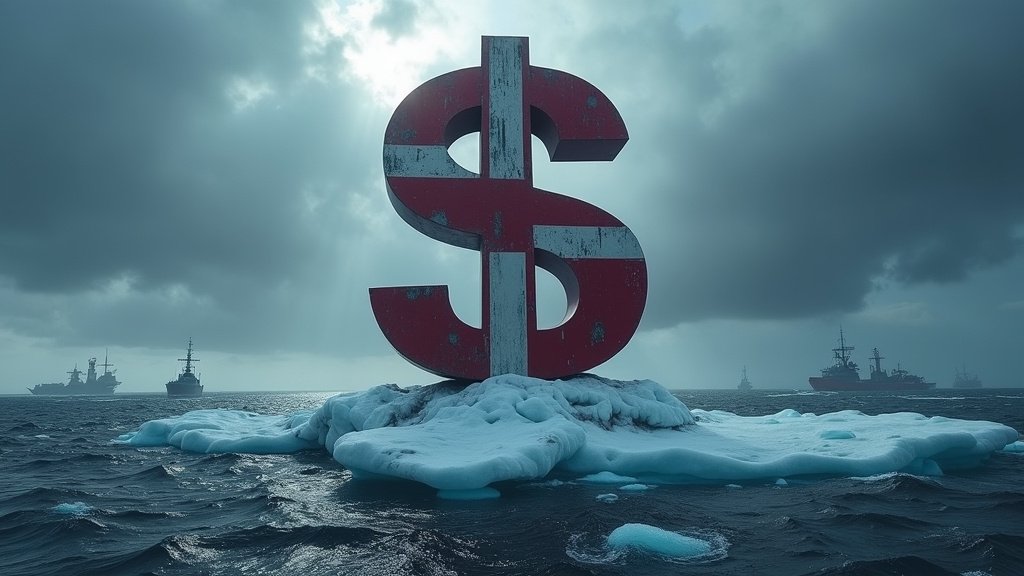
President Trump has ignited a trade firestorm by threatening new Trump Greenland Tariffs against eight European nations. This move targets their opposition to U.S. control over Greenland, escalating global trade tensions and straining vital alliances. The potential for these Trump Greenland Tariffs underscores a volatile period in international relations.
Tariffs Loom Over Europe Amidst Trump Greenland Tariffs Threat
President Trump announced a significant trade policy shift, declaring a new 10% import tariff that would affect goods from eight European countries. The Trump Greenland Tariffs are set to begin February 1st and are a direct response to opposition concerning the U.S. seeking control of Greenland. The threat escalates further, with tariffs potentially jumping to 25% by June 1st if a deal is not reached regarding the “Complete and Total purchase of Greenland.” Trump made the announcement via social media, signaling a direct challenge to European trade partners over the proposed US Greenland control.
The Greenland Nexus and Potential Trump Greenland Tariffs
Greenland holds strategic importance for the U.S., viewed by President Trump as vital for national security, especially given the growing Russian and Chinese presence in the Arctic region. Trump believes the U.S. must have control, arguing Denmark cannot adequately defend the island. His interest in Greenland is long-standing, first proposing to buy the territory in 2019 and reiterating this desire since returning to office in 2025. The imposition of Trump Greenland Tariffs is a drastic measure to pressure allies on this issue. The U.S. already operates a military base on Greenland under a 1951 defense agreement with Denmark, a key NATO ally.
Eight Nations Targeted by Trump Greenland Tariffs
The specific European nations facing the potential Trump Greenland Tariffs include Denmark, Norway, Sweden, France, Germany, the United Kingdom, the Netherlands, and Finland. These countries have shown solidarity with Denmark, with some sending troops for “Arctic security training.” Trump views these deployments with suspicion, calling them a “dangerous game” putting the planet at risk, a sentiment that fuels the justification for these import tariffs.
European Leaders Unite in Condemnation of Potential Trump Greenland Tariffs
European leaders reacted swiftly and strongly to the proposed Trump Greenland Tariffs. The eight targeted nations issued a joint statement declaring “full solidarity with the Kingdom of Denmark” and warning of negative consequences. “Tariff threats undermine transatlantic relations,” the statement cautioned, warning against a “dangerous downward spiral.” British Prime Minister Keir Starmer called the tariffs “completely wrong,” stressing Greenland’s future is for its people. French President Emmanuel Macron deemed the tariffs “unacceptable.” EU leaders are meeting to discuss a coordinated response, including economic countermeasures and potentially activating the EU’s “anti-coercion instrument.”
NATO Alliance Strain from Trump Greenland Tariffs
This tariff threat poses a direct challenge to NATO, an alliance built on collective security. The Trump Greenland Tariffs risk deepening divisions, which analysts believe benefit rivals like China and Russia. European Union foreign policy chief Kaja Kallas noted that China and Russia “must be having a field day.” Bipartisan U.S. senators also criticized the move, arguing that such import tariffs harm American businesses and consumers while undermining the value of NATO allies who have fought alongside the U.S. This action adds to global trade tensions.
Economic Clouds Gather Amidst Trump Greenland Tariffs
The International Monetary Fund (IMF) issued a grim warning that escalating geopolitical tensions and tariffs pose risks to global economic growth. Financial markets may face instability, and the Trump Greenland Tariffs could jeopardize existing trade deals between the U.S. and the EU. Furthermore, these import tariffs might increase costs for consumers, exacerbating existing economic pressures.
Uncertain Future for Transatlantic Ties Amidst Trump Greenland Tariffs
President Trump’s aggressive stance on Greenland, leading to the threat of Trump Greenland Tariffs, has created a crisis, highlighting his use of tariffs as leverage and straining relationships with key allies. European nations are united in their opposition and ready to respond firmly. The situation puts U.S. Europe relations under immense pressure. While the Arctic’s strategic importance is undeniable, the method of securing it through Trump Greenland Tariffs has created deep rifts and NATO alliance strain. This tariff dispute is a critical moment, shaping future global trade and security dynamics and testing the integrity of alliances. The world watches these developments closely as the geopolitical landscape shifts rapidly, with significant implications for global trade tensions.