
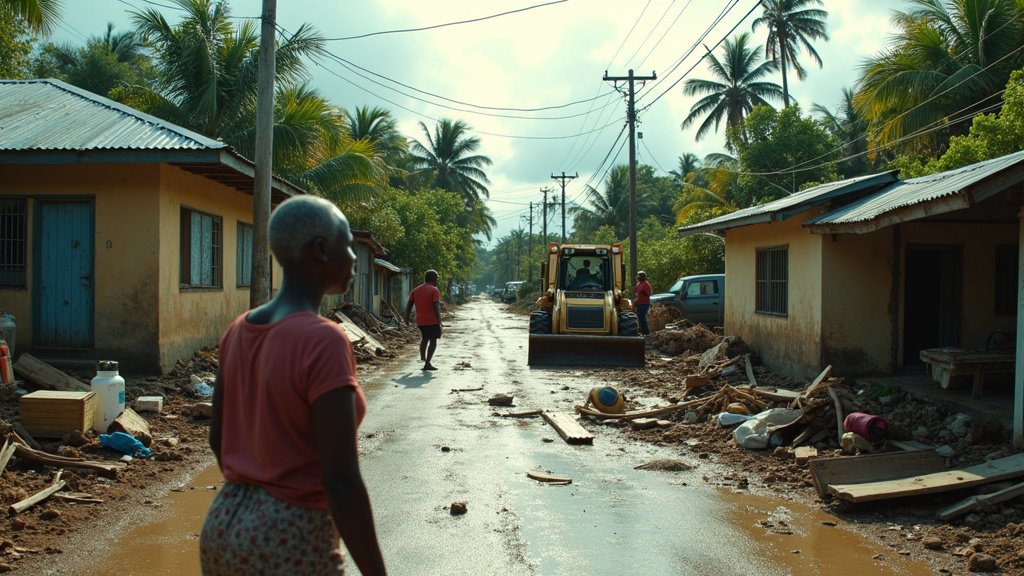
MONTEGO BAY, JAMAICA – While efforts to recover from the catastrophic Hurricane Melissa are visibly progressing in St. James Parish, reports of a complete declaration of success and an abrupt halt to further aid and infrastructure repairs appear to be premature and contradict the ongoing reality on the ground. Local officials acknowledge significant strides in clearing debris and restoring essential services, but the depth of the damage and the immediate needs of residents suggest a long road to full recovery in the St. James Recovery process.
Devastation from a Category 5 Storm and St. James Recovery Challenges
Hurricane Melissa, a Category 5 storm, made a direct landfall in Jamaica on October 28, 2025, becoming the most powerful hurricane in the island nation’s recorded history. The storm unleashed catastrophic winds and torrential rain, causing widespread destruction across western and southern parishes, including St. James. Tens of thousands of homes were damaged or destroyed, crops were decimated, and vital infrastructure like roads, power lines, and communication networks suffered severe blows. The economic toll is estimated to be between US$6-7 billion, significantly impacting Jamaica’s business sectors and tourism industry. In St. James Parish alone, the immediate aftermath was described as looking like a “war zone”, highlighting the immense St. James recovery needs.
Intensive St. James Recovery Efforts Underway
In the weeks following Hurricane Melissa, St. James Parish has been engaged in extensive recovery operations, spearheaded by a multi-agency task force coordinated by the St. James Municipal Corporation. Mayor of Montego Bay, Councillor Richard Vernon, has emphasized the acceleration of clean-up activities, with significant progress in clearing over 900 truckloads of debris from roadways. Efforts have focused on restoring mobility and economic activity, with key infrastructure like the Cornwall Regional Hospital, Sangster International Airport, and commercial centers receiving restored power. The local government has also prioritized vulnerable groups, including the elderly, persons with disabilities, and those still housed in shelters, as part of the broader St. James recovery.
Despite these advancements, infrastructure repair challenges persist. Significant debris continues to block access in some areas, and road repairs are ongoing, with certain routes remaining difficult to traverse. Over 350 individuals remained in emergency shelters across St. James more than two weeks after the hurricane, underscoring the continued need for support and housing solutions as part of the ongoing St. James recovery. The call for donations of essential items like clothing, food, and water remains active, indicating that immediate needs are still pressing, a common theme in Jamaica disaster relief efforts.
Aid and Infrastructure Repair Status in St. James Recovery
The notion that St. James Parish has declared a complete success and halted all aid and infrastructure repairs appears to be a misinterpretation of the situation. While the transition from immediate emergency relief to stabilization and recovery is a stated government objective, the research indicates that comprehensive St. James recovery work is far from concluded. International aid continues to flow into Jamaica, with various agencies and global partners contributing to relief and rebuilding efforts for the Hurricane Melissa aftermath. The UN and other aid organizations are still actively working to reach affected communities and distribute much-needed supplies as part of the post-hurricane aid.
Furthermore, official statements from the Mayor of Montego Bay suggest an intensification of recovery efforts rather than a cessation. He noted that municipal recovery teams “remain fully mobilised” and that work is progressing to stimulate economic resurgence across affected communities, including Montego Bay rebuilding efforts. The declaration of recovery success, if made, seems to pertain to the initial emergency phase rather than a complete cessation of all support and rebuilding activities for the St. James recovery. The focus has shifted, but the fundamental need for continued support for infrastructure, housing, and business recovery remains significant across Jamaica, and particularly in hard-hit areas like St. James Parish.
Looking Ahead: St. James Recovery and National Resilience
The path to full recovery for St. James Parish and Jamaica will be a protracted process. While commendations are due for the resilience and dedicated efforts of local authorities and citizens, the scale of Hurricane Melissa’s destruction necessitates sustained attention and resources for natural disaster recovery Jamaica. The news surrounding St. James’ recovery efforts highlights the ongoing humanitarian and infrastructural challenges faced by the island nation as it navigates the long-term rebuilding process following one of its most severe natural disasters.