
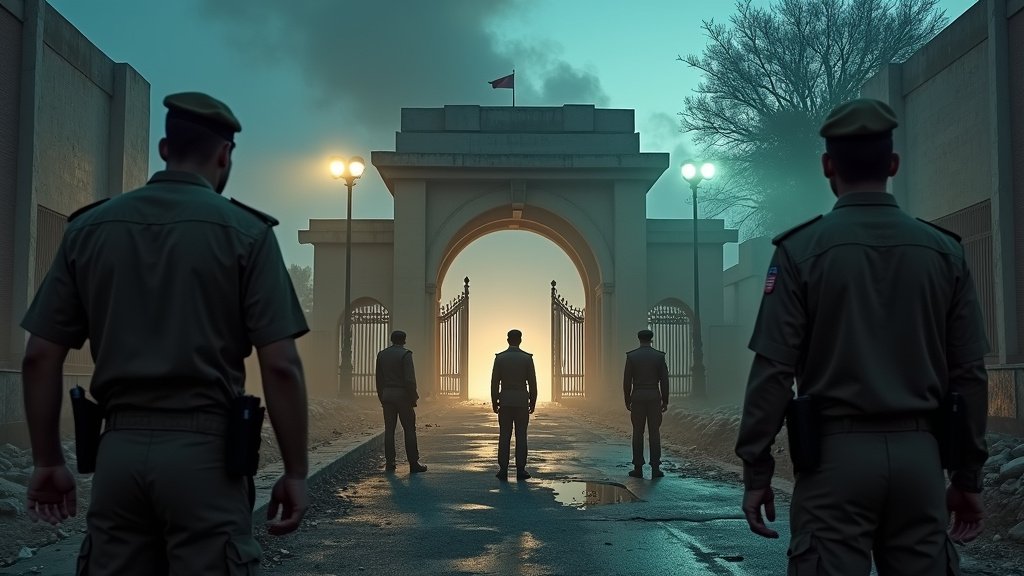
A coordinated Peshawar suicide attack targeting the headquarters of the Federal Constabulary (FC) in Peshawar on Monday morning claimed the lives of three security officers and wounded several others, underscoring a persistent and escalating security challenge in northwestern Pakistan. The brazen assault, which occurred as security forces prepared for a morning parade, highlights the growing threat posed by militant groups in the region, a grim reminder of the persistent threat of terrorism, and a significant suicide bombing Peshawar has endured.
Peshawar Suicide Attack: Details Emerge
The incident unfolded around 8:10 a.m. local time when three suicide bombers attempted to breach the perimeter of the FC headquarters, located in a densely populated area of Peshawar, the capital of Khyber Pakhtunkhwa province. According to initial reports, the first attacker detonated explosives at the main gate, creating an opening for the other two assailants to attempt entry into the compound. However, vigilant security personnel on duty responded swiftly, engaging and neutralizing the remaining two attackers before they could inflict further casualties in this Peshawar suicide attack.
The rapid response by the security forces is credited with preventing a much larger tragedy, as a significant number of personnel were on the parade grounds at the time of the assault. Tragically, three FC officers were killed in the initial explosion at the gate, and at least five civilians and security personnel sustained injuries. The wounded were promptly transported to Lady Reading Hospital and Khyber Teaching Hospital, where emergencies were declared following the devastating Peshawar suicide attack.
Background of Rising Militancy and the Peshawar Suicide Attack
While no group has immediately claimed responsibility for the Peshawar attack, security analysts point to the Tehrik-e-Taliban Pakistan (TTP) and its various factions as the most likely perpetrators of this Peshawar suicide attack. The TTP has been blamed for a significant surge in terrorist activities across Pakistan, particularly in Khyber Pakhtunkhwa and Balochistan, since it ended a ceasefire with the government in late 2022. This uptick in violence coincides with the Taliban’s return to power in neighboring Afghanistan in 2021, a development that has strained relations between Islamabad and Kabul, with Pakistan accusing Afghan authorities of harboring TTP militants who then launch attacks across the border, including the recent Peshawar suicide attack.
Peshawar and the wider Khyber Pakhtunkhwa province have historically been epicenters of militant activity and continue to be targets of TTP attacks. The city has endured several high-profile attacks in recent years, including the devastating 2014 Army Public School massacre, which killed over 150 people, and a 2023 suicide bombing in a police mosque that claimed nearly 100 lives. The current incident, a shocking Peshawar suicide attack, follows closely on the heels of other recent attacks, including a suicide bombing outside a court in Islamabad that killed 12 people just weeks ago, highlighting a worsening Pakistani security crisis.
Official Condemnation and Resolve Against Peshawar Suicide Attack
The attack drew swift condemnation from Pakistan’s top leadership. Prime Minister Shehbaz Sharif strongly denounced the act of terrorism, commending the security forces for their timely response and vowing that the perpetrators of the Peshawar suicide attack would be identified and brought to justice. He reiterated the government’s unwavering commitment to eradicating terrorism and thwarting any designs against Pakistan’s integrity. President Asif Ali Zardari also issued a statement strongly condemning the assault and offering condolences to the families of the martyrs. Interior Minister Mohsin Naqvi and Khyber Pakhtunkhwa Chief Minister Sohail Afridi also paid tribute to the fallen officers and emphasized that such cowardly acts, including the recent Peshawar suicide attack, would not weaken national morale, underscoring the ongoing struggle against rising militancy.
A Persistent Threat to Regional Stability from Peshawar Suicide Attack
The coordinated nature of the assault suggests a degree of planning and capability that continues to challenge Pakistan’s security apparatus in preventing another Peshawar suicide attack. The strategic location of Khyber Pakhtunkhwa, bordering Afghanistan, makes it a volatile nexus of cross-border militancy and a prime area for Khyber Pakhtunkhwa security concerns. Security experts note that while the TTP is the primary suspect for this Peshawar suicide attack, other groups like ISIS-K also pose a threat to security installations. The ongoing insurgency within the province, coupled with regional geopolitical dynamics, presents a complex and enduring security crisis for Pakistan, where security forces killed are a tragic reality.
In the aftermath, security forces sealed off the area and initiated clearance operations. The attack, a horrific Peshawar suicide attack, serves as a grim reminder of the persistent threat of terrorism that the nation is battling. This latest event is a significant piece of world news, highlighting the ongoing struggle for stability in the region and the threat of terrorism in Pakistan. The world watches as Pakistan continues its efforts to combat these extremist elements and ensure the safety of its citizens. The resolve expressed by national leaders suggests that the campaign against terrorism, particularly against perpetrators of the Peshawar suicide attack, will intensify, even as the costs in human lives and security remain high. This news continues to unfold as authorities investigate the full scope of the attack and its potential links to broader militant networks operating in the border regions.