
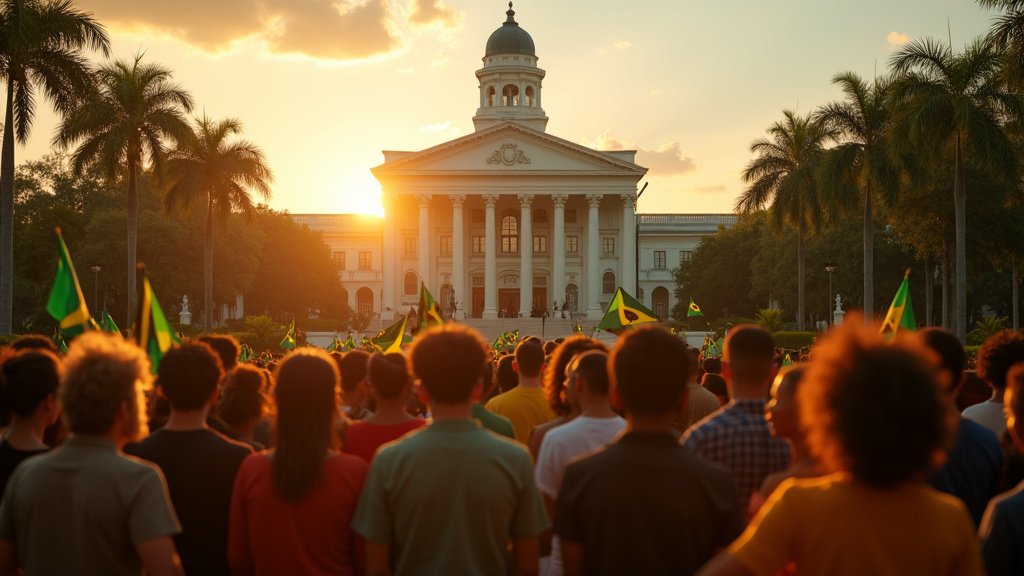
Jamaica is embarking on a significant constitutional transformation, actively pursuing its transition from a constitutional monarchy to a republic, a pivotal Jamaica republic move. This signals a decisive step towards severing its final institutional ties to its colonial past and establishing a fully independent system of governance with a Jamaican head of state. The news of these reforms has ignited national debate and legislative action, marking a pivotal moment in the island’s history and its journey towards becoming a full Jamaica republic.
The Momentum Towards Becoming a Jamaica Republic
The drive to become a republic has gained considerable momentum in Jamaica, with the government taking concrete legislative steps towards a Jamaica republic. In late 2024, the administration tabled a bill in Parliament aimed at abolishing the monarchy and transitioning the country to a republic. This legislation is part of a broader constitutional reform agenda, spearheaded by Prime Minister Andrew Holness’s administration and managed by the Ministry of Legal and Constitutional Affairs. The reform process is being conducted in phases, with the establishment of a republic identified as ‘Phase 1’. The goal is to replace the British monarch, currently King Charles III, with a non-executive president, thereby solidifying Jamaica’s national sovereignty and its status as a Jamaica republic.
The Evolving Role of the Governor-General in the Jamaica Republic
Under Jamaica’s current constitutional framework, the British monarch serves as the head of state, represented locally by the Governor-General. Appointed by the monarch on the prime minister’s recommendation, the Governor-General’s duties are largely ceremonial and administrative, acting on the advice of the elected government. The transition to a republic necessitates a re-evaluation of this office for the future Jamaica republic. While the specific details of a new presidential role are still being shaped, the ultimate aim is to have a Jamaican national lead the country, replacing the monarch’s representative and thereby completing the cycle of Jamaican independence and establishing the Jamaica republic.
Historical Roots and National Discourse on the Jamaica Republic
The debate over republicanism in Jamaica is not new; discussions have persisted since the nation gained independence from Britain in 1962. For decades, both major political parties – the Jamaica Labour Party (JLP) and the People’s National Party (PNP) – have expressed support for transitioning to a republic and solidifying the Jamaica republic. Public opinion on the matter has shown a divided landscape, with polls indicating significant support for becoming a republic, though not without considerable opposition and nuanced views on the timing and implications. Advocates for republicanism often cite the need to fully shed colonial vestiges and establish a distinct national identity, while others express concerns about political stability and the potential loss of tradition or Commonwealth ties in the new Jamaica republic.
Challenges and the Path Forward to the Jamaica Republic
Implementing constitutional reform in Jamaica involves a complex legal and political process to achieve the Jamaica republic. The path to becoming a republic requires not only parliamentary approval but also a national referendum, as stipulated by the Constitution. The Constitutional Reform Committee has been instrumental in facilitating public consultations and recommending changes, though disagreements over certain aspects, such as the final court of appeal, have arisen. The government has emphasized a phased approach to reform, focusing on establishing the Jamaica republic as a priority. The legislative news indicates a determined effort to move forward, with draft bills prepared for the constitutional amendment and the referendum process to finally establish the Jamaica republic.
Conclusion on the Jamaica Republic
Jamaica’s journey towards a republic represents a profound evolution in its national narrative and the establishment of the Jamaica republic. While the constitutional monarchy and the role of the Governor-General have historically provided a framework for governance, the nation is now poised to embrace a new chapter as the Jamaica republic. The ongoing legislative and public discourse underscores Jamaica’s commitment to self-determination and its aspiration to fully embody its independence on the global stage. This significant news highlights a nation actively shaping its future by re-establishing its core identity and governance structures for the Jamaica republic.