
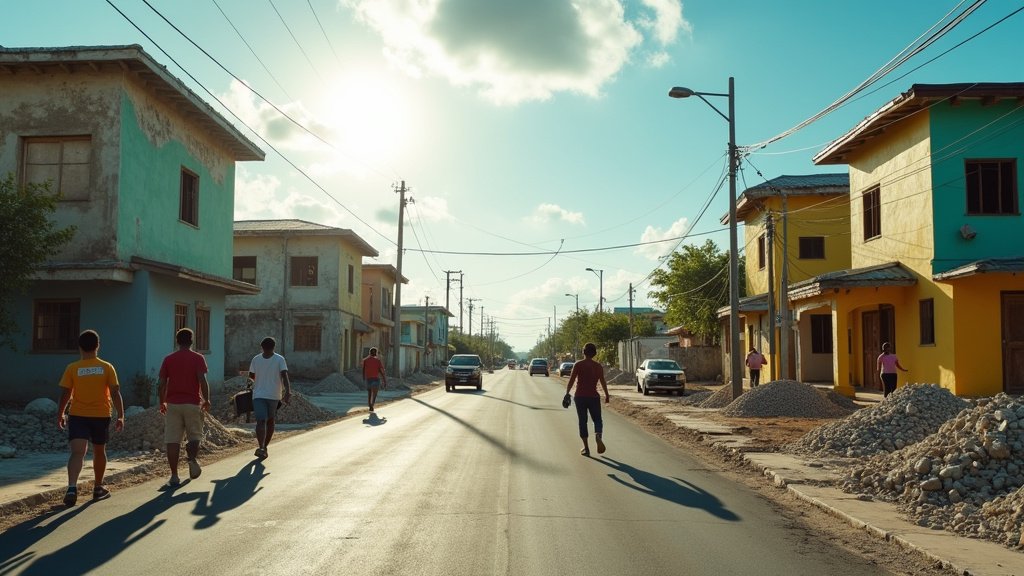
Jamaica Hurricane Recovery: Peace and Transformation Post-Hurricane Melissa
The government of Jamaica is prioritizing extensive Jamaica Hurricane Recovery efforts, viewing the post-hurricane period as a critical juncture for peace and transformational change. Prime Minister Andrew Holness announced this critical focus on January 3, 2026, underscoring the nation’s commitment to robust Jamaica Hurricane Recovery initiatives in the wake of Hurricane Melissa. This period presents a unique opportunity to address long-standing development constraints and accelerate Jamaica rebuilding efforts. The overarching goal of this comprehensive Jamaica Hurricane Recovery is to advance national priorities, including fostering sustainable economic growth, ensuring public safety, and maintaining social stability through effective Jamaica Hurricane Recovery.
Hurricane Melissa’s Devastation and the Imperative for Jamaica Hurricane Recovery
Hurricane Melissa struck Jamaica on October 28, 2025, as a devastating Category 5 storm. It has been recorded as one of the most intense Atlantic hurricanes, causing catastrophic damage and necessitating urgent Jamaica Hurricane Recovery. This event marked the strongest hurricane to ever hit Jamaica, highlighting the profound need for a well-coordinated Jamaica Hurricane Recovery.
The scale of destruction was unprecedented, with total damage estimated between $8 billion and $15 billion, representing nearly a quarter of Jamaica’s GDP. Over 626,000 people were affected, and tragically, 45 lives were lost. Many communities experienced severe flooding, and 35% of homes and businesses suffered power outages. Thousands of buildings sustained roof damage. The crucial tourism and agricultural sectors were hit hard, jeopardizing thousands of jobs and presenting a significant challenge for Jamaica rebuilding efforts.
Despite ongoing Jamaica Hurricane Recovery operations, critical needs persist. A month after the storm, over 90,000 households remained displaced, and approximately 100 emergency shelters were still operational. Further complicating the situation, leptospirosis outbreaks emerged from contaminated water, underscoring the urgent requirement for comprehensive Jamaica Hurricane Recovery and public health interventions.
A New Opportunity for Jamaica Rebuilding Efforts through Jamaica Hurricane Recovery
Prime Minister Holness has framed the crisis as a pivotal chance for significant rebuilding, emphasizing the mantra of “building back better” as a core tenet of Jamaica Hurricane Recovery. This approach aims to move beyond simply restoring what was lost, addressing the structural weaknesses exposed by the hurricane that have historically hindered growth. Congestion, for instance, with roadways proving inadequate for current needs, is a key challenge that the Jamaica Hurricane Recovery must confront. The rebuilding plans are geared towards creating modern, functional towns, a vital component of effective Jamaica Hurricane Recovery.
To spearhead these efforts, the government plans to establish a National Reconstruction and Resilience Authority. This agency will be instrumental in coordinating economic and infrastructure plans for Jamaica Hurricane Recovery, encompassing critical areas such as roads, schools, and security. The mandate extends to revitalizing the housing, tourism, and agriculture sectors, all with the ultimate aim of constructing the Jamaica of the future through dedicated Jamaica Hurricane Recovery.
Focus on Peace and Stability in Jamaica Hurricane Recovery
Maintaining peace is established as a paramount national priority within the framework of Jamaica Hurricane Recovery. Prime Minister Holness is committed to building on the success of keeping the murder rate low in 2025, which stood at 700, the lowest in 31 years. The government’s strategy includes robust peace-building initiatives targeting homes, schools, and communities, aiming to reduce violent tendencies as an integral part of overall Jamaica Hurricane Recovery and fostering peace and stability Jamaica.
The Prime Minister articulated in his New Year’s message that economic progress must be intrinsically linked with social stability. He highlighted that while reducing murders is a significant achievement, addressing the broader issues of violence and dysregulated behavior is equally crucial. The government views peace as the fundamental bedrock for development and a critical element of successful Jamaica Hurricane Recovery.
Economic Growth and Jamaica Hurricane Recovery
Jamaica’s economy has demonstrated strong performance, with the last quarter recording a 5% growth, a notable acceleration. The nation possesses a solid economic foundation and has secured over $6.7 billion in support specifically earmarked for Jamaica Hurricane Recovery, aiding both reconstruction and crucial resilience planning Jamaica.
The government is actively pursuing transformational change as a key outcome of Jamaica Hurricane Recovery. This includes fostering a sense of social responsibility, encouraging citizens to take ownership of their future, and promoting non-violent conflict resolution. The nation is on a determined path to transform from a society historically challenged by violence, a crucial and achievable outcome of effective Jamaica Hurricane Recovery.
Looking Ahead: Jamaica Hurricane Recovery and National Transformation
Prime Minister Holness has underscored resilience as the cornerstone of Jamaica Hurricane Recovery, emphasizing that it requires deliberate design, adequate financing, and strong governance. Jamaica is entering this new chapter on a significantly stronger footing, bolstered by its unwavering commitment to Jamaica Hurricane Recovery. The economy is stable, public finances are well-managed, and institutions have gained credibility, positioning the nation to effectively rebuild and reimagine its future through dedicated Jamaica Hurricane Recovery and Jamaica rebuilding efforts, driving national reconstruction Jamaica.