
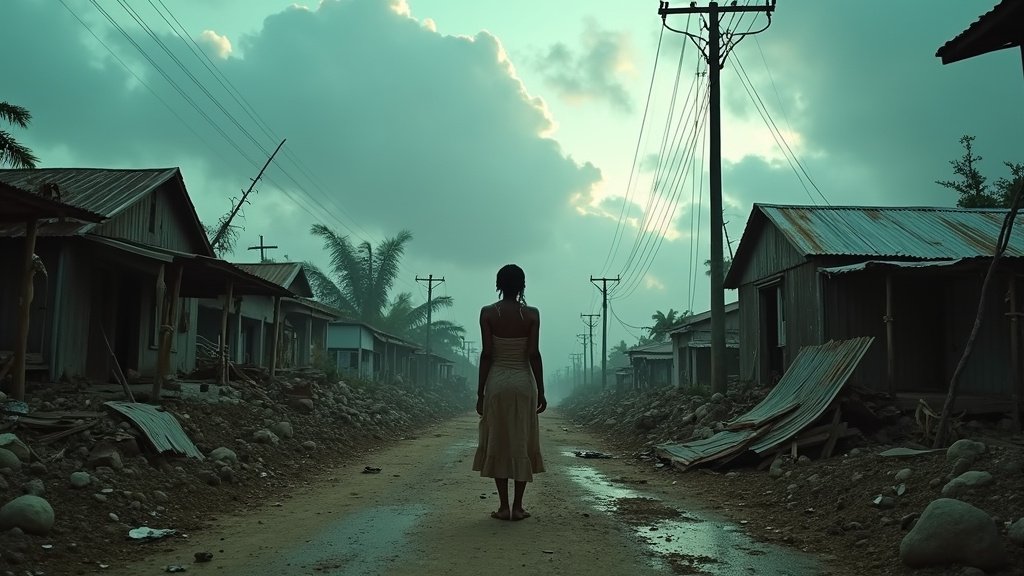
The Caribbean island of Jamaica is once again grappling with the aftermath of a catastrophic hurricane, highlighting a pervasive ‘compounding disaster trap’ that threatens its stability and future. In October 2025, Hurricane Melissa, a Category 5 superstorm packing winds of 185 mph, slammed into Jamaica, becoming the strongest hurricane ever recorded to make landfall on the island. Its devastating impact, resulting in widespread destruction and significant loss of life, underscores a critical vulnerability: storms are hitting with unprecedented force before communities and infrastructure have had a chance to fully recover from previous onslaughts. This experience with Jamaica Hurricane Melissa is a grim reminder of the Caribbean disaster trap.
Jamaica Hurricane Melissa’s Catastrophic Impact
Hurricane Melissa’s arrival on October 28, 2025, brought with it catastrophic damage across western Jamaica, leaving behind over 4.8 million tonnes of debris that choked roads and impeded access to essential services. The storm’s ferocity disrupted telecommunications and power services, with many areas remaining without utilities weeks later. Critical infrastructure, including roads, bridges, schools, hospitals, and homes, suffered extensive damage, with entire towns decimated. The United Nations Development Programme (UNDP) reported that tens of thousands of homes were impacted, and up to 32,500 people may have been internally displaced by Hurricane Melissa. Tragically, at least 48 lives were lost in Jamaica due to Melissa, with the total death toll across the Caribbean exceeding 96. UNESCO has since announced emergency support for Jamaica, Cuba, and Haiti to aid educational continuity and assess damage to cultural heritage following the Hurricane Melissa event.
A Cycle of Never-Ending Recovery After Hurricane Melissa
Hurricane Melissa did not strike an island that was prepared or resilient; it hit one still reeling from previous disasters. In July 2024, Hurricane Beryl, a Category 4 storm, had already ravaged Jamaica, particularly the agricultural heartland of St. Elizabeth. Beryl caused extensive damage to crops, affecting an estimated 45,000 farmers and leading to agricultural losses valued at millions of dollars. This pattern of sequential disasters means that recovery efforts are perpetually undermined, pushing Jamaica and other Caribbean nations deeper into a cycle of vulnerability. The time between major storms is now shorter than the time required for full recovery, creating a self-reinforcing loop of infrastructure collapse and economic strain, a situation exacerbated by the impact of Jamaica Hurricane Melissa.
Infrastructure’s Fragility and Systemic Failures
The repeated destruction highlights the inherent fragility of Jamaica’s infrastructure. Many structures are not built to withstand the escalating intensity of modern hurricanes, a reality that experts have warned about for years. While Jamaica has made investments in disaster preparedness and developed tools like the Jamaica Systemic Risk Assessment Tool (J-SRAT) to identify vulnerable infrastructure, the speed and scale of disasters like Hurricane Melissa overwhelm existing systems. The emphasis on rebuilding the same vulnerable roads or power lines only for them to be destroyed again by the next storm is a critical failure in recovery strategies, particularly in the context of the latest Jamaica hurricane.
Pathways to Resilience: Nature and Renewables
To break free from this destructive cycle, experts and international organizations are advocating for a paradigm shift towards more resilient solutions and climate change adaptation. Nature-based approaches, such as restoring and protecting mangrove forests, coral reefs, and wetlands, offer cost-effective and dynamic storm defenses that can buffer coastlines from surges and erosion. Simultaneously, the development of decentralized renewable energy grids, including solar and wind microgrids, is crucial. These systems can provide independent power to critical services like hospitals and communication hubs when the centralized grid fails, enhancing energy security and resilience. This is a vital component of disaster resilience.
The Human and Social Cost of Jamaica’s Hurricane Woes
Beyond the physical damage and economic losses, the relentless onslaught of hurricanes exacts a profound human and psychological toll on Jamaica’s community. Mass displacement weakens social cohesion, erodes community networks, and exacerbates psychological trauma. Survivors often experience eco-anxiety, PTSD, and ‘environmental grief’ as familiar landscapes are transformed into wreckage. The fear, disconnection, and exhaustion that follow such disasters can shape lives for years, a silent storm that often goes unreported in the immediate news, especially after a significant event like Hurricane Melissa.
Economic Strain and the Urgent Call for Change
The economic consequences of this compounding disaster trap are immense. Repeated hits from major hurricanes can lead to significant GDP losses, worsening national debt, and hindering long-term economic growth. Estimates for Hurricane Melissa’s damage to Jamaica alone range from 10% to 30% of the country’s GDP. Breaking free requires more than incremental improvements; it demands systemic change and effective hurricane recovery efforts. This includes robust international support, agreed-upon funding commitments for adaptation and loss and damage, and regional risk-pooling mechanisms that bypass the delays inherent in current recovery models, especially after the widespread damage caused by Jamaica Hurricane Melissa.
The experiences of Jamaica in the wake of Hurricane Melissa serve as a stark warning. Without a fundamental redesign of disaster recovery and resilience strategies, coastal and island communities worldwide will face similar fates as climate change accelerates. The news from Jamaica is a glimpse into a future where the time to recover is constantly shrinking, and the only way forward is through radical, transformative action. The ongoing challenges faced by Jamaica underscore the need for enhanced coastal protection and proactive disaster resilience measures.