
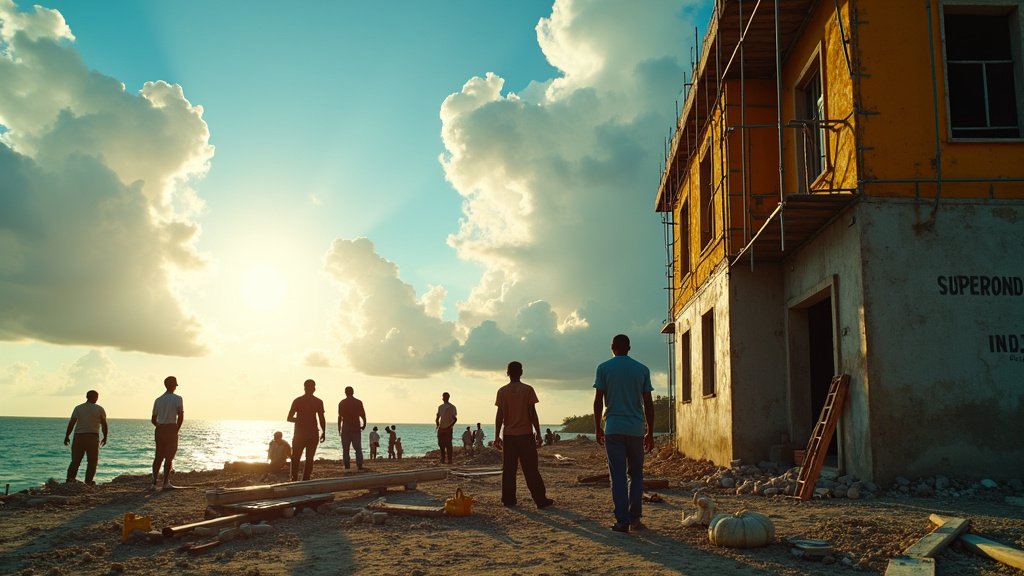
A monumental financial package, crucial for Jamaica Hurricane Aid, is set to aid Jamaica’s recovery. International partners committed up to US$6.7 billion. This support will span three years and aims to rebuild communities post-Hurricane Melissa. Several major institutions joined forces, including CAF, the CDB, the IDB Group, the IMF, and the World Bank Group, making this a significant development for the island nation and vital Jamaica Hurricane Aid. This extensive Jamaica Hurricane Aid package is designed to bolster Jamaica economic support.
Hurricane Melissa’s Devastating Impact and the Need for Jamaica Hurricane Aid
Hurricane Melissa struck Jamaica as a Category 5 storm, one of the strongest ever recorded in the region. It made landfall on October 28, unleashing catastrophic flooding and landslides with heavy rainfall and powerful winds. Preliminary estimates place the total damage at US$8.8 billion, with some reports suggesting damages could reach US$10 billion, equivalent to a significant portion of Jamaica’s GDP. The hurricane damaged or destroyed an estimated 116,000 structures, severely impacting homes, infrastructure, and agriculture, leaving many citizens without power and essential services. This catastrophic event underscored the urgent need for comprehensive Jamaica Hurricane Aid.
A Coordinated Global Response for Jamaica Hurricane Aid
Prime Minister Andrew Holness requested international assistance, leading to a unified commitment from global financial bodies. The US$6.7 billion package aims for long-term recovery and strengthening resilience, incorporating various financing types including emergency preparedness funds, sovereign loans, grant support, and private sector investments. This collaborative effort ensures a fiscally responsible rebuilding plan, a testament to the importance of dedicated Jamaica Hurricane Aid.
Funding Breakdown and Mobilization for Hurricane Recovery
A substantial portion of the aid is new sovereign financing, with up to US$3.6 billion to fund the government’s recovery program. CAF will provide up to US$1 billion, and the IDB will also offer up to US$1 billion in sovereign financing. The World Bank Group commits up to US$1 billion for budget support and critical projects, while the Caribbean Development Bank (CDB) will contribute up to US$200 million. These funds will support resilient infrastructure and small businesses. Additionally, Jamaica requested up to US$415 million from the IMF’s Rapid Financing Instrument for natural disasters, demonstrating the scale of the international financial package required for post-hurricane reconstruction.
Furthermore, private sector investment is crucial for reconstruction. IDB Invest, the IFC, and MIGA are working to mobilize an estimated US$2.4 billion. This blend of public and private capital aims to scale up recovery efforts, contributing significantly to the overall disaster recovery funding and Caribbean rebuilding efforts.
Early Response and Resilience Framework for Jamaica Hurricane Aid
Jamaica’s existing disaster risk financing framework proved vital, enabling a rapid flow of emergency funds to supplement government resources. In total, US$662 million was accessed for urgent needs from the Government’s Contingency Fund and National Natural Disaster Reserve Fund (US$37 million). The Caribbean Catastrophe Risk Insurance Facility (CCRIF) provided US$91 million, and the World Bank Group’s Catastrophe Bond contributed US$150 million. The IDB’s Contingent Credit Facility offered US$300 million. An additional US$42 million (scalable to US$84 million) was available from the World Bank Group’s Catastrophe Deferred Drawdown Option. An initial US$12 million in grants has also been mobilized, forming a critical part of the immediate natural disaster relief.
The Path to Reconstruction with Jamaica Hurricane Aid
Comprehensive recovery planning is now underway, focusing on critical priorities and reinforcing national resilience. The initiative emphasizes building back better to create infrastructure that can withstand future storms. The government plans to establish a National Reconstruction and Resilience Authority (NARA) to lead reconstruction efforts. The international partners are also providing technical assistance, drawing on global best practices in disaster response, to ensure effective Jamaica Hurricane Aid.
A Resilient Future Ahead with Strong Jamaica Hurricane Aid
The massive funding injection signifies strong international confidence and highlights Jamaica’s importance as a member of the global community. The coordinated approach underscores a unified commitment to help Jamaica navigate this challenging period. The island nation is on a path towards a stronger, more resilient future, bolstered by significant Jamaica Hurricane Aid. This news is a welcome headline for many seeking effective Hurricane Melissa recovery and substantial Jamaica Hurricane Aid.