
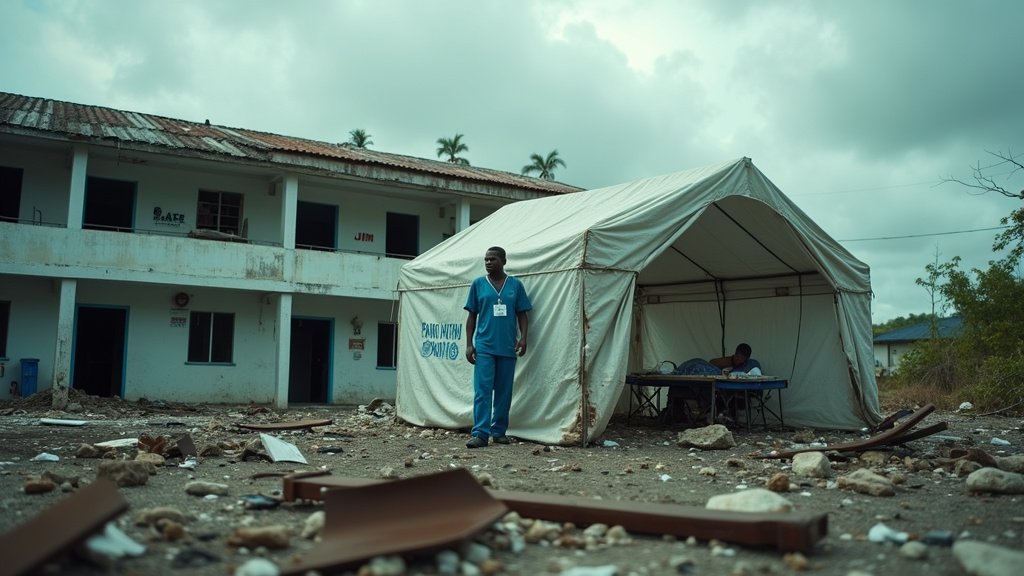
Port-au-Prince, Jamaica – November 5, 2025 – In the wake of the catastrophic impact of Hurricane Melissa, a severe Jamaica Health Crisis has emerged. The Pan American Health Organization (PAHO) and the World Health Organization (WHO) have issued a critical donor alert, urgently seeking $14.2 million to bolster Jamaica’s health sector and address the immediate and long-term needs of its affected population. This news highlights the immense scale of destruction and the vital role of international aid in recovery efforts, underscoring the gravity of the Jamaica Health Crisis.
Hurricane Melissa Unleashes Unprecedented Fury on Jamaica
Hurricane Melissa, a formidable Category 5 storm, made landfall on Jamaica’s southwestern coast on October 28, 2025, bringing with it sustained winds exceeding 185 mph, torrential rainfall, and devastating storm surges. It has been recognized as the strongest hurricane ever to strike Jamaica and one of the most powerful Atlantic storms on record. The slow-moving system lingered over the island for hours, causing widespread flooding, landslides, and catastrophic damage, particularly across the southern and western regions. This devastating event has sent shockwaves through the Caribbean, with over 50 lives lost and more than a million people displaced across the region, exacerbating the developing Jamaica Health Crisis.
Jamaica’s Health Infrastructure Critically Damaged Amidst Jamaica Health Crisis
The impact on Jamaica has been severe. As of early November, the country had confirmed 32 deaths and 94 injuries, with over 7,000 individuals remaining in shelters. More than 1.5 million people, over half the national population, have been affected by loss of housing, livelihoods, and prolonged power and water outages. The damage extends significantly to the health sector, with five major hospitals in the western and southern regions suffering severe structural damage. At least 15 health facilities across the country experienced significant damage, and several remain operational with limited resources, facing critical fuel shortages for generators and insufficient medical supplies, contributing to the ongoing Jamaica Health Crisis. Seventy water supply systems are inoperable due to contamination and electrical failures, exacerbating the risk of disease outbreaks. Forty percent of facilities island-wide are still experiencing power instability, severely compromising the continuity of essential health services.
Mounting Health Crises and Urgent Needs in the Jamaica Health Crisis
Initial health assessments reveal a dire situation where essential services are under severe strain, particularly for vulnerable populations including children, pregnant women, the elderly, and those with chronic conditions. Infrastructure damage and service disruptions have created formidable barriers to accessing care, a key aspect of this Jamaica Health Crisis. Beyond physical health, mental health needs are rapidly emerging as a critical concern, with communities grappling with widespread trauma and loss. The breakdown of sanitation, widespread displacement, and crowded shelters create fertile ground for the spread of waterborne, foodborne, mosquito-borne, and respiratory illnesses, posing a substantial risk of disease outbreak risk. Logistical challenges continue to hinder access to affected communities, delaying damage assessments and the delivery of life-saving aid and disaster relief Jamaica desperately needs.
PAHO/WHO Mobilizes Critical Resources to Combat Jamaica Health Crisis
In response to this escalating crisis, PAHO/WHO has issued an urgent donor alert, outlining the most pressing health needs and the funding required over the next six months to address the Jamaica Health Crisis. The organization is seeking $14.2 million, with $10.2 million specifically earmarked to support the continuity of essential care, including crucial mental health support, and to restore the damaged health services capacity. PAHO/WHO has already activated its emergency procedures and deployed twelve international experts to Jamaica. These experts are assisting with infrastructure damage assessment, environmental health, mental health and psychosocial support, emergency medical teams, logistics, and coordination. Daily collaboration is ongoing with Jamaica’s National Health Emergency Operations Center, the UN Country Team, and other humanitarian partners. PAHO is also coordinating health sector responses and participating in water, sanitation, and hygiene (WASH) efforts, while mobilizing medical supplies from its regional reserves amidst a significant medical supplies shortage.
Economic Fallout and a Stark Warning of the Jamaica Health Crisis
The economic consequences for Jamaica are staggering, with initial estimates suggesting damages equivalent to 28% to 32% of the nation’s Gross Domestic Product. Prime Minister Andrew Holness has declared the country a disaster area, warning that the costs will significantly impact Jamaica’s debt-to-GDP ratio, a direct consequence of the Jamaica Health Crisis and the wider devastation. Experts have noted that Melissa was powered by record sea temperatures, underscoring concerns raised by scientists about the intensifying nature of storms due to climate change. This event serves as a stark warning, highlighting the vulnerability of island nations to extreme weather events and the critical need for robust disaster preparedness and immediate humanitarian assistance, particularly for health infrastructure recovery.
A Call for Global Solidarity to End the Jamaica Health Crisis
The PAHO/WHO donor alert underscores the immediate and critical need for international support to prevent further loss of life, mitigate disease outbreaks, and begin the long process of recovery for Jamaica, given the severity of the Jamaica Health Crisis. The organization emphasizes that additional resources are urgently required to scale up and sustain these vital health response operations on the ground, protecting the lives and well-being of the affected population in the face of this unprecedented disaster and the looming threat of Hurricane Melissa damage. This news serves as a global call for solidarity and timely action.