
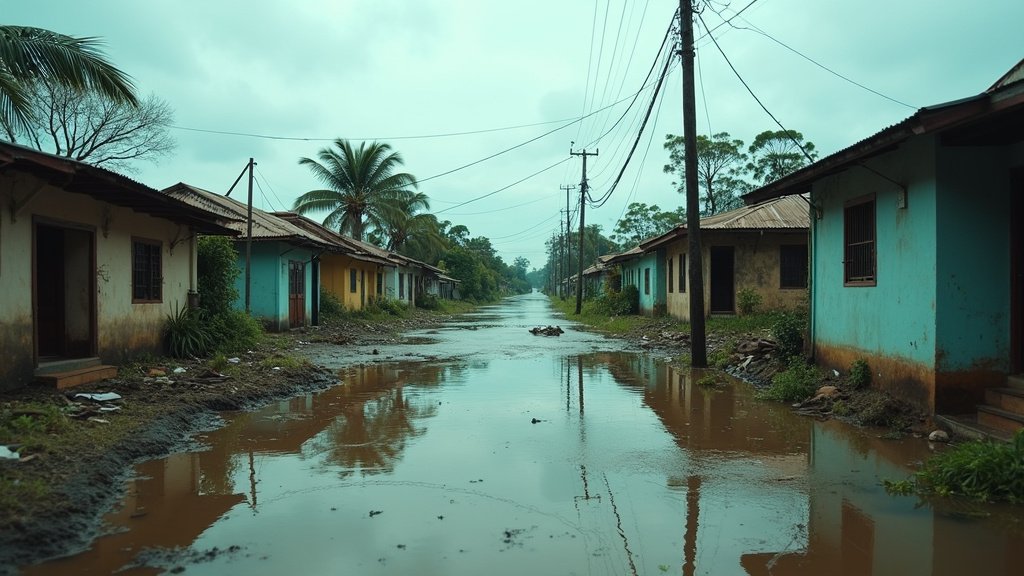
Weeks after Hurricane Melissa, a catastrophic Category 5 storm, ravaged Jamaica, numerous communities remain under a persistent Jamaica groundwater threat. This ongoing Jamaica groundwater threat is significantly complicating ongoing recovery operations. The Office of Disaster Preparedness and Emergency Management (ODPEM) has issued warnings highlighting that saturated ground conditions are leading to prolonged Jamaica groundwater flooding, impeding efforts to restore normalcy and exacerbating the overall post-hurricane impact.
The Lingering Jamaica Groundwater Threat and Rising Groundwater Levels
The intense rainfall associated with Hurricane Melissa has saturated Jamaica’s porous limestone terrain, creating significant groundwater mounds. This phenomenon, where underground water levels rise dramatically, is now causing extensive surface flooding in low-lying and coastal areas. In communities like Content in Manchester, rising groundwater levels have reached unprecedented heights, submerging homes and rendering roads impassable. Similar situations are being monitored in other parishes, where water continues to seep from the subsurface long after the storm’s surface floods have receded. This persistent groundwater inundation not only delays cleanup but also undermines road foundations and increases contamination risks for shallow wells, posing a long-term challenge for affected communities. Historically, such groundwater flooding has occurred in areas like Content, Manchester, with significant events noted in 2002 and 1977. Addressing this Jamaica groundwater threat is paramount for effective recovery.
Hurricane Melissa’s Devastating Impact and the Jamaica Groundwater Threat
Hurricane Melissa, the strongest storm to make landfall in Jamaica since records began in 1851, unleashed catastrophic winds and torrential rain on October 28, 2025. The storm inflicted widespread destruction, with initial estimates placing the physical damage at a staggering US$8.8 billion, equivalent to 41% of Jamaica’s 2024 Gross Domestic Product. This unprecedented scale of destruction makes Melissa the costliest storm ever to hit the island nation. The hardest-hit parishes, including St. Elizabeth, Westmoreland, and St. James, bore the brunt of the impact. Tragically, the hurricane resulted in 45 confirmed deaths, with 15 individuals still missing and an additional nine cases under investigation. Nearly 1.6 million people were affected, and approximately 30,000 households were displaced, with around 146,000 structures sustaining damage, including over 120,000 homes that lost their roofs. The Hurricane Melissa recovery is being significantly hampered by the subsequent Jamaica groundwater threat, prolonging the recovery period.
Infrastructure and Services Under Strain Amidst Jamaica Groundwater Threat
The storm’s ferocity crippled essential infrastructure across Jamaica. Widespread damage was reported to roofs, electrical systems, sewage and water networks, and drainage systems. Landslides further compounded the infrastructure damage Jamaica experienced, disrupting vital services. As of mid-November, while progress has been made, approximately 31% of Jamaica remained without electricity, and 24% of the National Water Commission’s (NWC) system was offline [Initial Context]. Power restoration efforts are ongoing but hampered by accessibility issues and the need for rebuilding. Similarly, water supply restoration faces challenges due to damaged pipelines, blocked intakes, and the pervasive flooding caused by rising groundwater levels, which complicates access and cleanup. This highlights the significant Jamaica groundwater threat to essential services and the broader recovery.
Recovery Efforts and Challenges Posed by the Jamaica Groundwater Threat
In the aftermath, ODPEM, led by Commander Alvin Gayle, is coordinating extensive recovery efforts. Humanitarian partners have been instrumental, distributing over 1.3 million meals and significant care packages. International support, including medical teams from the UK and assistance from the Royal Navy, has also been crucial in providing immediate aid and repairs. However, the persistent flooding from rising groundwater levels presents a significant, ongoing hurdle to Hurricane Melissa recovery. This phenomenon, a key aspect of the Jamaica groundwater threat, delays debris removal, hinders road repairs, and poses public health risks due to potential contamination of water sources. The sheer scale of debris generated—estimated at nearly five million metric tonnes—further complicates these efforts.
A Climate-Influenced Crisis Exacerbating the Jamaica Groundwater Threat
Preliminary scientific analysis suggests that Hurricane Melissa’s exceptional intensity was amplified by record-warm sea-surface temperatures, a clear indicator of climate change Jamaica‘s influence on extreme weather events. Warmer oceans can intensify hurricanes, while a warmer atmosphere can hold more moisture, leading to heavier rainfall and increased flooding potential. Rising sea levels also contribute to making coastal communities more vulnerable to storm surges. This event underscores the need for Jamaica to build community resilience against increasingly powerful storms and their cascading effects, such as prolonged groundwater flooding, a critical component of the Jamaica groundwater threat.
Looking Ahead: Addressing the Jamaica Groundwater Threat
As Jamaica continues its recovery from Hurricane Melissa, the ongoing Jamaica groundwater threat poses a complex challenge. The nation’s ability to rebuild and strengthen its infrastructure will depend on effectively addressing this persistent flooding. The resilience shown by the Jamaican people, coupled with continued national and international support and effective Jamaica disaster preparedness, will be critical in navigating the path towards long-term recovery and preparedness for future climate-driven disasters. This ongoing news highlights the critical need for sustained attention and resources for affected communities facing the severe Jamaica groundwater threat.