
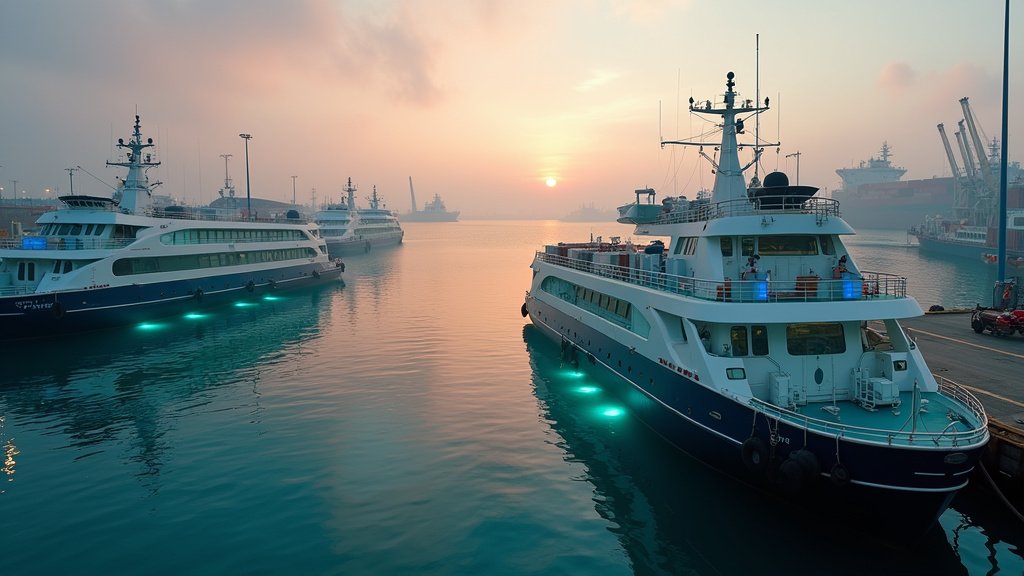
Jamaica is actively advancing its role in the future of marine fuels. A crucial national stakeholder workshop recently took place. This event explored the island’s potential in alternative marine fuel supply and demand. Global shipping is transitioning to cleaner energy. Jamaica aims to be a key player in this shift. The workshop was a vital step forward.
A Strategic Maritime Hub
Bertrand Smith, Director General of the Maritime Authority of Jamaica, highlighted the opportunity. Jamaica can assess decarbonization’s economic impact. It can leverage its strategic maritime advantages. The country’s location is excellent. Kingston Harbour boasts significant depth. These assets can strengthen its position. It aims to be a leading regional shipping and bunkering hub. This vision guides Jamaica’s maritime development.
Key Workshop Discussions
The national workshop brought together diverse stakeholders. Public and private sector leaders attended. They represented government ministries, port authorities, and energy companies. Academia and industry experts also participated. Discussions focused on several critical areas. These included market demand for new fuels. They also covered supply potential and infrastructure readiness. Regulatory considerations were thoroughly examined. Investment priorities were also identified.
Exploring New Fuel Pathways
The initiative assesses Jamaica’s capacity. It looks at producing and bunkering new fuels. Options include biofuels, methanol, ammonia, and hydrogen. Liquefied Natural Gas (LNG) is seen as a transition fuel. However, rapid development of low-carbon e-fuels and ammonia is also noted. These emerging fuels are moving from concept to reality. The Maritime Authority is preparing for this change. Studies are underway to inform decisions.
Bunkering Sector Growth
Jamaica’s bunkering sector is already growing. Five operators are currently active. This includes Shell LNG. LNG bunkering volumes are increasing. This is happening at Kingston and the outer anchorage. Ship-to-ship activity is also expanding. Portland Bight sees more activity. A modern legal framework is being developed. This will support a competitive bunkering sector. Legislation is expected soon. Petrojam Limited, Jamaica’s refinery, plays a role. It supplies fuels for export and domestic use. TFG Marine, with local partner Scott Petroleum, also operates in the sector. They aim to set new service benchmarks.
IMO Support and Regional Focus
The workshop was part of an IMO study. It was supported by the GreenVoyage2050 Programme. This IMO initiative helps developing countries reduce emissions. It grounds decarbonization efforts in evidence. The findings from Jamaica’s workshop are important. They will inform a regional roundtable. This event will be held in Trinidad and Tobago. It aims to foster a coordinated Caribbean approach. Regional leaders emphasize collective action. Harmonizing policies and sharing knowledge are key.
Looking Ahead
Jamaica is proactively addressing maritime decarbonization. The nation is leveraging its strategic advantages. It is also collaborating regionally. This forward-thinking approach positions Jamaica well. It prepares the island for the evolving global shipping landscape. The country is set to enhance its status. It aims to be a leader in sustainable maritime practices. This news signals significant progress for Jamaica’s shipping sector.