
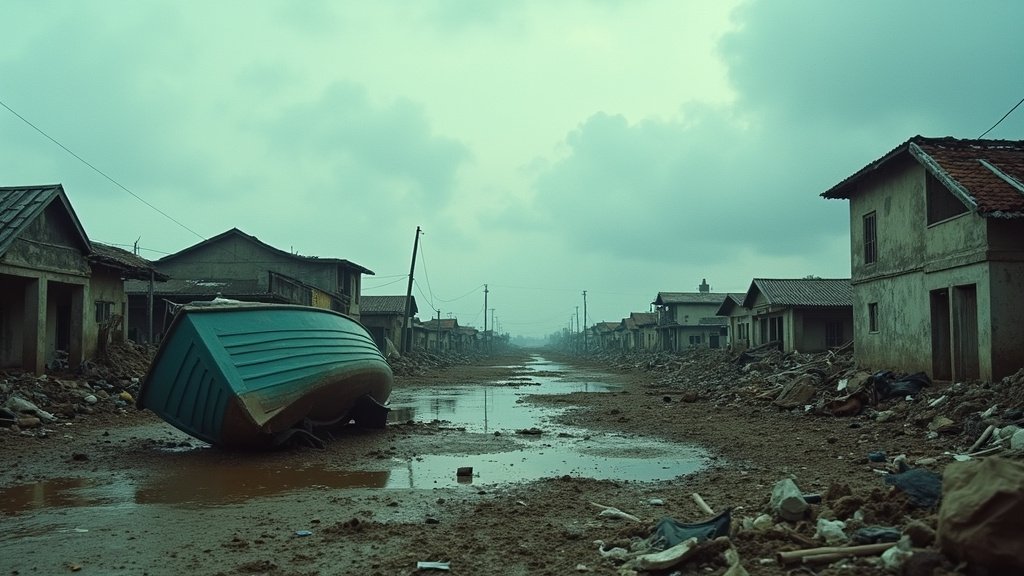
The reality for Jamaica economic impact following Hurricane Melissa is stark. The Planning Institute of Jamaica (PIOJ) has issued a grim forecast for the island nation, projecting a significant economic contraction of 11 to 13 percent for the October to December 2025 quarter, directly attributed to the devastating effects of Hurricane Melissa Jamaica. This severe downturn underscores the profound Hurricane Melissa damage.
Hurricane Melissa Jamaica: A Catastrophic Impact
Category 5 Hurricane Melissa made landfall on Jamaica on October 28, 2025, unleashing catastrophic winds and torrential rain across the island. This powerful hurricane was the strongest ever recorded to hit Jamaica directly, compounding existing vulnerabilities in areas still recovering from previous storms. The sheer force of Hurricane Melissa Jamaica caused immense destruction, leaving many communities in dire need of immediate assistance.
Jamaica’s Economic Shockwaves from Hurricane Melissa
The island’s economy, which was on a promising growth trajectory with an estimated 3.1 percent growth for the first half of the fiscal year, has been abruptly altered by Hurricane Melissa. The PIOJ now anticipates a 3 to 6 percent decline for the entire fiscal year 2025/2026. The projected contraction for the final quarter of 2025, driven by Hurricane Melissa Jamaica, is particularly significant, marking the sharpest quarterly decline and the worst performance since the COVID-19 pandemic’s second quarter of 2020. This downturn halts three consecutive quarters of economic growth and overshadows the recovery efforts from Hurricane Beryl and Tropical Storm Raphael, as the impact of Hurricane Melissa Jamaica is truly unprecedented.
Devastation Across Key Sectors Due to Hurricane Melissa Jamaica
Hurricane Melissa Jamaica has severely impacted multiple industries. The agriculture sector losses are substantial, with seven of the most affected parishes being vital for domestic crop production, animal husbandry, and export farming. Farmlands, livestock, and fishing equipment have sustained immense losses, raising serious concerns about food security and expecting price increases for essential goods. The accommodation and food services industry is also facing major disruptions. Approximately 89 percent of Jamaica’s hotel room stock is situated in storm-affected areas, leading to temporary closures and restricted operations. Furthermore, a US travel advisory in November cautioned Americans to reconsider travel to Jamaica, further exacerbating the tourism industry crisis following the devastation caused by Hurricane Melissa Jamaica.
Infrastructure Crippled by Hurricane Melissa Jamaica
Critical infrastructure across Jamaica has sustained extensive damage from Hurricane Melissa Jamaica. Housing stock has been severely impacted, and electricity generation, transmission, and distribution networks have failed. Roads and water supply infrastructure are crippled, alongside damage to telecoms, seaports, and airports. This widespread infrastructure damage Jamaica complicates response and recovery efforts, leaving many communities isolated. The restoration of essential services is a slow process, as electricity is crucial for powering water pumping stations. The construction sector has experienced work stoppages on major projects. Damage to ICT infrastructure will reduce services and sales, and transportation networks are severely curtailed due to the effects of Hurricane Melissa Jamaica.
Financial and Business Impact of Hurricane Melissa Jamaica
Preliminary estimates place the physical damage from Hurricane Melissa Jamaica at US$8.8 billion, equivalent to 41 percent of Jamaica’s 2024 GDP. This makes it the costliest hurricane in Jamaica’s history. Prime Minister Andrew Holness estimated the damage between 28% and 32% of GDP, representing significant losses for businesses. The business sector, which was optimistic before the storm with high consumer and business confidence, now faces challenges sourcing materials and potential skilled labor shortages that may slow recovery. The debt-to-GDP ratio is expected to rise, prompting the government to suspend its Fiscal Responsibility Law for two years to address the massive reconstruction costs ahead following Hurricane Melissa Jamaica.
Navigating the Path to Recovery from Hurricane Melissa Jamaica
Jamaica faces a challenging road to recovery from Hurricane Melissa Jamaica. Stagflation, a combination of low growth and high inflation, is a likely scenario, along with increased unemployment. However, officials project a return to growth in the October to December 2026 quarter, following intensive repair and reconstruction efforts. Investors are advised to take a long view, as economies often experience strong ‘catch-up growth’ after sharp declines. The government’s focus is on immediate relief and long-term reconstruction, including building more resilient infrastructure. International partners like the World Bank, IDB, and the United Nations Development Programme (UNDP) are providing support and collaborating on damage assessments and initial grants to restore community life and livelihoods, recognizing the vital role of private sector resilience in the reconstruction after Hurricane Melissa Jamaica.
A Resilient Nation’s Challenge: Recovering from Hurricane Melissa Jamaica
Hurricane Melissa Jamaica has severely tested the nation’s resilience, ushering in a difficult economic period. The immediate focus is on relief and rebuilding damaged infrastructure, alongside supporting affected businesses and communities. The path to full economic recovery from Hurricane Melissa Jamaica will be long and requires sustained effort and strategic planning. Jamaica is now concentrating on building back stronger to withstand future climate shocks. This event highlights the ongoing challenges for developing nations facing the dual threat of natural disasters and climate change, emphasizing the urgent need for recovery and future preparedness in the wake of Hurricane Melissa Jamaica.