
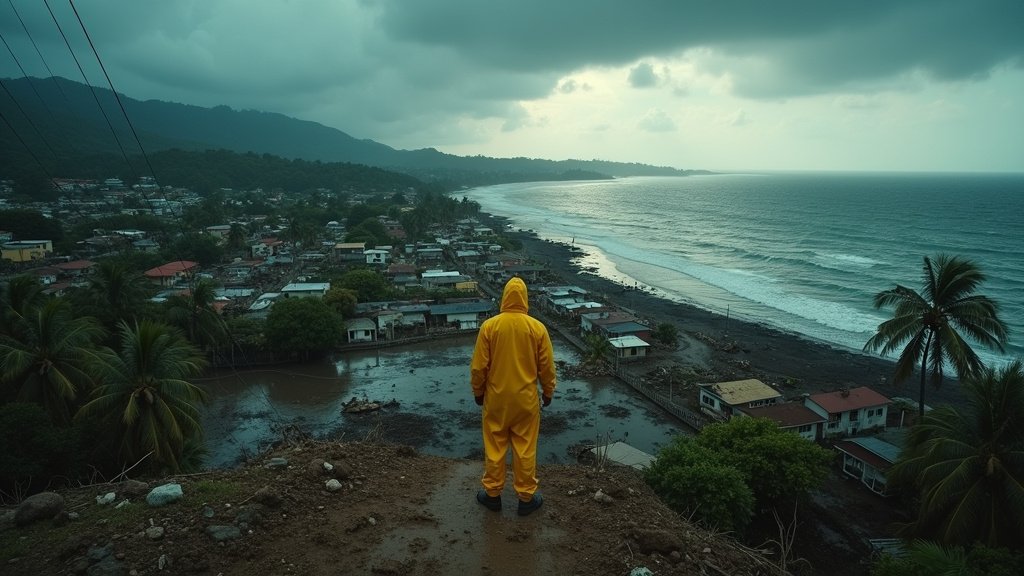
Jamaica is confronting the devastating aftermath of Hurricane Melissa, a catastrophic storm that struck the island on October 28, 2025. The preliminary damage assessment for Hurricane Melissa Jamaica, released by the World Bank and the Inter-American Development Bank (IDB), reveals an astonishing US$8.8 billion in physical destruction. This figure represents a staggering 41% of Jamaica’s entire Gross Domestic Product (GDP) for 2024, making Hurricane Melissa the costliest natural disaster in the nation’s recorded history, highlighting the immense Hurricane Melissa damage and the scale of the Jamaica natural disaster.
Hurricane Melissa Jamaica: An Unprecedented Scale of Destruction
The sheer magnitude of the damage underscores the ferocity of Hurricane Melissa, which made landfall with 185-mile-per-hour winds, positioning it as one of the strongest Atlantic hurricanes on record. The US$8.8 billion estimate for Hurricane Melissa Jamaica, derived from the Global Rapid Damage Estimation (GRADE) assessment, encompasses physical damage across key sectors. This unparalleled economic blow will undoubtedly shape Jamaica’s trajectory for years to come, marking a significant challenge for national recovery efforts following this Jamaica natural disaster. The hurricane impact Jamaica is profound.
Sector-by-Sector Impact of Hurricane Melissa Jamaica
The comprehensive report details how the destruction was distributed across the island’s vital economic pillars following Hurricane Melissa Jamaica. Residential buildings bore the brunt of the damage, accounting for 41% of the total estimated cost, equating to approximately US$3.7 billion. This includes widespread damage to homes and their contents, as well as mixed-use residential buildings, a direct consequence of the Hurricane Melissa damage.
Infrastructure suffered significant losses, with 33% of the total damage attributed to this sector, amounting to roughly US$2.9 billion. This category encompasses critical networks such as power, water, telecommunications, seaports, airports, roads, and bridges, all vital for the nation’s functioning after Hurricane Melissa Jamaica. Effective Jamaica reconstruction will depend on restoring these vital systems.
Non-residential buildings, including commercial establishments, industrial facilities, and tourism infrastructure, incurred 21% of the damage, estimated at US$1.8 billion, a direct consequence of Hurricane Melissa Jamaica. This highlights the broad hurricane impact Jamaica.
The agriculture sector, the heart of Jamaica’s productive belt, sustained 5% of the physical damage, estimated at US$389 million. While the direct physical losses were comparatively lower, the assessment warns of significant and prolonged economic repercussions for farmers, including damage to livestock and farm facilities, another aspect of the Hurricane Melissa damage.
The Human Toll of Hurricane Melissa Jamaica
Beyond the economic figures, Hurricane Melissa inflicted a profound human cost on Jamaica. Reports indicate that at least 45 people lost their lives, with 15 individuals still missing in the storm’s immediate aftermath. Thousands of households have been displaced, with many communities cut off due to the destruction of roads and essential services, a tragic outcome of Hurricane Melissa Jamaica. The United Nations reported that approximately 36,000 people required urgent food assistance in the wake of the disaster, part of the extensive natural disaster assessment.
A Coordinated Path to Reconstruction for Hurricane Melissa Jamaica
In response to the crisis, international financial institutions and governments have mobilized to support Jamaica’s recovery efforts following Hurricane Melissa Jamaica. The World Bank and the IDB are collaborating closely with the Jamaican government, offering technical expertise and financial assistance to guide reconstruction. The goal is comprehensive Jamaica reconstruction.
Susana Cordeiro Guerra, World Bank Vice President for Latin America and the Caribbean, pledged full support, stating, “The World Bank stands firmly with the Government and people of Jamaica as they transition from response to reconstruction. We are ready to mobilise our full range of support in collaboration with other international development partners to help deliver a resilient and inclusive recovery”. Similarly, Anabel González, IDB Vice President for Countries and Regional Integration, emphasized the bank’s commitment to helping Jamaica rebuild stronger and safer from Hurricane Melissa Jamaica.
Jamaica has also benefited from its existing disaster risk financing systems, including a US$150 million payout from its catastrophe bond, providing an immediate, albeit partial, financial lifeline. The Inter-American Development Bank has further expanded its emergency credit line, making up to US$300 million in fast-disbursing resources available for humanitarian assistance and the restoration of essential services, crucial for Jamaica reconstruction.
Other international partners, including the United States and the United Kingdom, have deployed disaster response teams, specialized search and rescue units, and medical personnel to provide critical aid and support. The UN has also allocated US$4 million from its Central Emergency Response Fund (CERF) to scale up humanitarian operations in the aftermath of this Jamaica natural disaster, aiding the hurricane aftermath Jamaica.
The Road Ahead for Jamaica Post-Hurricane Melissa
The devastating impact of Hurricane Melissa presents Jamaica with an immense rebuilding challenge. The extensive damage to infrastructure, housing, and the economy will require sustained national effort and robust international cooperation for Jamaica reconstruction. The focus now shifts to a resilient and inclusive reconstruction, aiming not only to restore what was lost but also to build a more resilient nation capable of withstanding future climate-related shocks. This news serves as a stark reminder of the vulnerabilities faced by small island developing states in the face of escalating climate events, especially concerning the costliest storm history. The economic damage Jamaica faces is substantial.