
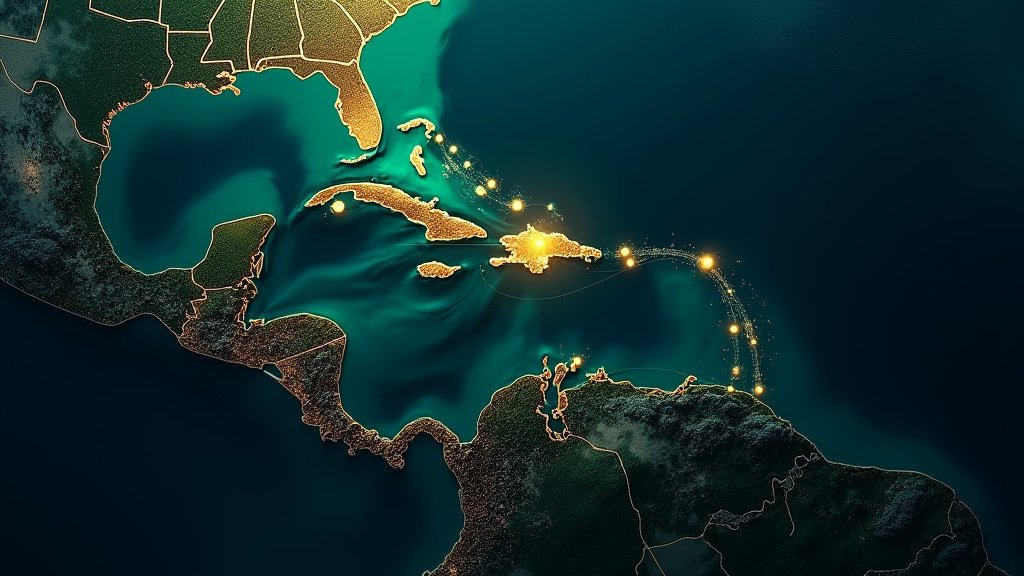
Jamaica is reportedly in discussions to potentially accept Third Country Nationals (TCNs) from the United States, a move that could significantly alter regional migration and asylum dynamics.
Key Highlights:
- Jamaica is considering accepting Third Country Nationals from the U.S.
- The discussions are in their early stages, with no firm agreements yet.
- This potential policy shift could impact regional migration patterns.
- Details on the specific criteria for TCNs remain undisclosed.
Exploring the Implications of TCN Acceptance
The Jamaican government is reportedly engaged in preliminary talks regarding the acceptance of Third Country Nationals (TCNs) who are currently in the United States. This development, if it materializes into a concrete policy, could represent a significant shift in how Jamaica, and potentially other Caribbean nations, manage asylum claims and migration flows originating from the U.S. While details are scarce, the mere contemplation of such an agreement signals a response to evolving global migration challenges and the pressures faced by countries like the United States in processing asylum seekers.
Regional Migration Dynamics
Caribbean nations often find themselves at a crossroads of migration, acting as both transit points and destinations. The U.S. has been seeking agreements with various countries to manage the flow of asylum seekers, particularly those arriving at its southern border. An agreement with Jamaica to process TCNs could be part of a broader strategy by the U.S. to expand its asylum processing capacity or to facilitate returns to countries that may be perceived as safer or more appropriate for individuals to pursue their claims. This move could also influence other Caribbean states, potentially leading to a coordinated regional approach or, conversely, to a diversion of migrant flows to other islands if the criteria or terms differ.
Economic and Social Considerations
Should Jamaica agree to accept TCNs, there would be substantial economic and social implications to consider. The processing of asylum claims requires significant resources, including personnel for screening, legal aid, and housing. The Jamaican government would need to assess its capacity to manage these demands, potentially requiring international assistance or new funding mechanisms. Furthermore, the integration of TCNs into Jamaican society, should their claims be successful, would necessitate careful planning to ensure social cohesion and access to services. Conversely, if the agreement is primarily for processing and potential return to other countries, the focus would be on the logistical and diplomatic frameworks required.
Legal and Diplomatic Frameworks
Any such agreement would need to be underpinned by robust legal and diplomatic frameworks. This would involve ensuring compliance with international refugee law and human rights standards. The specifics of the agreement would likely detail the types of TCNs eligible for processing, the criteria for asylum claims, the duration of stay, and the mechanisms for cooperation between Jamaica and the U.S. Such a framework would also need to address potential challenges, such as ensuring fair and efficient processing and preventing secondary movements of individuals seeking to circumvent the agreement.
U.S. Asylum Policy Context
This potential development occurs within the broader context of evolving U.S. immigration and asylum policies. The U.S. has been exploring various avenues to manage an increasing number of asylum seekers, including expanding legal pathways, strengthening border enforcement, and increasing cooperation with countries in the Western Hemisphere. Agreements for processing asylum claims in third countries, or facilitating returns to them, have become a significant component of these efforts. Jamaica’s potential role would be a notable expansion of this strategy into the Caribbean.
FAQ: People Also Ask
What are Third Country Nationals (TCNs)?
Third Country Nationals (TCNs) are individuals seeking asylum or international protection who are present in a country other than their country of origin or the country where they last habitually resided. In this context, TCNs in the United States would be individuals who are not citizens of the U.S. and are seeking protection, potentially being processed or relocated to a third country like Jamaica.
Why would the U.S. seek to send TCNs to Jamaica?
The U.S. may seek such agreements to alleviate pressure on its own asylum system, to process claims in countries deemed safer or more appropriate for certain nationalities, or as part of broader regional migration management strategies. It aligns with a broader trend of seeking third-country processing arrangements.
What are the potential benefits for Jamaica?
Potential benefits for Jamaica could include financial or technical assistance from the U.S. in exchange for cooperation, enhanced diplomatic ties, and a role in regional migration governance. It could also be seen as contributing to global humanitarian efforts.
What are the potential challenges for Jamaica?
Challenges include the significant financial and logistical resources required for processing asylum claims, potential social integration issues, ensuring compliance with international human rights standards, and managing public perception and domestic impact.
Has Jamaica accepted TCNs from other countries before?
While Jamaica has historically been a destination and transit country for various migrants, specific formal agreements for processing TCNs from a country like the U.S. would likely be a new development in its immigration policy landscape. Details on past practices are not widely publicized in this specific context.