
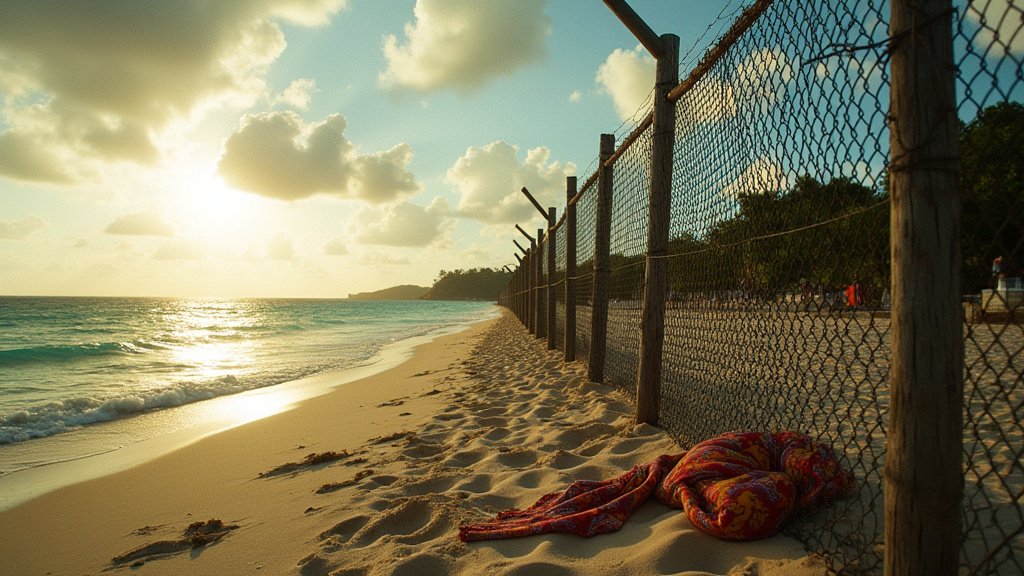
Jamaica is facing a growing crisis as public access to its world-renowned beaches becomes increasingly restricted. Residents and visitors alike are expressing frustration over the privatization and encroachment on coastlines, leading to a movement demanding the restoration of “our beaches” for all.
Key Highlights:
- Public access to many of Jamaica’s beaches is being curtailed due to private development and hotel expansion.
- Local communities are organizing and voicing strong opposition to the loss of traditional access points.
- The issue highlights a conflict between tourism development and the rights of citizens to enjoy natural resources.
- Calls for stronger government regulation and enforcement of public beach access laws are mounting.
The Shrinking Shoreline: A Battle for Beach Access
Jamaica, an island nation celebrated for its breathtaking turquoise waters and pristine sandy shores, is grappling with a disturbing trend: the steady erosion of public access to its coastline. What was once freely accessible to all citizens and visitors is increasingly being blocked by resorts, private residences, and commercial developments. This situation has ignited a passionate debate and galvanized local communities to reclaim what they feel is rightfully theirs.
The idyllic image of Jamaica often conjures scenes of sunbathers and swimmers enjoying the open sea, but for many locals, this dream is becoming a distant reality. The privatization of beachfronts has led to the erection of fences, the imposition of hefty access fees, and the outright denial of entry to popular spots. This not only deprives Jamaicans of their natural heritage but also impacts local livelihoods that depend on the free flow of people to the coast.
Roots of the Crisis: Development and Deregulation
The current predicament is largely a consequence of unchecked tourism development over several decades. As the demand for luxury resorts and exclusive villas grew, so did the pressure to acquire prime beachfront land. In many instances, regulations meant to protect public access were either inadequate, poorly enforced, or circumvented. This has resulted in a patchwork of privately owned strips of coast, leaving limited and often inconvenient access points for the general public. The allure of foreign investment has, at times, overshadowed the need to preserve the island’s natural resources for its people.
The Growing Resistance: ‘We Shouldn’t Be Forced to Fight’
In response to the escalating restrictions, a groundswell of activism has emerged. Community leaders, environmental groups, and ordinary citizens are organizing protests, petitions, and public awareness campaigns. The sentiment, encapsulated by the phrase “We shouldn’t be forced to fight for what is already ours,” resonates deeply. These movements aim to lobby the government for stricter laws, clearer demarcation of public versus private beach areas, and robust enforcement mechanisms. Social media has become a powerful tool, amplifying voices and connecting individuals across different parishes who share the same grievance.
Economic and Social Implications
The closure of beaches has far-reaching consequences beyond mere inconvenience. Small businesses that rely on beachgoers, such as vendors, boat operators, and local eateries, suffer significantly when access is restricted. Furthermore, the social fabric of communities that have historically used specific beaches for recreation, fishing, and cultural practices is being disrupted. The loss of these communal spaces can lead to social isolation and a diminished sense of belonging. While tourism is vital for Jamaica’s economy, its sustainability is threatened if it alienates the local population and degrades the very natural assets that attract visitors in the first place.
Looking Ahead: Policy Reforms and Community Action
The path forward requires a multi-pronged approach. Experts are calling for a comprehensive review and reform of Jamaica’s coastal zone management policies. This includes establishing clear buffer zones along the coastline, mandating public access corridors in all new developments, and creating a publicly accessible registry of all beach access points. Community-led initiatives, such as beach cleanups and monitoring programs, also play a crucial role in advocating for and protecting these vital spaces. The Jamaican government faces the challenge of balancing economic development with the fundamental right of its citizens to access and enjoy their island’s natural beauty.
FAQ: People Also Ask
Q1: What is the main issue regarding beaches in Jamaica?
A1: The main issue is the increasing restriction of public access to Jamaica’s beaches due to private development and privatization, which limits the ability of citizens and visitors to enjoy these natural resources.
Q2: Why are private entities developing on Jamaican beaches?
A2: Private entities, primarily hotels and luxury property developers, seek to acquire prime beachfront land to enhance their offerings, cater to tourists seeking exclusive experiences, and maximize investment returns.
Q3: What are the consequences of reduced beach access for local communities?
A3: Reduced access negatively impacts local businesses that depend on beach tourism, disrupts traditional fishing and recreational activities, and diminishes the sense of community ownership and access to natural heritage.
Q4: What actions are being taken to address the beach access crisis?
A4: Activism, community organizing, petitions, public awareness campaigns, and calls for government policy reform are among the actions being taken to restore and protect public beach access.
Q5: How does Jamaica’s government regulate beach access?
A5: While regulations exist, their enforcement has often been inconsistent, leading to loopholes exploited by developers. There are ongoing efforts to strengthen and enforce coastal zone management policies to ensure public access is maintained and protected.