
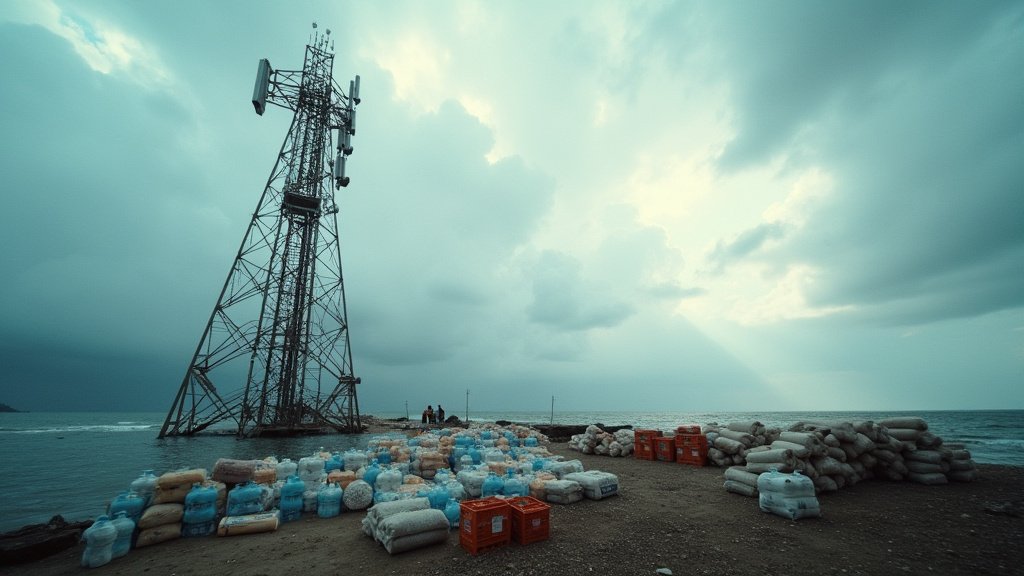
Jamaica has demonstrated remarkable speed and efficiency in its disaster relief efforts following the passage of Hurricane Melissa. Emergency services and aid organizations mobilized within hours, providing critical support to affected communities across the island.
Key Highlights:
- Immediate deployment of rescue teams to hardest-hit areas.
- Distribution of essential supplies like food, water, and shelter materials has commenced.
- Restoration of critical infrastructure, including power and communication lines, is underway.
- Collaboration between government agencies, NGOs, and international partners is ensuring a coordinated response.
Hurricane Melissa Relief Operations Underway
The swift response to Hurricane Melissa highlights Jamaica’s enhanced disaster preparedness protocols. As the storm passed, leaving a trail of damage, particularly to coastal regions and agricultural lands, the nation’s resilience was immediately put to the test. The Office of Disaster Preparedness and Emergency Management (ODPEM) has been central to coordinating the multi-agency response, working closely with the Jamaica Defence Force, the Jamaica Constabulary Force, and various local government bodies. Their immediate priority was search and rescue operations in areas where communication was lost and infrastructure was severely impacted.
Initial Assessments and Immediate Aid
Initial assessments indicate that several parishes experienced significant wind damage, localized flooding, and coastal erosion. Power outages were widespread in the immediate aftermath, disrupting normal life and hampering initial assessment efforts. However, emergency crews worked tirelessly to restore essential services. The distribution of aid has been a critical focus. Shelters have been opened for displaced residents, and the provision of food, clean water, and basic medical assistance is being prioritized. The Jamaican Red Cross and other non-governmental organizations are playing a crucial role in reaching communities with much-needed supplies and support.
Infrastructure Restoration and Long-Term Recovery
Beyond immediate relief, efforts are concentrating on the restoration of vital infrastructure. Telecommunication companies are working to repair damaged lines, and the national power company is prioritizing the re-establishment of electricity grids. The Ministry of Economic Growth and Job Creation, in conjunction with other ministries, is already beginning to assess the long-term economic impact, particularly on agriculture and tourism, which are vital to Jamaica’s economy. Plans are being formulated for rebuilding damaged homes and public facilities, with an emphasis on making them more resilient to future weather events. International aid and technical assistance are expected to supplement local efforts in the coming weeks and months.
FAQ: People Also Ask
What was the impact of Hurricane Melissa on Jamaica?
Hurricane Melissa caused significant wind damage, localized flooding, and coastal erosion in several parishes. Widespread power outages were also reported in the immediate aftermath.
Who is leading the disaster relief efforts in Jamaica?
The Office of Disaster Preparedness and Emergency Management (ODPEM) is leading the coordination of the multi-agency response, working with government bodies, emergency services, and NGOs.
What kind of aid is being provided to affected communities?
Essential supplies such as food, clean water, and shelter materials are being distributed. Medical assistance is also being provided, and shelters are available for displaced residents.
What is being done to restore essential services?
Emergency crews are working to restore power to affected areas, and telecommunication companies are repairing damaged communication lines.
What are the next steps for recovery in Jamaica?
Efforts are focused on infrastructure restoration, rebuilding damaged homes and facilities with an emphasis on resilience, and assessing the long-term economic impact on sectors like agriculture and tourism.