
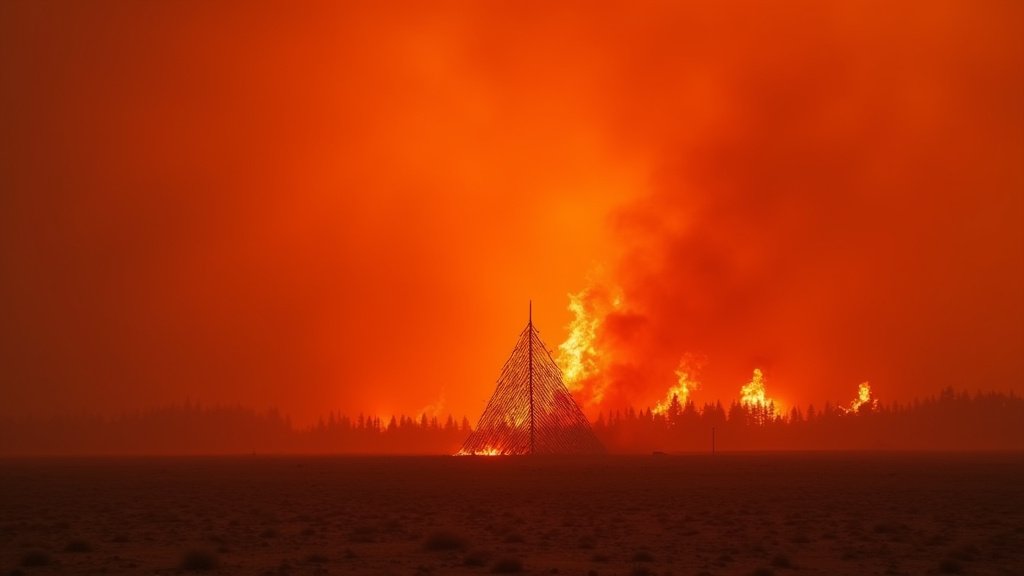
The planet is facing an unprecedented climate crisis, with alarming new data revealing a sharp increase in extreme weather events. Charts depicting a ‘world on fire’ are surging in popularity across news outlets and scientific publications, reflecting growing public concern and the undeniable impact of global warming.
Key Highlights:
- Record-breaking global temperatures continue to climb, fueling more frequent and intense heatwaves.
- Extreme weather events, including devastating wildfires, floods, and storms, are becoming the new normal.
- A surge in visual data, like ‘world on fire’ charts, indicates heightened public awareness and demand for climate action.
- Scientific consensus points to anthropogenic greenhouse gas emissions as the primary driver of these changes.
Climate Change: The Unfolding Reality
Escalating Temperature Anomalies
The Earth’s climate system is undergoing rapid and significant changes, primarily driven by human activities. The most direct indicator of this crisis is the consistent rise in global average temperatures. Recent decades have seen a marked acceleration in warming trends, leading to numerous ‘hottest year on record’ designations. These rising temperatures are not merely abstract statistics; they translate into tangible, devastating consequences across the globe. Heatwaves are becoming more prolonged, intense, and widespread, posing severe risks to human health, agriculture, and ecosystems. The “world on fire” metaphor, often visualized through complex charts and graphs, has become a stark representation of this reality, illustrating how large swathes of the planet are experiencing conditions that are increasingly unsustainable and dangerous.
The Rise of Extreme Weather
Beyond rising temperatures, the world is witnessing an alarming increase in the frequency and intensity of extreme weather phenomena. Wildfires, fueled by dry conditions and extreme heat, are becoming larger and more destructive, consuming vast areas of forest and threatening communities. Conversely, other regions are grappling with unprecedented rainfall and flooding, as atmospheric moisture increases and weather patterns become more erratic. Hurricanes and typhoons are intensifying, carrying greater destructive potential. These events are no longer considered isolated incidents but rather symptomatic of a systemic shift in our planet’s climate. The data visualizations that have gained traction, such as those starkly portraying a ‘world on fire,’ serve as a potent visual language to communicate the gravity of this escalating crisis to a broad audience.
Scientific Consensus and Data Visualization
The scientific community’s consensus on anthropogenic climate change is overwhelming. Decades of research, corroborated by countless studies and reports from organizations like the Intergovernmental Panel on Climate Change (IPCC), confirm that human emissions of greenhouse gases are the principal cause of the observed warming. In response to this, data visualization has become an increasingly critical tool. Charts and infographics that vividly depict global temperature anomalies, sea-level rise, and the correlation between emissions and extreme events—often adopting motifs like a ‘world on fire’—are instrumental in conveying complex scientific information effectively. These visuals help to translate abstract data into understandable and impactful narratives, driving home the urgency for climate action. The proliferation of these charts reflects not only the scientific evidence but also a growing public appetite for clear, compelling information about the state of our planet.
The Urgency for Global Action
The escalating climate crisis demands immediate and coordinated global action. While the challenges are immense, a range of solutions exists, from transitioning to renewable energy sources and improving energy efficiency to implementing sustainable land-use practices and developing carbon capture technologies. International cooperation, policy changes, and individual behavioral shifts are all crucial components of an effective response. The stark imagery and data represented by the ‘world on fire’ charts serve as a powerful call to action, urging policymakers, industries, and individuals alike to prioritize the health of our planet for present and future generations.
FAQ: People Also Ask
What does ‘world on fire’ mean in a climate context?
In a climate context, ‘world on fire’ is a metaphorical expression used to describe the widespread and intense extreme weather events, particularly heatwaves and wildfires, that are becoming more frequent and severe due to global warming. It’s often represented visually through charts showing rising global temperatures or maps depicting areas affected by intense heat and fires.
Are climate change and global warming the same thing?
While often used interchangeably, global warming refers specifically to the long-term heating of Earth’s climate system observed since the pre-industrial period due to human activities, primarily fossil fuel burning, which increases heat-trapping greenhouse gas levels in Earth’s atmosphere. Climate change encompasses global warming but refers to the broader range of changes happening to our planet, such as rising sea levels, changes in weather patterns, and increased frequency of extreme weather events.
What is the primary cause of the current climate change?
The overwhelming scientific consensus is that the current climate change is primarily caused by human activities, particularly the burning of fossil fuels (coal, oil, and natural gas) for energy. This process releases greenhouse gases, such as carbon dioxide and methane, into the atmosphere, trapping heat and leading to a warming planet.
How do rising temperatures lead to more wildfires?
Rising global temperatures contribute to more frequent and severe wildfires by drying out vegetation, making it more combustible. Higher temperatures also increase the rate of evaporation, exacerbating drought conditions in many regions. This creates a tinderbox effect, where ignition sources, whether natural or human-caused, can lead to rapidly spreading and intense fires.
What are the main entities involved in addressing climate change?
Key entities involved in addressing climate change include international organizations like the United Nations Framework Convention on Climate Change (UNFCCC) and the Intergovernmental Panel on Climate Change (IPCC). National governments, environmental agencies (e.g., EPA in the US), scientific research institutions, renewable energy companies, and numerous non-governmental environmental organizations (NGOs) also play crucial roles.