
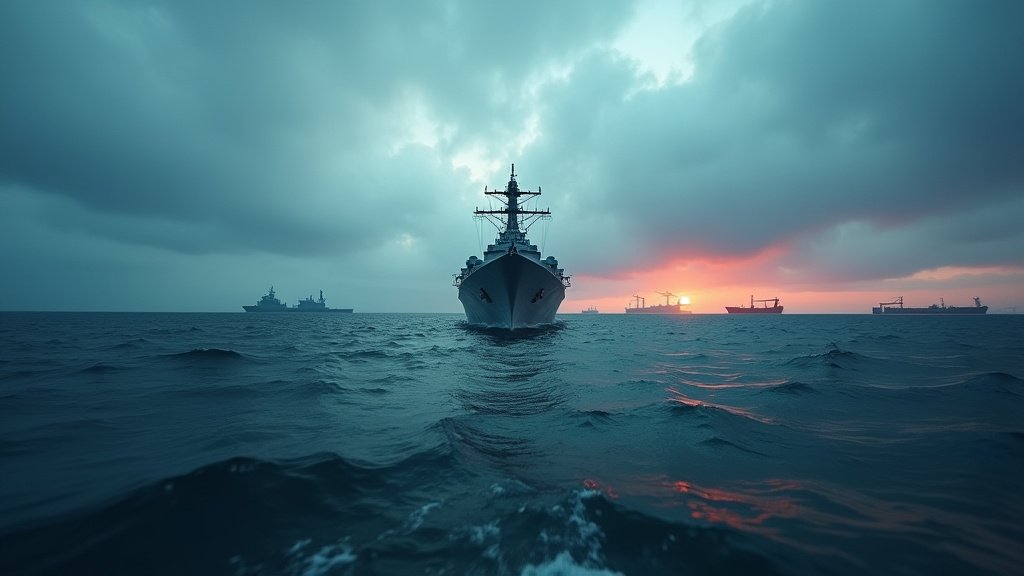
The United Kingdom has dispatched the Type 45 destroyer HMS Dragon to the Middle East as part of its commitment to maritime security and freedom of navigation in the strategically vital Strait of Hormuz. The deployment comes amid heightened regional tensions and concerns over potential disruptions to global shipping lanes.
Key Highlights:
- HMS Dragon, a state-of-the-art destroyer, has been deployed to the Persian Gulf region.
- The deployment is aimed at ensuring the safe passage of vessels through the Strait of Hormuz.
- It signifies the UK’s commitment to international maritime security and de-escalation.
- The move occurs amidst a backdrop of increased geopolitical friction in the region.
UK Naval Presence Reinforces Maritime Security in the Strait of Hormuz
The presence of HMS Dragon in the Persian Gulf underscores the United Kingdom’s steadfast commitment to upholding international maritime law and ensuring the free flow of global trade. The Strait of Hormuz, a narrow waterway connecting the Persian Gulf to the open ocean, is a critical chokepoint for oil transportation, with a significant percentage of the world’s oil passing through its waters daily. Any disruption here could have far-reaching consequences for the global economy.
Strategic Deployment and Operational Mandate
HMS Dragon, a technologically advanced air-defence destroyer, is equipped with sophisticated radar systems and weaponry, making it a formidable asset for maritime security operations. Its deployment is designed to deter any potential aggressors and to reassure commercial shipping that transit through the Strait. The vessel’s mission includes escorting merchant vessels, conducting maritime surveillance, and responding to any incidents that may threaten freedom of navigation. This proactive measure aims to de-escalate potential conflicts and prevent miscalculations that could lead to wider instability.
Geopolitical Context and Regional Tensions
The deployment of HMS Dragon is occurring at a time of heightened geopolitical sensitivity in the Middle East. Recent events have led to increased tensions between several regional powers, raising concerns about the security of vital shipping routes. The UK government has emphasized that the deployment is defensive in nature and part of a broader international effort to promote de-escalation and stability. By maintaining a visible naval presence, the UK seeks to signal its resolve to protect its interests and those of its allies, while also encouraging diplomatic solutions to regional disputes.
International Cooperation and Naval Alliances
The deployment of HMS Dragon is not an isolated effort but is often conducted in coordination with international partners. The United Kingdom actively participates in multinational maritime security initiatives in the region, working alongside navies from countries such as the United States, France, and other regional allies. This collaborative approach enhances collective security, improves interoperability between forces, and provides a more robust deterrent against threats. By sharing intelligence and coordinating operational efforts, these naval forces aim to create a secure environment for maritime commerce and to project a unified stance against any attempts to undermine regional stability.
Historical Precedents and Lessons Learned
The Strait of Hormuz has historically been a focal point of geopolitical tensions, and naval deployments to ensure its security are not unprecedented. The UK, along with other global powers, has a long-standing interest in maintaining freedom of navigation in this crucial waterway. Past incidents have demonstrated the fragility of maritime security in the region and the potential for rapid escalation. The current deployment can be seen as a reiteration of past commitments, drawing on lessons learned from previous crises to inform present-day strategies for de-escalation and deterrence. The aim is to prevent a recurrence of past disruptions by demonstrating a clear and present capability to respond.
Economic Implications and Global Trade Impact
The economic ramifications of any disruption in the Strait of Hormuz are profound. As a conduit for a significant portion of the world’s crude oil and liquefied natural gas, its closure or restriction would inevitably lead to price spikes, supply shortages, and significant economic repercussions worldwide. The presence of HMS Dragon is, therefore, also an assurance to global markets, helping to maintain confidence in the stability of energy supplies. The UK’s proactive stance contributes to a broader effort to safeguard the intricate web of global trade upon which economies depend.
FAQ: People Also Ask
What is the primary role of HMS Dragon?
HMS Dragon is a Type 45 destroyer, primarily designed for air defence. However, it is a highly versatile warship capable of undertaking a range of operations, including maritime security, anti-piracy patrols, and escort duties, making it suitable for ensuring freedom of navigation in critical waterways like the Strait of Hormuz.
Why is the Strait of Hormuz strategically important?
The Strait of Hormuz is a narrow maritime passage that serves as the sole sea route for crude oil and liquefied natural gas (LNG) from the Persian Gulf to the open ocean. Approximately 30% of the world’s seaborne oil trade passes through this strait, making it one of the most vital and sensitive shipping lanes globally.
What kind of tensions exist in the Strait of Hormuz?
Regional tensions, often involving geopolitical rivalries and disputes over maritime boundaries and resources, can lead to increased risks for shipping in the Strait of Hormuz. These tensions can manifest as naval standoffs, incidents involving commercial vessels, and concerns over potential mine warfare or disruptions to navigation.
How does the UK contribute to maritime security in the region?
The UK contributes through naval deployments, such as that of HMS Dragon, participation in multinational task forces, intelligence sharing, and diplomatic engagement. Its aim is to deter aggression, reassure shipping, and uphold international maritime law to ensure the safe passage of vessels.
What are the potential consequences of a disruption in the Strait of Hormuz?
A disruption could lead to severe global economic impacts, including sharp increases in oil and gas prices, significant supply chain disruptions, and potential inflationary pressures worldwide. It could also exacerbate regional instability and lead to wider geopolitical conflicts.